During a joint appearance by the Presidents of Azerbaijan and Egypt, Ilham Aliyev and Abdel Fattah el-Sisi, held on June 8 in Cairo, our nation’s leader reminded that during Azerbaijan’s chairmanship of the Non-Aligned Movement, issues concerning the resolution of the Palestinian-Israeli conflict and the establishment of an independent Palestinian state have always been a focus. “Azerbaijan’s position is unequivocal – an independent Palestinian state must be established, with East Jerusalem as its capital. The current tragedy in Gaza must be stopped as soon as possible, the war must end, and all issues should be resolved through negotiations,” he said.
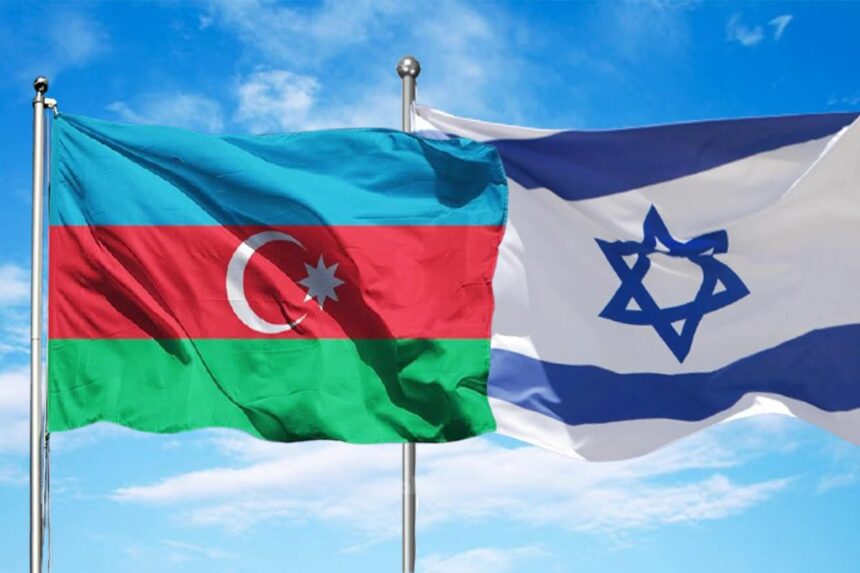
This is Azerbaijan’s official stance on the Palestinian-Israeli conflict. It might seem that Ilham Aliyev’s statement could impact the strategic partnership between Israel and Azerbaijan, which is not just friendly but mutually beneficial. However, there is no cause for concern, as the emergence of a modern, developed Palestinian state adhering to all norms of morality and humanity is what not only Azerbaijan and the entire civilized world want but also Israel itself.
Why then has this not been possible for many decades since the issue was raised at the international level? The answer is as complex and convoluted as global politics itself, with its various conflicting interests of major players.
Let’s delve into the problem. In 1988, Palestine declared its independence, unlike Israel, which proclaimed its independence in May 1948 based on the UN General Assembly resolution of November 1947. However, Palestine utilized this right 40 years later. Why? A state implies clearly defined borders, a government apparatus that formulates foreign and domestic policy, a security system, an economic and social development strategy, and much more – all forming its sovereignty. Such a system has not yet been established in Palestine.
Why? It is challenging to describe in one article how, after Israel appeared on the world map, five Arab states immediately attacked it, to describe the occupation of the Gaza Strip and the fate of the West Bank, how Hamas and Fatah emerged, and to explain what the national unity government is, which was created in Gaza in 2019 but lacked real governance power due to the war between Hamas and Fatah.
Meanwhile, in November 2012, as a result of a UN General Assembly vote, Palestine was granted observer status in this organization. Note that it was not given the status of an independent state because its borders were not defined, but simply the status of a representative of the Palestinian people at the UN. In 2013, the Palestinian National Authority issued a decree instructing all countries to use the name “State of Palestine” instead of “Palestinian National Authority.” It is clear that this internal order cannot become an official directive for states, even if they officially supported it at the UN. The UN itself did not do so.
Overall, if we look at it in periods, the recognition of Palestine as a state by different countries occurred in waves. When Palestine declared its independence in 1988, it was immediately recognized by 80 countries, including the USSR, and hence all those countries under its influence, such as India, African countries, and some Asian states. Later, in the 1990s and early 2000s, the geography expanded to Latin American countries. However, the USA, UK, Canada, Australia, and most European countries have not done so to this day. As a result, 139 out of 193 UN member states officially recognize the Palestinian state.
However, the main problem is not even in the recognition of Palestine but in what it will represent as a state. Who will govern it? Hamas, a proxy force of Iran? It was Hamas, having ousted Fatah, that essentially ruled the Gaza Strip, leading to the tragic events of November 7, 2023. Fatah itself, lacking experience in state governance, was unable to cope.
But even if we set aside the question of governance, will the policy of the Palestinian government truly be independent? Its mere proximity to Israel activates nearly all the Arab countries and Iran, each with its own goals and plans in the Middle East. Plus, there are the interests of countries representing power centers, such as the USA with its numerous military bases throughout the Middle East, which alternates between declaring itself Israel’s strategic ally and restraining Israel’s actions, depending on foreign policy scenarios. Europe also has its interests in the region regarding Iran, Saudi Arabia, Qatar, etc.
Most intriguingly, even Israel does not have clear answers to all these questions. The war in Gaza has been ongoing for eight months, causing civilian casualties among Palestinians and losses for Israelis, yet even they have a vague understanding of Gaza’s future, the West Bank, and the territories theoretically included in the State of Palestine. The Israeli Prime Minister has one vision, military group leaders have another, analysts a third, while the population watches and tries to comprehend where their leaders are taking the country. Overall, no one has a coherent vision of the situation. Although it is clear that Iran will not abandon its anti-Israel policy, meaning that even after Palestine is granted full statehood by the UN, this new state will remain under the pressure of Iranian proxy groups.
Will Arab countries help Palestine? Unlikely, as for many decades none of them intervened in the events in the Gaza Strip. Even Egypt, which after the end of the British mandate over these territories in 1948, seized the Gaza Strip but was forced to cede it to the Israelis during the Six-Day War, refused to accept refugees from Gaza during the current war.
Returning to Azerbaijan and Ilham Aliyev’s official visit to Egypt. According to political scientist Elkhan Shahinoglu, Azerbaijan’s and Egypt’s positions on international issues coincide. Evidence of this is the phrase by the President of Azerbaijan: “We support Egypt’s efforts, and Egypt’s initiatives must be taken into account.”
“Ilham Aliyev supports his Egyptian counterpart’s idea of resolving the Palestinian-Israeli conflict and creating an independent Palestinian state,” the expert said.
E. Shahinoglu believes that Baku will officially continue cooperation with Tel Aviv. Although Egypt supports the idea of creating an independent Palestinian state, it continues its contacts with Israel. The continuation of the Israeli government’s military operation in Gaza and the rising death toll among Palestinians weaken Tel Aviv’s position in the international arena.
“Of course, official Baku will not refuse to cooperate with Tel Aviv, but the inability of the Israeli government to stop the military operation in Gaza creates some discomfort for all countries cooperating with this state, including Azerbaijan. Therefore, Tel Aviv should understand the idea of the President of Azerbaijan to create an independent Palestinian state. An independent Palestinian state is also a requirement of Western countries cooperating with Israel,” the political scientist noted.
Rauf Nasirov
Translated from minval.az