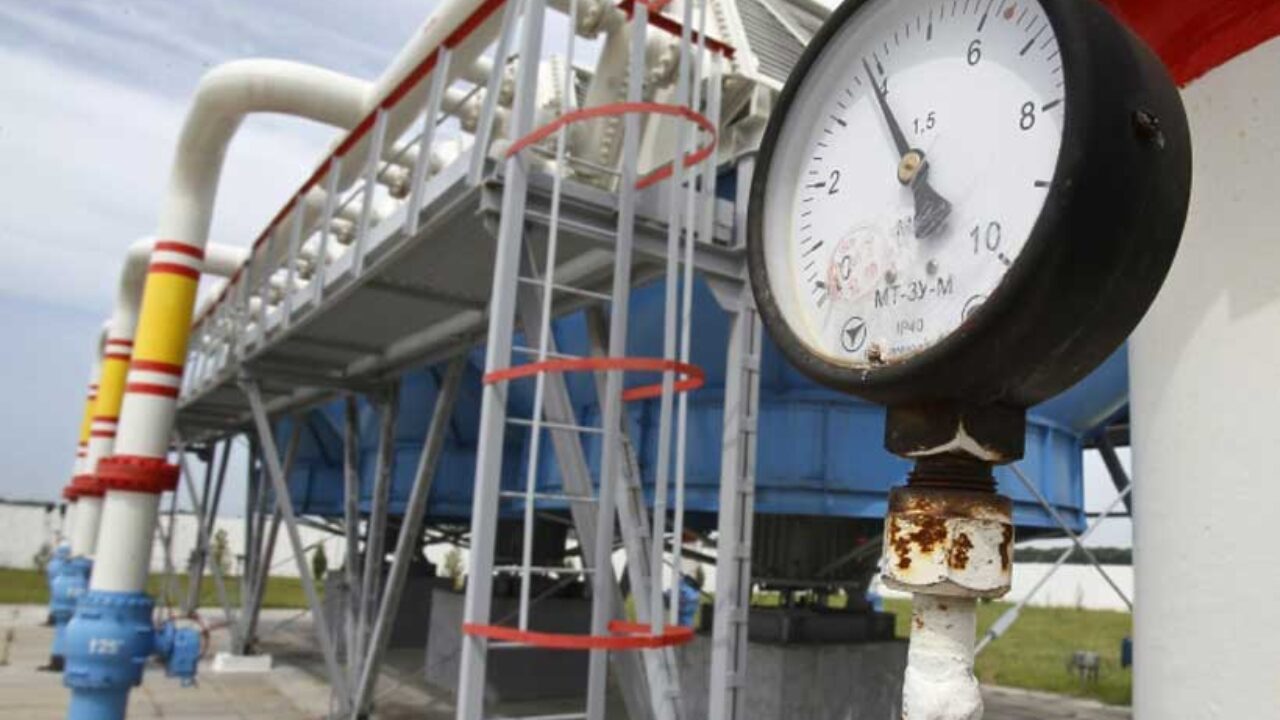
When Rafik Baghdasaryan died in prison in 1993, his body was transported from Russia to Armenia for burial. Baghdasaryan was part of a criminal network spanning the former Soviet Union and associates from Baku flew in to Yerevan to attend his funeral. At the time, Armenia faced a profound shortage of energy but reverence for Baghdasaryan was reportedly so profound among criminal circles in Azerbaijan that power was restored if only for the few days of the funeral. Since then, Armenia receives its gas from Russia through the North Caucasus-Transcaucasia Gas Pipeline.
That story, recounted in Black Garden: Armenia and Azerbaijan Through Peace and War, is not the end, however. In March 2021, while maintenance work was underway on the Transcaucasian pipeline, gas was temporarily supplied to Armenia through Azerbaijan – though not directly as it had once been. While it did indeed pass through Azerbaijan, it went only as far as Georgia and then redirected to Armenia. Nonetheless, it was an encouraging precedent, highlighting the importance of regional cooperation and integration.
Now, the issue has emerged again.
“Armenia is ready to buy natural gas from Azerbaijan,” said Hakob Vardanyan, Deputy Minister of Territorial Administration and Infrastructure, at the Tbilisi Silk Road Forum held in Georgia last year. “[…] during Soviet times […] we got our gas from Azerbaijan. […]. We had three huge gas pipelines and we can restore these pipelines if there are no political issues between our countries.”
And in April, Azerbaijan President Ilham Aliyev also suggested the same. “Potentially, Armenia could also be a recipient of Azerbaijani gas, especially given the very preferential price for gas supplied to Georgia,” he said. “And from the point of view of proximity, from the point of view of infrastructure, […] it would be natural to have this kind of cooperation.” A few days later, even Armenian National Assembly Speaker Alen Simonyan entered the fold. “We must discuss this issue. […] laying a gas pipeline to purchase gas not only from Azerbaijan but also from Iran.”
The topic comes at a relevant time as Yerevan seeks to reduce its traditional reliance on Moscow, though many Armenians might balk at the idea. In March last year, the government was quick to reassure consumers that no Azerbaijani petrol would be imported when the multinational Shell company established a presence in Armenia. There will also be energy security concerns, especially when memories of the disruption of the gas pipeline through Lachin from Armenia to Karabakh are fresh.
But there are certain realities too.
“[…] infrastructure determines the delivery routes of energy and […] the decisions of certain countries on where they buy energy from,” Hungarian foreign minister Péter Szijjártó noted at the Tbilisi Silk Road Forum on the same panel as Vardanyan. He was also quick to point out what diversification is. “[It] does not mean replacing reliable suppliers with new suppliers,” he explained, in a direct reference to Russia. “Diversification [only] means more sources and more routes of delivery.”
Certainly, Moscow still remains an issue.
In March, some five months after his panel in Tbilisi, Vardanyan told parliament that Yerevan expects Russia to continue selling its gas to Armenia at below market prices until at least 2031. Moreover, according to an agreement signed in 2013, Moscow holds a monopoly on gas distribution in Armenia until 2043, preventing Yerevan from purchasing it from other countries. At the time, former foreign minister and then opposition deputy Alexander Arzumanyan criticised the decision, warning that any breach of the agreement would end up in international arbitration.
As a result, Russia still accounts for 87 percent of Armenia’s gas while the remainder comes from Iran. Not surprisingly, it has long been believed that Moscow reduced the diameter of the latter pipeline in order to prevent gas from reaching further and also to restrict volume. The arrangement is also one where Armenia supplies electricity to Iran in exchange for gas. That deal is slated to end in 2030 but Gazprom also owns and controls the Armenian section of that pipeline too.
In that context, is it even possible to consider Armenia purchasing gas from Azerbaijan? Unless Yerevan can cancel or renegotiate its existing obligations, that remains unknown. However, that is not to say there aren’t other opportunities. Given the finite nature of fossil fuels, and a gradual switch to renewables anyway, perhaps alternative energy sources offer more potential. Armenia already exports electricity to Georgia and that could be expanded to include Turkiye and through the Black Sea Submarine Cable too – but likely only if normalisation continues.
“We are a country without any fossil fuels and our goal is to develop renewable energies more […], said Vardanyan in Tbilisi. “But for […] tangible volumes we need [regional] cooperation.” This necessity has also been emphasised in the European Green Deal. “The economic case for cross-border cooperation is strong,” a briefing by the European Environment Agency noted in 2020. “[It] can reduce overall costs and maximise benefits.”
Following an unprecedented joint statement by Yerevan and Baku last December, in which Armenia green lit Azerbaijan hosting the United Nations Climate Change Conference (COP) later this year, the event offers the opportunity to take this conversation further. At the weekend, Azerbaijani Presidential Advisor Hikmet Hajiyev had already put the focus on making the important global event “an engine for peace by finding common ground […].”
As the world continues to grapple with the problem of climate change and securing new sources of energy for the future, it is vital that Armenia, Azerbaijan, and Georgia work together as part of a larger solution. The signs are already there.
Onnik James Krikorian is a journalist, photojournalist, and consultant from the U.K. who has covered the Armenia-Azerbaijan conflict since 1994.