Analysts often use the Syrian file to link both regions. We notice in both these files the same players: Turkiye, Russia, Iran and, in the background, the Europeans and the US. Yet, what stands out as the most interesting dynamic in what is described as the “New Middle East” is the relationship between Russia and Turkiye.
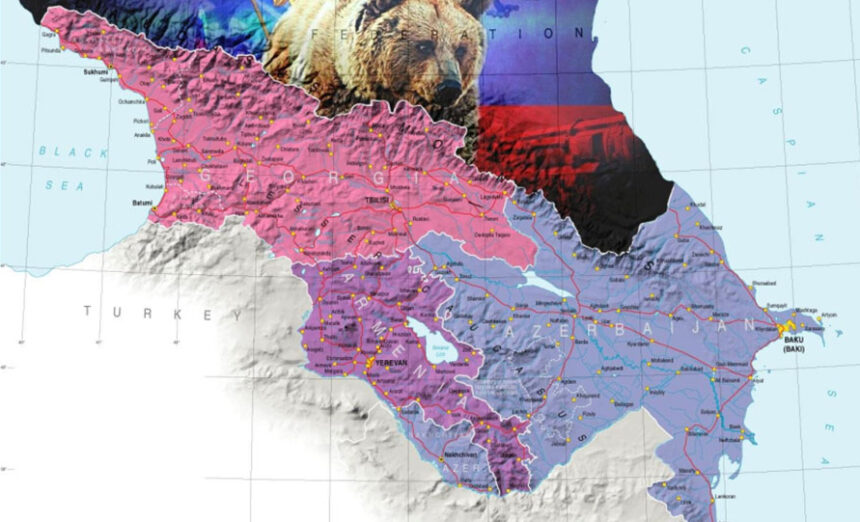
A major geopolitical shift has taken place following the settlement of the Nagorno-Karabakh dispute and the fallout from the Ukraine war. Armenia, Azerbaijan and Georgia now have a stronger global presence and have been actively looking to shift their foreign policy strategies away from Russia’s influence. Azerbaijan is strengthening its links with Turkiye mainly, but also Israel and the EU; Armenia, disappointed by its Russian sponsorship, is clearly expanding its engagement with the EU and France in particular, while also looking to build military ties with India; and Georgia, facing domestic turmoil, is once again looking to fortify its relationships with the US and China, as well as the EU.
For many analysts, the dynamics in the South Caucasus have long been defined within the post-Soviet era, meaning following the collapse of the USSR. Now, they are putting forward the post-Ukraine era as a second phase of the decline in Russian influence in the region. And the country benefiting the most in terms of influence is Turkiye, especially through its alliance with Azerbaijan, which has become a leading regional voice.
However, will this situation stay the same for long? Is the Russian army so focused on the Ukrainian front that it will lose even more ground in this vital region for Moscow? If this is true, the ripple effects will extend to other countries and regions, such as Central Asia. Here too, just like in the Middle East, Turkish sitcoms and soap operas preceded Ankara’s entry as a true geopolitical player.
I would put a twist on these analysts’ view and look at defining this as the era of the post-Georgia war of 2008. In many ways, we are today living with the consequences of this incident — and on a bigger scale. Coincidentally, the Democrats are in the White House again. The Georgian defiance toward Moscow, some might even say provocations, pushed the creation of a new situation. Despite Moscow being able to maintain its interests there, it showed a weak military on the logistical side. I remember vividly a former Arab military official being shocked at footage of Russian soldiers being transported in various seized trucks and pickups. This apparent weakness has taken decades to create a true challenge to Russia.
Nevertheless, there is no doubt that, if we compare militaries, Russia is the dominant force. It is ranked as the second-biggest global military power and it maintains a vast array of military assets, including the largest tank force and one of the largest nuclear arsenals. Moscow has, according to military reviews, a significant presence on the global stage, with more than 1.32 million active military personnel and a broad spectrum of capabilities from land to air to sea.
Turkiye, on the other hand, has only the eighth most powerful military in the world. But it has undergone significant modernization and expansion, particularly in its expeditionary and overseas capabilities. With a focus on technological advancements and self-reliance, Turkiye’s armed forces have grown to be a key player within NATO and beyond, boasting a diverse and increasingly sophisticated array of military hardware and a robust defense industry.
When focusing on the Caucasus, Russia maintains a strategic military presence, particularly in the regions of Abkhazia and South Ossetia. In Abkhazia, the Russian 7th Military Base hosts about 4,500 personnel, while South Ossetia’s 4th Guards Military Base hosts some 3,500 personnel. Additionally, Russia has the 102nd Military Base in Gyumri, Armenia, and the 3624th Airbase at Erebuni Airport near Yerevan, with estimated personnel numbers ranging from 3,214 to 5,000. These bases play a crucial role in Russia’s influence.
Meanwhile, Turkiye does not have any official military bases in the Caucasus region. However, it maintains close military cooperation with Azerbaijan, including joint military exercises and defense agreements. This partnership was notably evident during the Nagorno-Karabakh conflict, where Turkish support played a significant role in Baku’s victory in clashes leading up to September 2023, when it reclaimed full control over the region that is disputed with Armenia. Turkiye’s military presence in the region is more about strategic alliances and support, rather than physical bases.
This is an interesting twist, as Turkiye applies to Russia the same strategy Russia applies to the US in various theaters, such as Syria and Africa. Both countries are looking to avoid direct clashes and have found a modus operandi that blends indirect confrontation with collaboration in other arenas. We should remember that this region has historically been a battleground for imperial powers, including the Ottoman Empire, Persia (and later Iran) and Russia.
This is why, with a potential expansion of the war in Ukraine, a more appropriate comparison is not with the Middle East, despite the common interests and stakeholders. Instead, we should remember the Russo-Turkish War of the 19th century, between the Ottoman Empire and a coalition led by the Russian Empire. This war was fought in the Caucasus and … wait for it … the Balkans. One thing is clear: Russia’s influence will not wane in the blink of an eye, especially as Moscow now has a war economy, with an impressive increase in its industrial military capacity.
Khaled Abou Zahr is the founder of SpaceQuest Ventures, a space-focused investment platform. He is CEO of EurabiaMedia and editor of Al-Watan Al-Arabi.