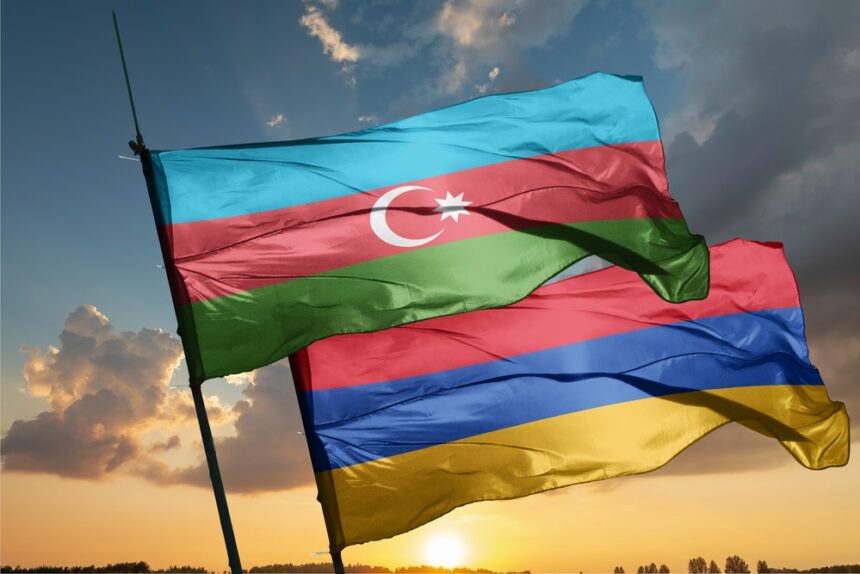
However, these moments also present fresh possibilities for the parties engaged to reassess whether embracing collective violence aligns with their interests, or if they should instead embrace the avenues of peace and reconciliation.
What watershed event might occur in the ongoing Armenian-Azerbaijani conflict to prompt both parties to reconsider their stances?
The Armenian-Azerbaijani conflict, spanning over three decades, encompasses both ethnic and territorial dimensions.
This conflict stands as the longest-running in the post-Soviet region, categorized among numerous “frozen conflicts” at the edges of Russia’s backyard. Despite occasional declarations in recent years suggesting an imminent peace agreement between Baku and Yerevan, such resolutions have yet to materialize. Nevertheless, several factors suggest that the current circumstances may diverge from past patterns.
First, a major barrier to peace has been eliminated, albeit through military action. Following years of diplomatic setbacks, Azerbaijan launched a 24-hour offensive against Armenian forces in September 2023. As a result, the separatist leadership in Khankendi surrendered, and Armenian troops were withdrawn from Azerbaijan’s territory. Nonetheless, Armenia’s surrender of Karabakh has consistently been a primary condition for achieving peace.
Second, both the Armenian and Azerbaijani leaderships have shown a strong dedication to pursuing peace. Previously, such commitment posed particular risks for the Armenian leadership, which faced the threat of extremist elements within Armenia willing to employ not only political pressure but also violence to obstruct peace efforts.
In December, Armenia and Azerbaijan demonstrated a rare gesture of goodwill by exchanging prisoners of war and issuing a joint statement acknowledging the significant moment for peace in the region. Further indications of this commitment came from senior officials in subsequent statements. During the same month, Hikmet Hajiyev, the top foreign policy advisor to Azerbaijani President Ilham Aliyev, declared, “For Azerbaijan, there are no longer obstacles on the way to a peace agenda.”
Both parties have swapped numerous versions of a peace agreement. Most recently, Aliyev and Pashinyan convened on the sidelines of the Munich Security Conference in February this year, under the auspices of German Chancellor Olaf Scholz.
Another instance is the selection of Azerbaijan as the chair of the United Nations Climate Change Conference, COP29, ostensibly attributed to its reconciliation process with Armenia. Specifically, Armenia consented in December 2023 to endorse Azerbaijan’s bid to host COP in exchange for inclusion in the Eastern European group’s COP bureau. In a recent opinion piece, Mukhtar Babayev, Azerbaijan’s minister for ecology and natural resources and the designated president of COP29, directly attributes Azerbaijan’s current COP chairmanship to peace efforts with Armenia.
Finally, both parties seem to acknowledge that several lingering issues can be addressed following the signing of a peace treaty. These concerns revolve around transportation routes, enclaves, and notably, the demarcation of borders between Armenia and Azerbaijan, a task that has never been undertaken previously.
A significant outstanding issue revolves around the Zangezur corridor, often referred to as a vital connection between Azerbaijan and its exclave of Nakhchivan, forming a crucial segment of the potentially lucrative East-West route known as the Middle Corridor. Nakhchivan shares borders with Armenia and Iran. In November 2020, Armenia entered into a trilateral ceasefire agreement with Azerbaijan and Russia following a brief conflict between the two nations. As part of this agreement, Pashinyan consented to the establishment of a land transportation link through Armenian territory, specifically in the Syunik province.
The Zangezur corridor symbolizes a contrasting vision of alternatives to east-west trade routes. It serves as a microcosm illustrating the intricate geopolitical dynamics involving the Middle East, Europe, and Russia in the unfolding narrative of the South Caucasus region.
While both Armenian and Azerbaijani leaders have shown their dedication to peace, in the past year, US Secretary of State Anthony Blinken and European Council President Charles Michel have been engaged in active efforts to facilitate a peace deal, sidelining Russia. It is no coincidence that towards the end of the year, Russian Foreign Minister Sergei Lavrov accused the European Union of attempting to exclude Russia from the region. Lavrov further alleged that Armenia’s tilt towards the West, particularly NATO, would lead to the erosion of Armenia’s sovereignty, when in fact, the opposite is true. This rhetoric serves as an attempt to justify the Kremlin’s diplomatic shortcomings in post-Soviet sphere.
Nonetheless, many potential pitfalls remain. On September 26, the leader of Armenian separatists in Karabakh revoked his earlier decree, which had mandated the dissolution of separatist institutions by January 1, effectively bringing an end to three decades of separatist rule.
Moreover, Russia, the former kingmaker, is attempting to reassert its influence. Moscow’s strategies may involve orchestrating a coup in Yerevan or exerting economic pressure. Indeed, Armenia relies on Russian natural gas imports, its power grid is overseen by an oligarch holding Russian citizenship, its railways are under the ownership of Russian Railways, and its inclusion in the Moscow-led Eurasian Economic Union ensures the prevalence of Russian goods in its shops. Meanwhile, the Russian military base in Gyumri is unlikely to be shut down anytime soon.
Whether there will be another conflict or peace between Armenia and Azerbaijan remains uncertain, but ultimately, the decision lies with Baku, not Moscow. For Baku, the decision boils down to either endorsing a framework treaty to bolster its global standing or undermining the process to rationalize potential future military escalations. Baku’s decision-making regarding this matter will largely hinge on external factors.
Fuad Alakbarov is a freelance foreign policy analyst from Glasgow with a focus on South Caucasus, Africa and Central Asia. The views and opinions expressed in this article are those of the author.