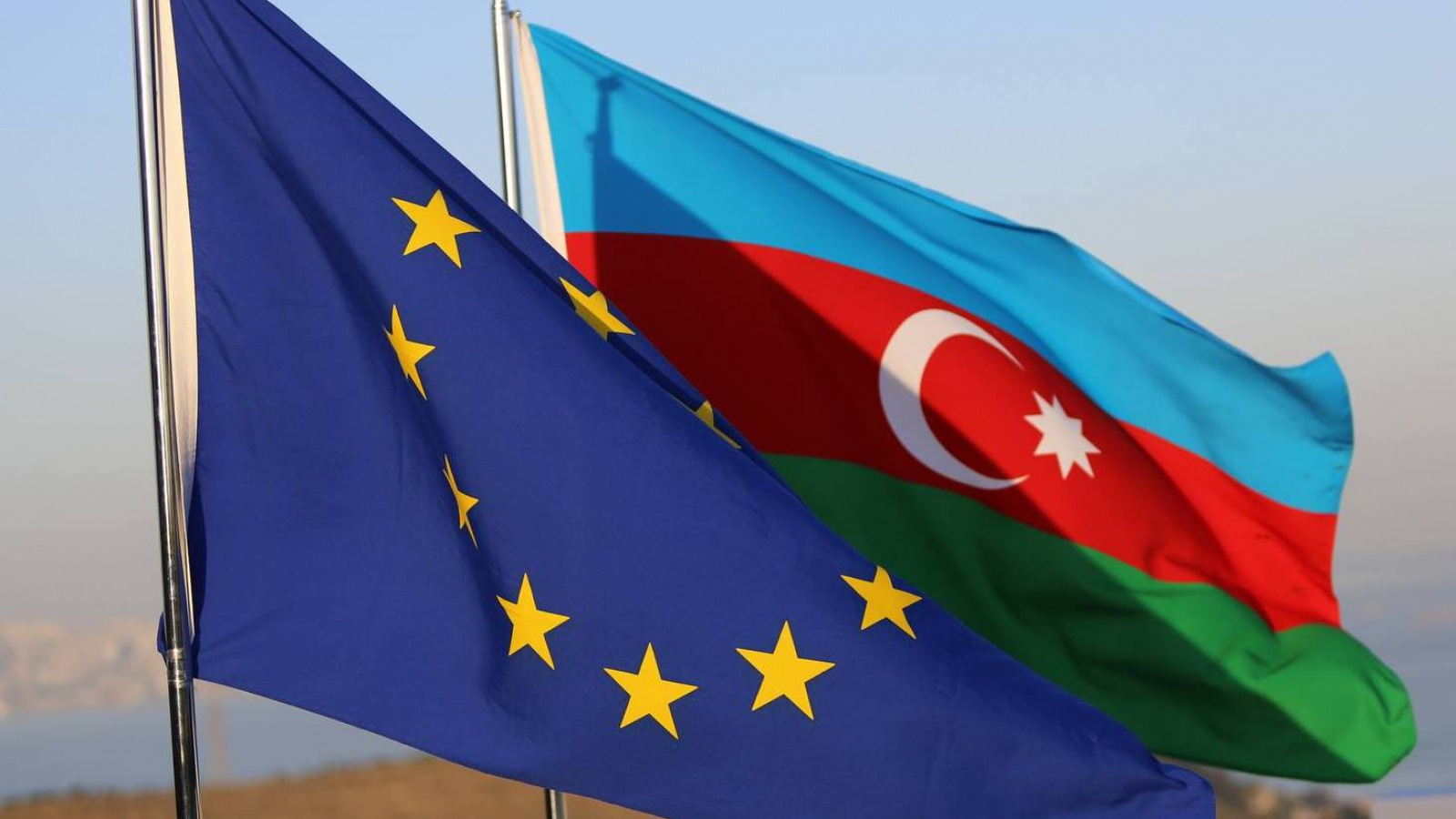
When the Azerbaijani flag was raised at the Council of Europe back in January 2001, many hoped it would be the beginning of Azerbaijan’s European path. Yet twenty-three years later, the Azerbaijani delegation has been suspended from the Parliamentary Assembly of the Council of Europe (PACE) over its human rights record, underscoring growing tensions between Baku and some Western capitals.
The relationship between Baku and Brussels has long been something of a rollercoaster. Leveraging its abundant oil and gas reserves, the South Caucasus nation of Azerbaijan broke into the European energy market in the mid-2000s, inking a series of strategic partnership deals with about one-third of the European Union’s member states. Yet despite these strides, political integration has remained elusive. The last political agreement between Azerbaijan and the EU was signed in 1999. Subsequent attempts to sign a deal have been bogged down in Baku’s intransigence and ended in failure—or eternal postponement.
For the most part, bilateral relations between the EU and Azerbaijan have adhered to a well-established framework centered around energy, trade, and to some extent human rights. The landscape shifted dramatically when Azerbaijan fought a six-week war with neighboring Armenia over the long-disputed region of Nagorno-Karabakh in 2020. It changed again when Russia launched its full-scale invasion of Ukraine in 2022. Amid calls for a more geopolitically engaged EU, there was a recalibration of Azerbaijani-EU ties.
For the first time, negotiations between Azerbaijan and Armenia took place with mediation from Brussels. This engagement, along with broader Western diplomatic interventions, yielded some symbolic victories, including prisoner swaps, landmine map exchanges, and mutual recognition of territorial integrity, paving the way for substantive peace talks. Progress stalled, however, with Azerbaijan’s takeover of Nagorno-Karabakh in September 2023. The military escalation and the mass exodus of Karabakh Armenians put immense strain on Azerbaijan’s relations with its Western counterparts. Nevertheless, there was no substantive Western response.
Above all, it’s hard to ignore the rising tensions between Azerbaijan and EU member state France, dating back to 2020. This diplomatic friction, which partly reflects broader regional dynamics, reached new heights with the deployment of an EU monitoring mission (EUMA) to Armenia in 2023 and subsequent French military hardware sales to Armenia. While Baku perceived the EUMA as an initiative solely driven by Paris, it involved twenty-three EU members, reflecting a pan-European consensus.
At the same time, recent statements from the Kremlin—traditionally Armenia’s ally—indicate growing support for Azerbaijan and hint at a possible shift in Russia’s regional priorities. An Azerbaijan-Russia military alliance is a long way from becoming reality, but there is a tactical overlap. For its part, Azerbaijan tends to favor integration with Turkey over Europe. A recent crackdown on independent journalists and activists in Azerbaijan has put even greater strain on the country’s ties with the West. Given all this, the question of whether Azerbaijan could completely decouple from Europe has been posed more and more frequently.
The answer, at least for the moment, is no. So far, Baku’s disengagement from the West has mostly been performative, with little indication that substantive changes are in the offing. This is largely because of a strong mutual dependence: should either side make a dramatic move, it will result in serious consequences for both sides.
Energy cooperation is at the heart of this interdependence. While Azerbaijan only meets a fraction of Europe’s overall gas demand, its significance is magnified for individual EU member states including Bulgaria, Italy, and Greece. Recent additions to this roster include Romania and Hungary, with expectations of further expansion of Azerbaijani gas supplies to nations like Croatia, Slovakia, and even Austria.
The strategic importance of Azerbaijani gas lies in its role as an alternative (sometimes the only alternative) to Russian gas, which has been weaponized by the Kremlin. Contractual obligations are a significant hurdle to anyone seeking to disrupt these arrangements, as doing so triggers penalty clauses worth millions, if not billions, of dollars.
Azerbaijan is particularly dependent on this relationship. With approximately 90 percent of the country’s income consisting of oil and gas revenues, energy exports are the cornerstone of its economic and political stability. In 2023 alone, Azerbaijan raked in 19 billion euros from oil and gas sales to the EU. While it also has significant non-EU buyers for oil, its gas exports are mostly directed toward the European market. Notably, projections suggest that Azerbaijan’s gas revenues will outstrip those it gets from oil in 2024: a definitive shift to a gas-centric era. With its annual gas production nearing 50 billion cubic meters, Azerbaijan is planning to sell about half of this to the EU. There is nothing remotely comparable to the size of the EU market for Azerbaijan if it were to seek to diversify its exports.
Trade routes and international connectivity are another increasingly important aspect of the ties between Europe and Azerbaijan. The war in Ukraine and recent disruptions to maritime trade through the Red Sea have heightened focus on the Trans-Caspian International Transport Route (linking China and Southeast Asia to Europe via Central Asia and the South Caucasus), which is commonly referred to as the Middle Corridor. While several options exist for this route in Central Asia, there is no alternative to Azerbaijan.
In Baku, the Middle Corridor is perceived as a possible source of investment and the only way of generating revenue on a par with what it derives from oil and gas. In Brussels, it’s viewed as a strategic alternative to existing routes, and European and international financial institutions recently announced an investment of 10 billion euros into the Middle Corridor.
In other words, the deep-seated interdependence between Azerbaijan and the EU makes a major rift highly unlikely. Both sides are actively working to strengthen their bonds when it comes to energy and trade. Still, disruptions are possible. Baku appears inclined to exploit its growing influence by pursuing a “business only” arrangement with Brussels, prioritizing economic interests over everything else. The degree to which Brussels is on board with such an approach, however, remains to be seen.
Shujaat Ahmadzada