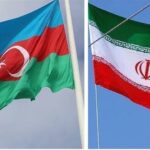
However, Pakistan’s non-recognition of Israel has prevented Baku from forming a “quadruple alliance” with its three strategic allies, including Turkey, Israel and Pakistan. Armenia, after defeat in the war and amid dissatisfaction with its traditional ally Russia and the Collective Security Treaty Organization (CSTO), views India, France and Iran as new strategic options, however, Iran prefers Armenia to maintain its traditional and strategic relations with Russia. The tripartite cooperation between Armenia, Iran and India focus efforts on “soft balancing” (economic-transit) instead of “hard balancing” (military-security), against the tripartite ties of Azerbaijan, Turkey and Pakistan in the South Caucasus.
BACKGROUND: The different approaches of Pakistan and India in the South Caucasus, especially in the conflict between Armenia and Azerbaijan, were formed in the immediate aftermath of the Soviet Union’s collapse. Pakistan was the second state after Turkey to recognize Azerbaijan as an independent country. Moreover, although Turkey, Yemen, and Saudi Arabia severed diplomatic ties with Armenia over the Nagorno-Karabakh conflict, Pakistan is the only country that does not recognise Armenia. Pakistan’s approach towards Armenia can only be compared with Iran’s position towards Israel. The parallel between the legal and territorial status of Karabakh and Kashmir became an important focus of cooperation between Baku and Islamabad in the United Nations, the Non-Aligned Movement (NAM) and the Organisation of Islamic Cooperation (formerly Organization of the Islamic Conference). Simultaneously, India and Armenia pursued coordinated diplomacy in international organizations to defend the principle of “self-determination” of Armenians in Nagorno-Karabakh and Indians in Kashmir.
Both Pakistan and India increased their engagement with the South Caucasus during the 2020 Second Karabakh War. Pakistan supported Azerbaijan during the war and regularly participated in military exercises with Ankara and Baku, now known as the “Three Brothers.” In January 2021, the parties signed the trilateral Islamabad Declaration. Neither the 2020 war or the one-day war in September 2023, which led to the complete return of Nagorno-Karabakh and its surrounding areas to Azerbaijan, changed Pakistan’s position towards Armenia. While Turkey and Armenia are normalizing their relations, and Armenia and Saudi Arabia have resumed their diplomatic ties after three decades, there is no sign that Pakistan will recognize Armenia. Simultaneously, Armenia, defeated in the war and dissatisfied with Russia and the CSTO, is developing its cooperation with India.
IMPLICATIONS: The extension of India-Pakistan strategic competition to the South Caucasus has had important consequences regarding the sale of weapons, defence equipment and the transfer of military technologies to Armenia and Azerbaijan. While Israel and Turkey have been the main arms suppliers to Azerbaijan, Pakistan’s role has also been steadily increasing in the last decade. The Pakistani and Azerbaijani militaries have reportedly conducted joint exercises since 2016 and maintain extensive strategic security contacts. Students and senior military officers, as well as pilots and special forces of the Azerbaijani army, are trained in military universities and training centers of the Pakistani army.
Although officially unconfirmed, Pakistani military advisers reportedly participated in the Second Karabakh War, providing tactical advice on operations in Karabakh’s highlands. The Pakistani army’s experience of fighting in the mountainous areas of Kashmir was allegedly utilized in capturing the strategic city of Shusha in the Nagorno-Karabakh region. The 44-day war undoubtedly brought Pakistan closer to Azerbaijan and its ally Turkey. The first joint military drills between Turkey, Azerbaijan and Pakistan took place in September 2021. Azerbaijan and Pakistan also signed a deal on JF-17 Block-III fighter jets, jointly developed by China and Pakistan. Azerbaijan will purchase Pakistan-made fighter jets worth US$ 1.6bn. The contract also covers training for pilots and the acquisition of ammunition for the jet. While Armenia suffers greatly from the imbalance in air power, the addition of these Chinese-Pakistani fighters to Israeli and Turkish ones, as well as missile and drone systems, will further strengthen Azerbaijan’s air force.
Armenia has simultaneously developed its military and defense relations with India. When Armenian Defense Minister Suren Papikyan visited New Dehli in October 2022, India’s support for Armenia shifted into high gear with the provision of Indian artillery systems, anti-tank rockets and ammunition worth US$ 245 million. Indian media reported that Armenia ordered 3 versions of the Pinaka multiple-launch rocket system from India. Under a contract worth US$ 250 million, Armenia ordered versions of the Pinaka Mk-1 (range 37.5 km), Pinaka Mk-1 Enhanced (45 km), and Guided Pinaka (75 km) systems. Notably, Armenia became the first foreign operator of the Akash SAM system, a medium-range mobile surface-to-air missile. In the continuation of this process, in November 2023, Armenia ordered the India-developed Zen Anti-Drone System (ZADS), a Counter Unmanned Aerial System (CUAS) designed to provide comprehensive security against drone attacks. With a multi-layer multi-sensor Architecture, it will strengthen the Armenian air defence system against the Turkish Bayraktar TB-2 drones, which played an important role in the Second Karabakh War. India is thus becoming Armenia’s key partner in military-technical cooperation. Previously, this position was held by Russia, which accounted for over 93 percent of Armenia’s arms and military equipment in 2011–2020. However, despite the important military agreements between Armenia and India and unlike Azerbaijan and Pakistan, they have not yet conducted joint military exercises.
Moreover, by participating in the Chabahar transit port in southeastern Iran and adjacent to the Gulf of Oman, Armenia hopes to intensify cooperation with India and Iran in the Persian Gulf-Black Sea corridor. India also participates in the International North-South Transport Corridor (INSTC) with Iran, Azerbaijan and Russia, manifesting that India takes a relatively more balanced approach to the South Caucasus than does Pakistan.
CONCLUSIONS: The political arrangement and the balance of power in the South Caucasus have undergone significant changes after the Second Karabakh War, and Russia’s war against Ukraine has also accelerated this process. Although the emerging geopolitical setup of the region remains unstable, India and Pakistan are the two new actors in this transition process. Their roles and influence in the region remain decidedly smaller than those of Russia and Turkey and face clear limitations and challenges. Although Islamabad’s stubborn refusal to recognize Armenia has made Pakistan, along with Turkey and Israel, a strategic partner of Azerbaijan over the last three decades, Pakistan’s non-recognition of Israel has prevented Baku from forming a “quadruple alliance” with its three strategic allies. The military exercises between Pakistan, Turkey, and Azerbaijan in September 2021, illustrate this situation. Moreover, the bloody war between Israel and Hamas will prevent the formation of a tripartite alliance between Azerbaijan, Turkey and Israel at least in the near future.
Simultaneously, Armenia is seeking new strategic allies and India and France are the most important options for Yerevan. Recently, Prime Minister Nikol Pashinyan defended Armenia’s arms deals with France and India, emphasizing their necessity for the country’s national security and defence. Iran is also an option for Armenia. Armenia’s defence minister recently visited Tehran and the two countries have common standpoints on several issues, including opposition to the Zangezur Corridor between Azerbaijan and Nakhchivan. However, Iran prefers Armenia to maintain its traditional and strategic relations with Russia. Moreover, Tehran wants to avoid straining its relations with Azerbaijan and Turkey through an obvious strategic and military link with Armenia and wishes to limit the influence of western players such as France in the South Caucasus. The growing cooperation between Iran, Armenia and India can be considered part of Tehran’s effort to restore the balance of power in the South Caucasus after the Second Karabakh War. It seems that this particular tripartite cooperation will, instead of “hard balancing” (military-security), focus efforts on “soft balancing” (economic-transit) against the tripartite ties of Azerbaijan, Turkey and Pakistan in the South Caucasus.
Vali Kaleji based in Tehran, Iran, holds a Ph.D. in Regional Studies, Central Asia and Caucasian Studies.
cacianalyst.org