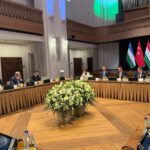
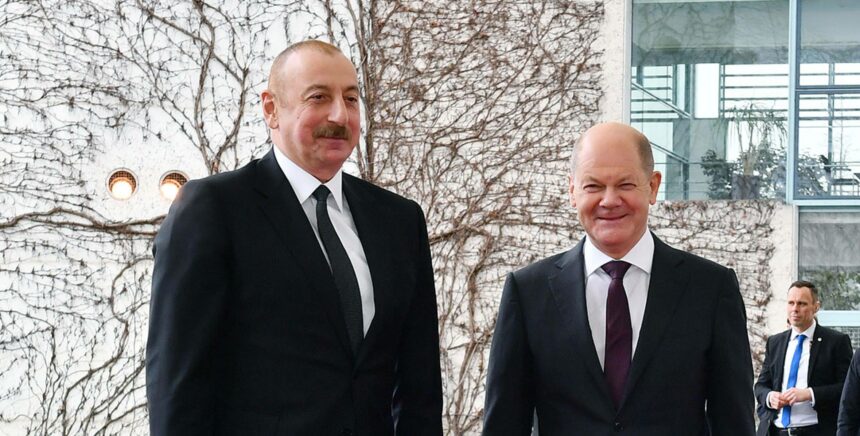
This meeting, which had not been expected among the expert community, should be considered a positive sign of pragmatic willingness on behalf of European leaders to embrace new formats towards the achievement of a comprehensive peace agreement between Baku and Yerevan. It may also convey a message that any format that will lead to the finalisation of the peace deal, shall be approved in Europe. A day later, Aliyev affirmed the productivity of this meeting and mentioned that agreements have been reached on normalising Armenian-Azerbaijani relations, border delimitation, and continuing negotiations on a peace treaty. He added that a foreign ministerial-level meeting will be held soon. Aliyev expressed optimism about signing a peace agreement. In his turn, the Chancellor emphasized that Germany and the EU are ready to support it in accordance with their capabilities, including the efforts of Charles Michel.
In fact, diplomatic efforts by European Council President Charles Michel’s have always been appreciated in Baku. On February 8, Charles Michel had phone conversation with Ilham Aliyev, during which they discussed restarting trilateral meetings between Azerbaijan, Armenia, and the EU in Brussels. Aliyev affirmed Azerbaijan’s consistent support for such a format. They also exchanged views on peace talks between Armenia and Azerbaijan, emphasizing the significance of the joint statement made on December 7 as a substantial stride forward in bilateral relations.
Despite the overall positive trajectory, there is still dissatisfaction in Baku with the Brussels track of negotiations. This discontent has been fueled by perceived pro-Armenian bias and sometimes provocative statements from several European leaders, primarily the President of France Emmanuel Macron, and this negativity has gradually escalated in a diplomatic standoff between Baku and Paris. This raises a critical question for Azerbaijan: should it engage or disengage with Europe in light of this dissatisfaction?
The answer to the question of engagement versus disengagement lies in recognizing that the current discontent is likely temporary. Azerbaijan’s dependence on Europe, both economically and strategically, makes a full-fledged decoupling unrealistic. Baku is deeply embedded in the European economy, with a focus on energy and transport cooperation. Azerbaijan’s strategic importance to Europe is evident in the energy and transport cooperation between the two. For instance, the share of EU countries in Azerbaijani trade turnover constitutes 64.4% of the country’s total exports and 17.4% of its total imports. Among the top five countries contributing to Azerbaijan’s trade dynamics are Italy, Germany, Greece, Spain, and the Czech Republic. It is also important to recall the Memorandum of Understanding on a strategic partnership in the energy sector signed between the EU and Azerbaijan in 2022. The recent call on February 8 between Charles Michel and Ilham Aliyev emphasized the European Union’s commitment to specific projects aimed at enhancing ties in the region’s transport and communications.
Azerbaijan assumes a pivotal role as a potential gateway for Europe seeking access to the Central Asian region. Positioned strategically between Europe and Central Asia, Azerbaijan stands as a key player in facilitating regional connectivity and fostering economic ties. In this sense, the EU’s pledge to invest 10 billion euros in the development of the Middle Corridor, as part of the Global Gateway trade network, shows a long-term commitment to strengthening economic and geopolitical ties. Azerbaijan’s geographical position makes it a key player in ensuring the success of the Middle Corridor, which in turn solidifies its relevance to European interests. The significance of Azerbaijan as a transit hub gains added importance in the context of the current geopolitical challenges, particularly concerning Russia. By maintaining its role as a gateway, Azerbaijan can contribute to better regional stability by promoting diplomatic and economic engagements with Europe.
In contrast, Baku’s possible disengagement in its relations with Europe poses potential threats to both parties and hinders the ongoing peace negotiations between Baku and Yerevan. This discord has the potential to jeopardize constructive dialogue and collaboration that are crucial for reaching a comprehensive peace agreement between Baku and Yerevan. Consequently, Baku must carefully weigh the potential risks associated with strained relations with the EU, which can have repercussions on various fronts. It is crucial to maintain a consistent understanding that relations between the EU and Azerbaijan extend far beyond the scope of Armenia-Azerbaijan reconciliation. While the process of reconciliation between Armenia and Azerbaijan is important, it should be recognized that the EU’s engagement with Azerbaijan encompasses broader dimensions and objectives. Emphasizing this multifaceted nature of EU-Azerbaijani relations, there is a need to consider various aspects such as economic cooperation, political dialogue, and cultural exchange.
In general, Baku appears set on maintaining its policy of non alignment, as reiterated by President Ilham Aliyev during his recent inauguration speech. Emphasizing principles of equitable relations, mutual respect, and non-interference in others’ affairs, Aliyev confirmed Azerbaijan’s commitment to a balanced foreign policy. Notably, at the Munich Security Conference 2024, Aliyev had meetings with various European politicians. He also had a meeting with President Volodymyr Zelenskyy, during which they engaged in discussions covering a range of areas, including economic, trade, humanitarian, and energy cooperation between the two nations. It is important to understand that this all stands in contrast to media campaigns actively supported by Armenians, claiming an allegedly decisive pro-Russian tilt by Baku.
All in all, the deliberation on whether to engage or disengage with the EU comes to a critical juncture, which requires careful examination of the costs and benefits associated with each potential path, weighing the significance of continued collaboration against the backdrop of dissatisfaction. Here, Azerbaijan’s engagement with Europe, particularly in energy and transport cooperation, remains vital for its own economic development and regional stability. Against the backdrop of certain discontent, Baku should prioritize and safeguard the overarching strategic interests that tether it to the EU. By doing so, Azerbaijan secures its own economic development, contributes significantly to the larger framework of regional stability, and fortifies its engagement with the Brussels.
Gulkhanim Mammadova is a researcher with a focus on gender studies, peacebuilding, and conflict transformation.