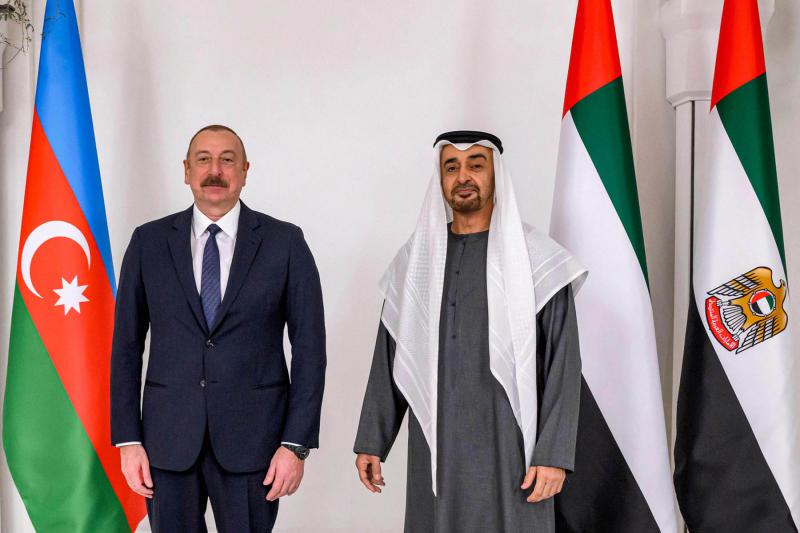
Instead of being swayed by the Iranian religious model or by sectarian confrontation, Arab Gulf countries chose the path of confronting Iran’s expansionism through development, tolerance and openness.
A few years ago I received an invitation to attend an evening at the British parliament on investment prospects in Azerbaijan.
Particular attention was paid by the Azerbaijani organisers to Arab media as they extended invitations to representatives of the Arab press in the diaspora, in addition to British politicians, investors and journalists.
I must admit that the evening was a defining moment for me and for others. For many years, the international community, including the Arab world, has dealt with the former Soviet republics as one similar group of countries. Western media’s neglect of these republics and the lack of Arab political and media attention to them, helped create a static image of this strip of republics extending from China to the Caucasus.
The first shock to me during that event came from the quality of Azeri representation. Leyla Aliyeva, daughter of President Ilham Aliyev, led the succession of remarks in the evening, speaking eloquently about her country and the advantages it offered investors. Mrs Aliyeva was not only a beautiful young lady. She was also remarkably elegant. My surprise was further heightened by learning that she is married to a famous singer, not a general or a senior intelligence officer. Such facts make one reconsider one’s perception of Azerbaijan. The country is classified as an Islamic republic and a neighbour to Iran, the leading extremist nation in this modern era. I remembered from my years at university how my Iranian Azeri colleagues were very different from other Iranians, be they Persians, Arabs, Baluchis or Kurds. They were different both in their appearance and way of life. Their being Iranian did not preclude them from being more open-minded than others. But the young people from the Republic of Azerbaijan were so exceptionally different that their outlook on life whet one’s appetite, after the evening for more information about the world of Azerbaijan.
Although the Azeris are Muslim (75 percent Shia and 20 percent Sunni), Azerbaijan does not look at itself from a religious perspective, and observers consider it to be the most secular of Muslim countries. The Soviet influence was significant in shaping the relationship of Azeris with religion. Perhaps their most important consideration is that they are of Turkish stock. This makes them closer to Turkey than to Iran, which shares many sectarian traits with them. During the recent wars of Nagorno-Karabakh and the attempt of the Armenian minority in the region to secede from Azerbaijan, Turkish military support was decisive in the Azeri victory, while the Iranians were closer to the Armenians.
This makes Azerbaijan stand out. The country, which is rich in oil, gas and many other natural resources, is the antidote to the Iranian sectarian project. Perhaps the Azeris can learn from members of the Azeri-Iranian minority what it is like to live in a religious state permeated by a Persian nationalist sense, even if most Azeris belong to the Shia sect. The victory of the Azeris over the separatists also sent a strong message to Iran. The essence of this is that on Iran’s northern borders there is a country which is proud of its Turkish nationalist streak and is attached to its distinct form of secularism that touches on the smallest details of the lives of its people. It is a country that is by no means drawn to the Iranian orbit.
A profound and unprecedented change is taking place in the Middle East. Since the defeat of Iraq in the war to liberate Kuwait in 1991, the US invasion and the fall of the Saddam Hussein regime in 2003, Iran has been able to build its own world based on a national-religious-sectarian project. There were various appellations used to describe this world, starting with the Shia Crescent. It all meant the establishment of a world largely controlled by Iran. It is a world that has evolved into the form of a geographical continuum linking Iran to the Mediterranean Sea through Iraq, Syria, Lebanon and Gaza, access to the Gulf and increased encroachment to the Red Sea and the Gulf of Aden. This geographical continuity is a characteristic of ancient empires. But in the case of Iran, this old legacy comes with a modern feature which allows various loyal militias based in several countries to practice effective control of power. Their formal appearance of independence is coupled with a nearly total allegiance to Tehran.
Considering the diverse sources of power in these countries, including manpower, oil and gas resources, and their geographic spread, one realises that the Iranian sectarian empire is at its apex. What enhances Iran’s presence and influence is the US reluctance to respond to its actions even in cases of aggression where it is directly involved. By letting the drone and cruise missile attacks on Saudi oil installations go unpunished, the world is today faced with attacks in the Red Sea launched under the pretext of the war in Gaza.
In their expansionist designs, the Iranians are trying to encroach on countries that stand as political and economic fortresses preventing the establishment of their project. Perhaps the Emirati model in the Gulf is one particularly important example of steadfastness. Instead of being swayed by the Iranian religious model or by sectarian confrontation, Arab Gulf countries chose the path of confronting Iran’s expansionism through development, tolerance and openness. This is what we now see happening with Saudi openness, or with Oman’s ironically following in the footsteps of the Emirati model while preserving the country’s specificities as well as its legacy of political proximity to Iran.
Confronting Iranian expansionism requires more than one means, some consisting of offering clear counter-models, and others going the way of geographical containment. When the Pakistanis saw that Iran driven by hubris launched strikes deep into Pakistan, they immediately responded with counterattacks, which made Iran rush to seek appeasement with Islamabad. The Gulf countries responded differently as they tried to present a counter-model based on prosperity and development. They steered away from the past modes ideologically-based confrontation of Wahhabism versus Shia proselytising. Geographical containment is a prominent and tangible course of action in the case of Azerbaijan. This country is wealthy and bears sectarian similarities to Iran, but uses secularism and Turkish ethnic sentiment to confront Iran. This is somehow similar to the Iraqi model of the 1980s, minus its foolhardiness.
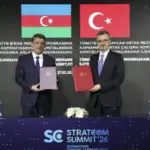
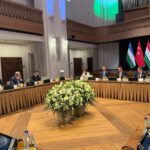
Containing Iran does not necessarily mean waging war against it nor confronting its local proxies head-on. The Emirati-Azerbaijani relationship model is quite a pertinent example. The two countries keep close ties of coordination in many regards. Within a year, their leaders, Sheikh Mohammed bin Zayed Al Nahyan and President Ilham Aliyev, met three times, twice in the UAE and once in Azerbaijan. During Sheikh Mohammed bin Zayed’s recent visit to Baku, several joint memorandums of understanding were signed emphasising strategic and economic coordination and commitment to work together to ensure peace in the region.
The soft crescent of peace that is forming in front of the Iranian expansionist project is both necessary and important.
These are countries that are confident in the strength of their domestic fronts, even when they realise the danger of what Iran is doing.
Rapprochement between these countries is necessary, and pre-emptive action and joint coordination between them at various levels compels Tehran to think twice before trying to repeat the dubiously “successful” experiences which allowed it to dominate other countries and lead them to ruin. Azerbaijan is on the northeastern edge of this crescent.
Dr Haitham El-Zobaidi is the executive editor of Al Arab Publishing Group.