For instance, a number of the post-Soviet states, such as Georgia, Ukraine, and Moldova that have lost part of their land due to ethno-political and territorial conflicts since their independence and are still unable to secure territorial integrity and sovereignty. These conflicts, which arose as a consequence of the dissolution of the Soviet Union in the late 1980s, have been the primary security, political, and social difficulty facing the above-mentioned states for more than three decades.
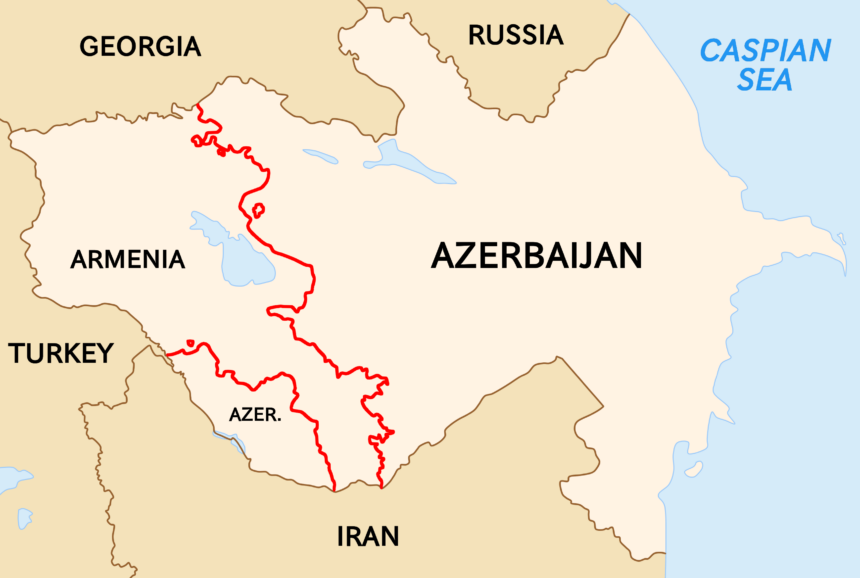
After restoring its independence in 1991, Azerbaijan, as other post-Soviet countries, experienced years of Armenian occupation. To specify further, in the early 1990s, the Armenian forces occupied around 20 percent of the internationally recognized Azerbaijani lands and more than 700,000 people were displaced from their homeland. The occupation of former Nagorno-Karabakh region and seven surrounding districts by Armenia has posed serious security risks, as well as great political, economic and social burden for to Azerbaijan.
Furthermore, the occupation of Azerbaijani lands by the Armenian Armed Forces was clearly confirmed as a fact by four resolutions (822, 853, 874, 884) adopted by the UN Security Council in 1993. Despite these resolutions and other international documents, Armenia continued to keep the territories of Azerbaijan under occupation almost for thirty years.
Finally, in 2020, Azerbaijan turned to military force to liberate the majority of its occupied territories during the Second Karabakh War. Subsequently, as a result of the counter-terrorism operation implemented on September 19-20, 2023, the Azerbaijani Army put an end to the existence of separatist regime, which exercised power over Karabakh. Dismantling of the separatist regime and the illegal Armenian armed groups allowed Azerbaijan to gain full sovereignty over its entire territories.
In other words, Azerbaijan is one of the few countries in the world which could successfully end separatism and the first and yet only one in the post-Soviet space that restored its territorial integrity. This is, without doubt, a significant historical success, particularly taking its complex geopolitical location into account.
To be precise, Azerbaijan’s historical success is primarily due to the well-thought and continuous foreign and defense policies pursued during the past three decades. It is worth noting that Azerbaijan learned from the massive defeat it suffered in the First Karabakh War and was able to build a regular, highly combat-capable army equipped with modern weapons. This was the Army that demonstrated its great fighting capacity during the Second Karabakh War in 2020, as well as military operations that lasted for 23 hours on September 19-20, 2023. This was once again proved while Azerbaijani armed forces managed to break through the seemingly impenetrable defense line built by Armenia’s Armed Forces and showed readiness to conduct their combat tasks at a high level. It is not a coincidence that many international experts have already highly valued the tactical and strategic victories of the Azerbaijani army equipped with modern weapons during the Second Karabakh War.
Moreover, I would like to point out to the fact that, in the early 2000s, Azerbaijan has managed to effectively utilise its expanding economic power and substantial revenues from the sale of energy resources to rebuild its army and purchase new advanced weapons. For instance, in the years 2009-2018, the country’s military expenditures were 24 billion US dollars, whereas Armenia’s military expenditures were 6 times less, amounting for 4 billion US dollars. However, according to the report issued by the Stockholm International Peace Research Institute (SIPRI), Armenia allocated a higher portion of its state budget to the military than Azerbaijan did during the same period.
In our opinion, it is appropriate to emphasize Türkiye’s role in expanding the military potential of Azerbaijan. Military cooperation between the two strategic allied countries has spanned several fields. Azerbaijan-Türkiye military relations involve personnel training, defense industry cooperation and other areas. In recent years, the adaptation process of the Azerbaijani army to the Turkish model is underway, which is critical for Azerbaijan in terms of security.
As previously stated, Azerbaijani foreign policy strategy in the last 30 years played a critical role in attaining the territorial integrity of the country. We might refer to this foreign policy strategy as multi-vector, balanced, and risk minimization (strategic hedging). Thus, Heydar Aliyev’s foreign policy strategy since 1993, based on preserving the country’s national interests and security while avoiding conflict with any power centres has been properly continued by his successor Ilham Aliyev.
In general, I would like to emphasize the following factors as the foundation of a well-reasoned foreign policy: the country’s geopolitical position, geographical location, territorial capacity, population, economic and military potential, history and, of course, ever-changing international situation. Given all these factors, the foreign policy undertaken might be deemed reasonable or meticulously planned. Azerbaijan has formulated its foreign policy with these factors in mind and has been implementing that policy for the past three decades. So, the strategic hedging pursued by Azerbaijan entails abandoning unilateral policies and minimizing potential risks linked with regional powers by avoiding confrontation.
Overall, based on the results of the Second Karabakh War and subsequent developments, we can claim that Azerbaijan has yielded the most significant outcomes of its foreign policy pursued since 1993. Frankly speaking, Azerbaijan’s relations with regional and global powers have a considerable role in achieving this defense and foreign policy objective. That helped Azerbaijan to mitigate certain negative factors and external intrusions during the military operations.
Thus, in the case of Azerbaijan it has been once again demonstrated that how it is important to stick to the foreign policy, that is far from adventurism and taking risks, whereas it contains rationalism and pragmatism. I do believe that this policy not only serves the fundamental national interests of Azerbaijan at the regional and global levels, but also contributes to the formation of sustainable peace, security, and cooperative relations in the South Caucasus and beyond.
In brief, when reviewing the global practice, we can obviously see that there are few examples of states that have successfully and effectively executed this type of foreign policy like in Azerbaijani case and yielded significant results in the current system of international relations.