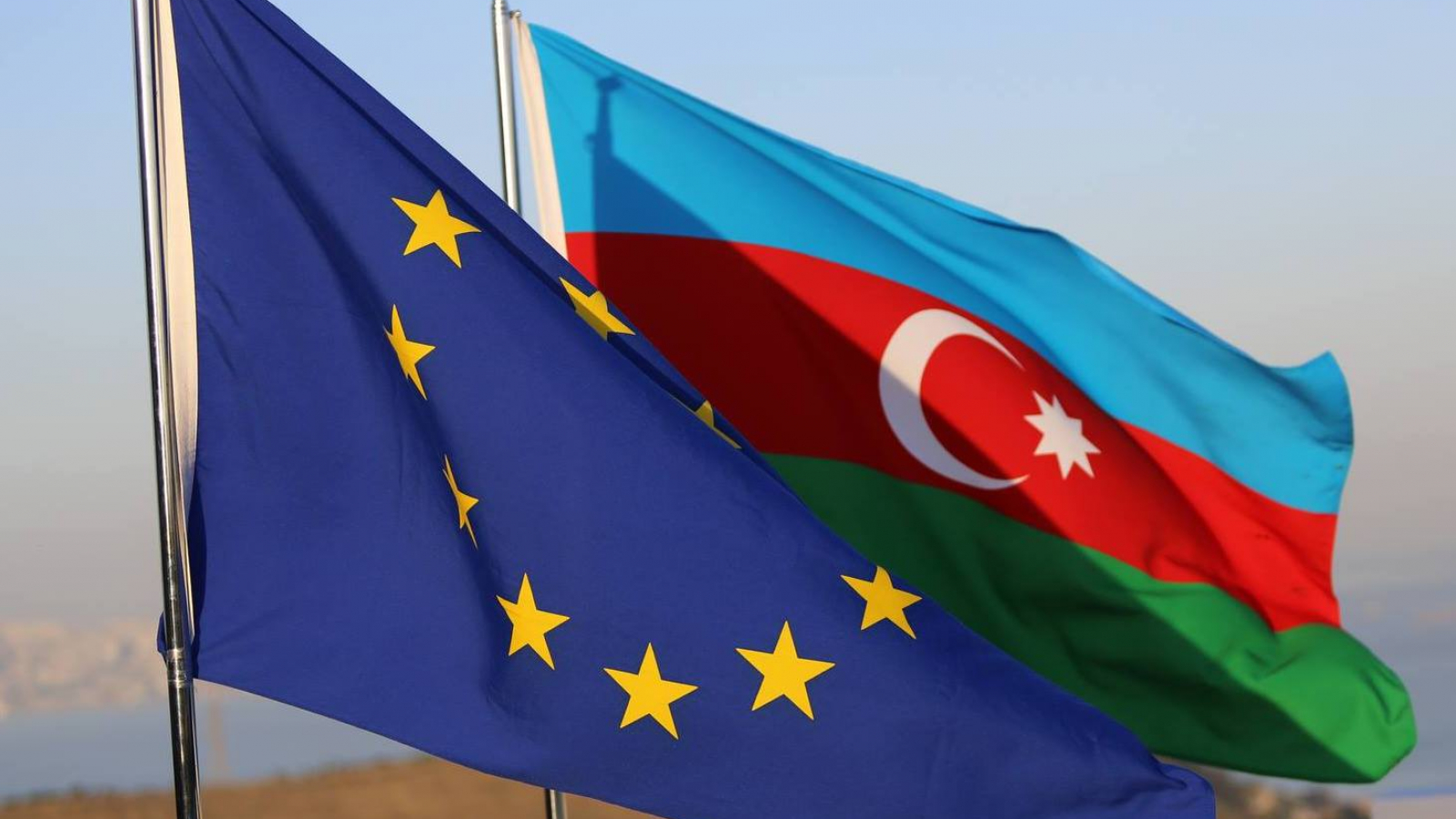
According to the official EP statement, “the European Parliament will not observe this electoral process and consequently will neither comment on the process nor on the results that will be announced afterwards. No individual Member of the European Parliament has been authorized to observe or comment on this electoral process on its behalf.” There is, sort of, an official explanation. The Ministry of Foreign Affairs of Azerbaijan did not invite the European Parliament. But such invitation, or “non-invitation”, is preceded by a confidential exchange of opinions, and an official invitation is sent after its results. And in this case, there is no doubt that it was the EP representatives who refused to come.
It would be curious to examine the “anatomy” of this refusal. First of all, recall that Azerbaijan is outside the area of responsibility of the European Parliament. Our country is not a member of the European Union, has not requested the status of a candidate and does not intend to wait in the “European reception room” for officials who think they are “big bosses” to condescend to it. This alone is a reason to ask whether the European Parliament should send to Baku its “observation mission”, which clearly assumes the role of a kind of “audit and evaluation commission”. Especially now, when Azerbaijan’s relations with the European Parliament are completely ruined thanks to MEPs. MEPs were simply unable to stomach Azerbaijan’s victory in Karabakh. They cheered Pashinyan and fervently demanded sanctions against Azerbaijan. The question as to what extent this initiative was “paid for” by Russia’s Gazprom was never voiced in the corridors of the European Parliament. Yet they were happy to voice the most ridiculous fabrications against Azerbaijan.
This hysteria began long before Azerbaijan’s localized antiterrorism raids in Karabakh and the liquidation of the junta. Our country has not forgotten—and will not forget!—how the President of the European Parliament Roberta Metsola called on the Speaker of the Milli Majlis Sahiba Gafurova to forbid MP Tural Ganjaliyev to comment on corruption in the European Parliament. It happened in the midst of the scandal around EP Vice-Speaker Eva Kaili, with all the racy details like attempts to flee from the police with a bag full of cash, but Metsola in her letter demanded that the MP be banned from commenting on corruption in the European Parliament. By what right? And how exactly were these scandalous demands of hers supposed to be enforced in Azerbaijan—by introducing censorship in the media and social networks? None of this bothered Metsola. But MEPs were very much bothered by Ganjaliyev’s statements that the gold stolen in Karabakh was flowing into their pockets.
Obviously, with this background, the European Parliament was in a difficult position when it came to the issue of sending a mission to observe the elections in Azerbaijan. They realize that the elections have been organized at a high level, that there is campaigning, both paid and free, live debates, web cameras at polling stations, registration of observers and active work of the media. And in this situation, MEPs cannot just come and say that “the elections are bad”. To do this, they will have to present at least some evidence—and not embarrass themselves, as they already did when they tried to twist the Election Code of Azerbaijan. And the European Parliament made a “smart” decision, as it seems to its top brass, not to observe the elections at all. Moreover, the leadership of the European Parliament intends to deprive individual MEPs of the right to express their assessments, emphasizing that “no individual member of the European Parliament is authorized to observe or comment on this electoral process on its behalf”. The campaign launched back in 2013-2014 to demonize individual EP deputies who dared to come to Azerbaijan and not to voice fakes here, but to make an honest and objective assessment of the presidential elections, gives plenty of food for thought.
We could stop here. And note that the translation of the EP decision is clear: “we cannot say that the elections are bad, and we do not want to acknowledge that they are good”. But there is one more, and perhaps the most important factor. These are the first elections to be held across the entire territory of Azerbaijan, including the previously occupied territories. They will cover Zangilan and Fizuli, Shusha and Jabrayil, Khankendi and Khojaly. This is fully in line with international law and the recognized borders of Azerbaijan. But it seems that the MEPs’ trip to these very elections and their de facto recognition makes the apologists of the “fight for the rights of Armenians” too nervous. More precisely, the recipients of money from the Armenian lobby and those who push their political orders through this lobby. The impact of the presence or absence of the European Parliament mission on the restoration of Azerbaijan’s territorial integrity is nil, much less on the legitimacy of the elections, but their desire to curry favor with their sponsors is hard to miss.
Technically, of course, the European Parliament has the right to refuse monitoring. And this is not the case when it is necessary to issue notes and statements. But given all the pro-Armenian papers that its members have produced in the fall of 2023, the refusal to observe the first elections across the entire territory of Azerbaijan is perceived in a different light. There is such a thing as political responsibility.
A. Shakur
Translated from Minval.az