The Karabakh conflict is slowly, although yet not very surely, in many ways problematically and painfully, moving into the past, where the great epic of struggle, suffering, patience, courage and heroism of the Azerbaijani people, who proved their right not only to their land, to an independent and powerful state, but also to respect for themselves, their culture, history, traditions and spiritual values, will be written in golden letters.
The historic moment of the Karabakh conflict becoming a thing of the past was accurately signaled by President Ilham Aliyev, who publicly declared its end and the need for a peace treaty with Armenia.
How do we rebuild ourselves?
But peace, unlike war, has its own, often diametrically opposed laws. If war requires mobilization of military resources, peace needs the opposite process; if war means an increased level of anxiety, inevitable human and material losses, constant moral and psychological tension, peace is always associated with trust, optimism, positive emotions, creation of cultural and aesthetic values and population growth.
There are many such dichotomies, not necessarily mutually exclusive in terms of energy, but invariably different in terms of modality. For example, hardly anyone would deny that peace also requires mobilization. Not of military and economic resources of “hard power”, but more of diplomatic and cultural resources of “soft power”.
In short, based on this logic, the Azerbaijani people is in the stage of transition to a new modality, to a new spiritual quality. The question is, are we ready for it?
I think not quite yet.
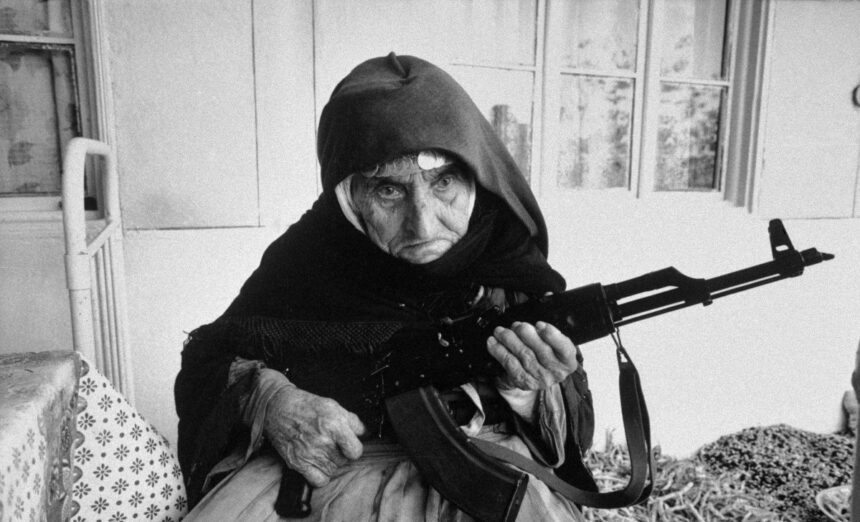
Indeed, after thirty years of occupation, after the Khojaly genocide, after tens of thousands killed and one million refugees and IDPs, how can we change our discourse, our worldview, our perception of Armenia and all those who killed, raped, robbed!?
It is difficult, sometimes unbearable, and as a result, today we still talk about peace in terms of war, in the language of wartime, from which we have not yet fully recovered: the wounds are too fresh and the pain of our losses has not yet subsided.
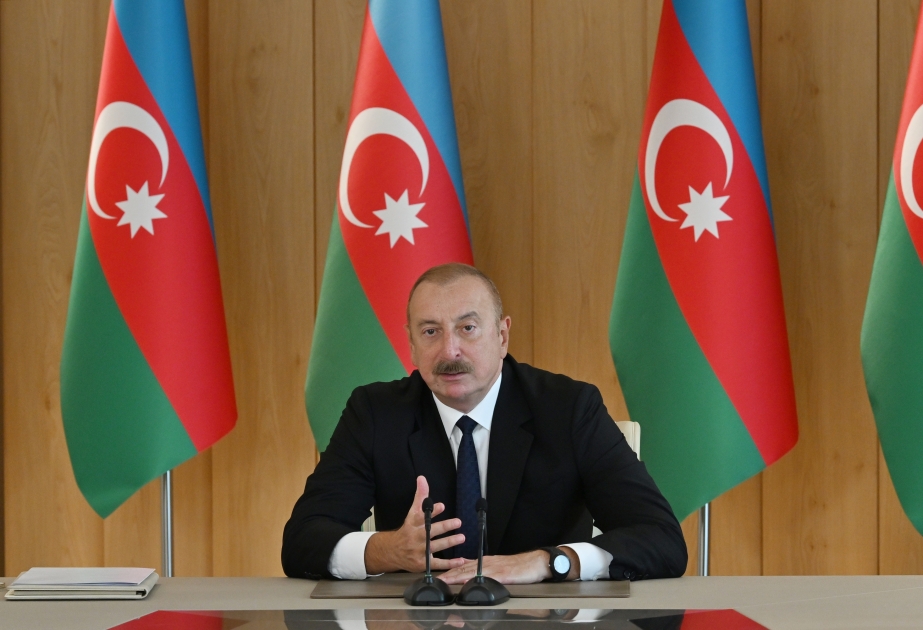
Even the head of state, speaking to journalists, once said that it is “very difficult for him to talk about it”. But Ilham Aliyev is a politician who is finely attuned to the people’s hopes, aspirations and dreams, he is always honest and consistent in his words and actions, which are driven by deep pragmatic and practical necessity, no matter how hard and dangerous they may be. The Patriotic War and the counterterrorism operation are brilliant evidence of this. We must admit that few of us believed in success on this scale, but now that the President of Azerbaijan is talking about peace, we should all listen to him carefully.
Another question is how do we rebuild ourselves? Where to start and how to live if a powerful mobilization factor like the liberation of Karabakh is in the past, effectively having fulfilled its historical mission?
Mission accomplished
The people of Azerbaijan, who over almost three decades learned to fully identify with the principle of “All in the name of victory, all in the name of Karabakh”, has made its dream come true by gaining a historic victory on the battlefield and returning Karabakh. The feeling of fulfilled duty and national pride overflows our hearts, gives us confidence and, quite frankly, even relaxes us.
But today’s world is very dynamic, it is changing as fast as it is developing. And keeping up with the global processes is a critical and very difficult task that requires maintaining a sprint pace on a marathon distance.
It is essential to understand that this is the imperative of the time. For not only stopping, but even slowing down the speed of civilizational development of a state can result in it vanishing from the sight of the world community and even from the political map of the world.
Our neighbor Armenia is a vivid example of this.
It was this country that, jumping at the opportunity after the collapse of the USSR, occupied a part of Azerbaijan and would not let Karabakh out of its hands for 30 years, unable either to develop the occupied territories or to give up its bloody spoils. The result was its defeat in the 44-day war, catastrophic capitulation and a frantic search for a way out of the existential deadlock in which the country had driven itself by stalling its progress in the dynamically developing region for 30 years.
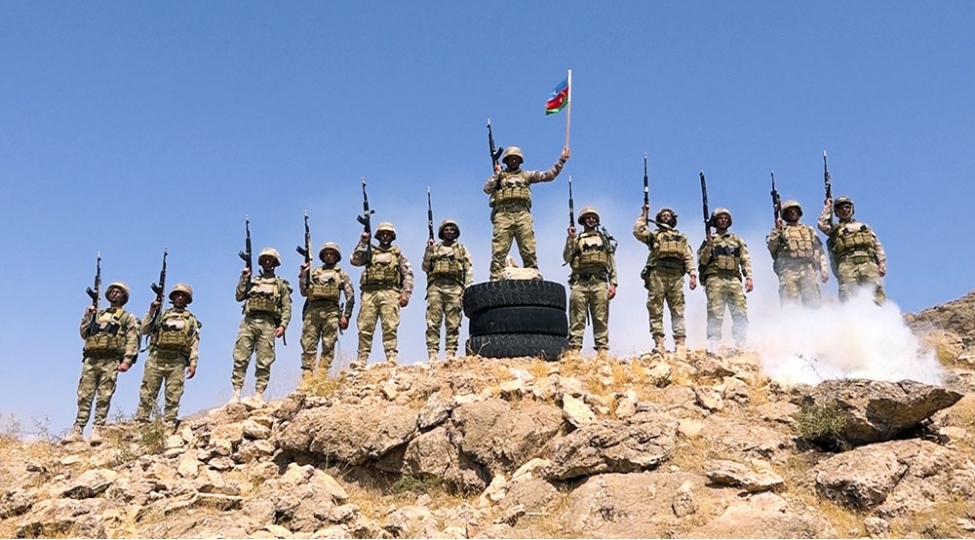
That is, for the very 30 years during which Azerbaijan achieved phenomenal results thanks to its dynamic development fueled by the national dream of liberating Karabakh.
Yes, the tragedy that struck Azerbaijan destroyed our towns and villages, claimed the lives of tens of thousands of people, made more than a million people homeless… But it also raised us to be heroes, ready to defend our homeland and, if necessary, to give our lives for it, ready not only to hoist the banner over Karabakh, but also to raise it among those who were so unjust and indifferent to our suffering and losses. In other words, the Azerbaijani people did not withdraw into themselves in their pain, but sublimated it into a creative potential for development and progress, ensuring the dynamic growth of their country, making it competitive, influential and respected in the world.
Even after the complete de-occupation of Karabakh, the dream of Karabakh remained the main motivating force behind the truly rapid revival of this region of the Republic of Azerbaijan. During the three post-war years, using enormous financial, scientific, technical and human resources in the process of restoration of the liberated territories, towns, villages, international airports, modern roads, power stations, schools, mosques, churches were rebuilt, necessary infrastructure was created, a new Karabakh University was opened, thousands of various events, conferences, festivals, sports competitions were held…
The scope of the work completed and ongoing is astounding, turning Karabakh into a pearl of our country and one of the centers of world tourism.
And the desire not only to rebuild Karabakh, but also to return its original inhabitants to this region of the republic, finds its place in the State Program for the return of internally displaced persons to their homes, adopted in 2022, unprecedented in scope and ambition. These plans are already becoming a reality and, before long, will allow hundreds of thousands of our citizens to permanently return to their homes to live in peace and prosperity.
That is why it is so difficult for us to get used to the reality and understand that the historical mission of liberation and restoration of Karabakh, which for many years charged the people of Azerbaijan with its energetic potential, has been accomplished. Not only that, even downplaying the relevance of this motivating factor causes a sense of discomfort and certain fear in society. The danger of an ideological vacuum under the question “What comes next?” is beginning to weigh on people, causing anxiety for the future of the country. And the farther away the Karabakh war fades into history, the louder this question will sound, shaping the acute need and public demand for a new national idea, which should secure further progressive movement of Azerbaijani society.
What comes next
Being clearly aware of this problem, President Ilham Aliyev was the first to voice it. Few expected this level of frankness from the head of state, but the ability to anticipate events is very much his style. Knowing that it would be a mistake to continue exploiting the subject of victory of the Azerbaijani people in the 44-day war as a national idea, the leader of the nation and head of state was the first to tell the people about it. In the President’s opinion, if we continue to fetishize the victory in the Karabakh war, the people will eventually become tired and divided, which will play into the hands of those who continue to hatch various plans against us. In a recent interview, Ilham Aliyev reiterated this perspective, emphasizing that, unlike some countries, Azerbaijan should not rest on the laurels of victory, but work together to create a new national idea.
That is, society is once again faced with a fundamental question: what exactly should be the next higher purpose that will stimulate the progressive movement of our society?
Before answering this question, we must understand how exactly Karabakh and its liberation became the national idea.
Back then, in the early 1990s, amid global injustice towards us and imitation of peacekeeping efforts by the world’s leading powers, all of us, united around the national leader Heydar Aliyev, were able to save the country from enslavement and de facto colonization. But even the power and magnitude of Heydar Aliyev’s personality could not eliminate the threat of the country’s dismemberment completely. Political wisdom, experience and influence of the national leader was only enough to stop this process, disastrous for the country which Heydar Aliyev managed to literally snatch from those who were already rubbing their hands in anticipation of victory over Azerbaijan.
Ilham Aliyev took advantage of this life-saving respite and, in fact, a unique historical chance: not only did he continue his father’s work, holding back Armenia, which had won the First Karabakh War, and the international forces behind it, but for the FIRST time he moved from a defensive policy to an offensive strategy, responding with dignity to provocations both on the military fronts and in strengthening the country’s statehood and its international positions.
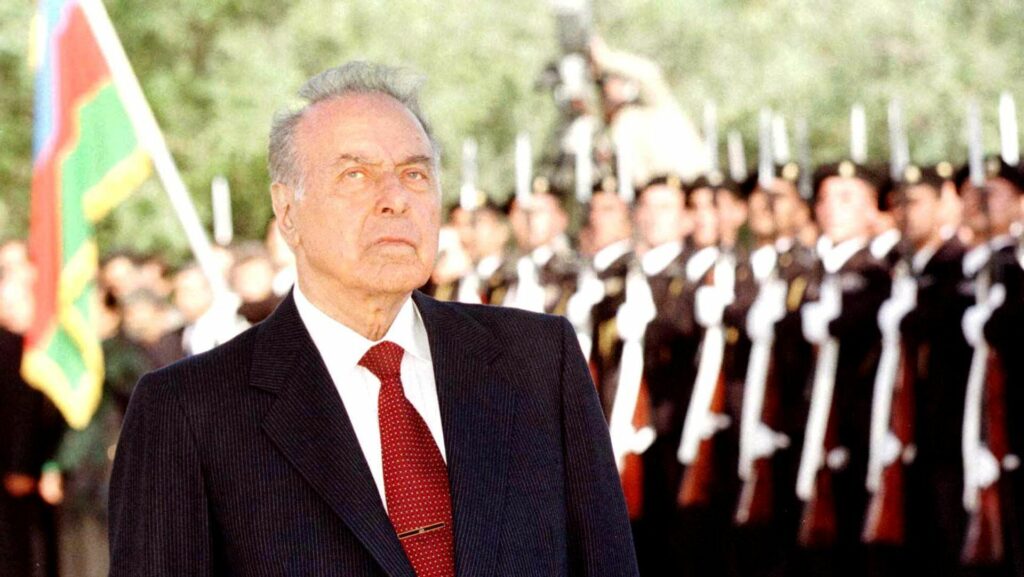
Being in the classic state of “neither war nor peace”, Ilham Aliyev consistently built a peaceful life, developing and expanding not only the economy, international relations, stability of government institutions, without which a modern civil society is impossible, but also a powerful army that meets all international standards. The head of state declared war against the defeatist policy, demonstrating to the world not only Azerbaijan’s economic and military-industrial potential, but also the ability of the Azerbaijani people to unite in the name of achieving national goals.
I know of no other example of a state or a nation that, with 20 percent of the territories occupied by the enemy and a million refugees or internally displaced persons, developed and outpaced not only the occupying country but also many other states living in peace and prosperity.
I know of no other state or nation capable of sublimating the pain of loss and humiliation into creativity, a nation that, while mourning its losses in its heart, would laugh in the face of those who had committed crimes against it.
It was a conscious choice of Azerbaijanis not to let pain and suffering triumph over the desire for victory, not to complain and not to ask the powers that be to accept the Azerbaijani people as inferior, aggrieved or oppressed, but to become equal, worthy and necessary for them.
It was the choice of a national idea based not on weakness and a yearning for compassion, but on strength.
Not on submission, but on independence.
Not on meek acceptance of a foreign mindset, but on the development of our own culture, our own way of life and our own worldview.
As a result, all these specifics, perceptions and expectations were reflected and embodied in the national idea of liberation of Karabakh, which led our people to victory.
Peace after war. But how?
And, as if sensing a fundamental shift in Azerbaijan’s policy, “Armenia+”, as Ilham Aliyev dubbed the neighboring country, began to press in all directions. Paradoxically, while we were at war, an unjust, essentially defeatist peace was being forced upon us, which we could not accept. But as soon as we won, liberated our territories from occupation, achieved justice and peace in the long-suffering lands of Azerbaijan, they began to impose war on us, provoke us to aggressive actions and do their utmost to bring chaos and uncertainty back to our lands. Provocations became more frequent, pressure on international platforms increased, and all this served the sole purpose of making us give up what we had accomplished and recognize the separatist regime in one form or another.
But it was too late. It was already impossible to stop the Azerbaijani people, its army and the Supreme Commander-in-Chief, who were motivated by the sacred national idea of liberating Karabakh.
And now, when the victory in the 44-day Karabakh war creates in the inflamed imagination of our opponents the image of Azerbaijan that will not stop there and will continue to live with expansionist ideas of seizing other people’s territories, President Ilham Aliyev begins to build peace and calls on the Azerbaijani people to work together to find a new national idea of sustainable peaceful development of the region.
Tellingly, Aliyev is doing this at the peak of his military-political, economic and foreign policy accomplishments. The President of Azerbaijan outplayed his enemies and political opponents when he rejected the defeatist peace imposed on us, beat them on the battlefield and once again prevailed over them when, after the victory, he refused to continue the war and offered peace and good-neighborliness in the South Caucasus
I am confident that global structural and fundamental reforms of public administration await Azerbaijan. We are talking about reforms that come from the top and cut across all levels of the socio-political structure of the country, reforms that will create a kind of perpetuum mobile, a spiritual source of constant forward motion, in which the movement itself will become a source of the country’s dynamic growth.
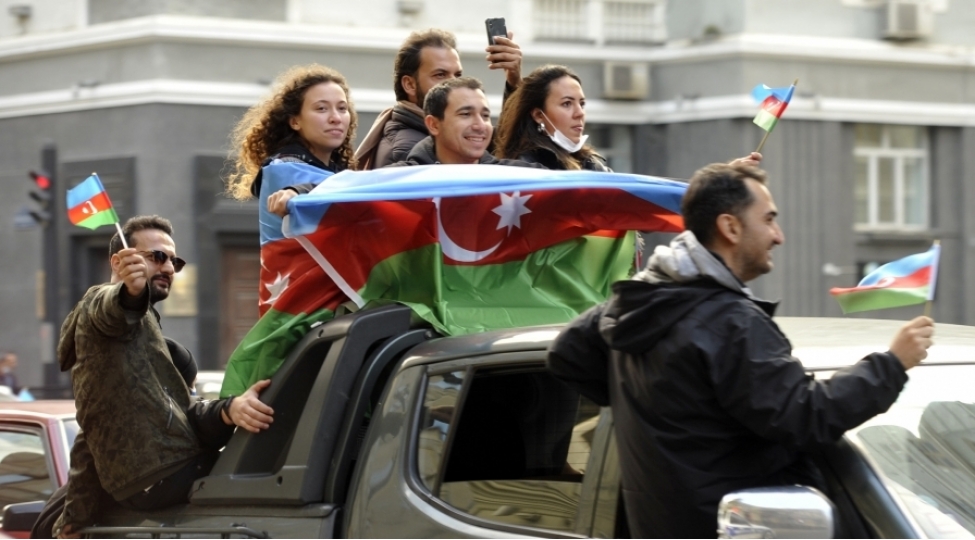
Preserving the mainstays our people have been building through colossal efforts over the past 30 years, we can and must fundamentally, by reforming the superstructural elements of society, create a set of new social, legal, political relations and forms of social consciousness. Yes, we must create, because everything that existed before was created, built, produced and consumed during the war and in the name of victory.
Considering that Azerbaijan has never had a real peace, these are not just words. Since independence, we have invariably been in a state of either “hot” or relatively “cold” war. Add to this the civil war of the early 1990s, as well as the war for power that took place during the same years, and you will see that throughout the 30 years of our independence we have done nothing but fight. Is it any wonder that during these hardest decades the notions of justice, objective approach to evaluation of events, international regulations and standards of behavior were completely devalued and discredited in the minds of Azerbaijanis?
During these years, people’s personal priorities changed and, in accordance with the wartime conditions, stable patterns of perception and analysis of the surrounding reality were formed, which extended not only to socio-political, intergroup and interpersonal relations, but also to the awareness of the role and place of the Republic of Azerbaijan in the system of international relations.
Thus, Ilham Aliyev’s call for peace is not only a new ideological platform, it is also a program for the shaping of new personal qualities, worthy citizens of a strong, free, developed, multi-confessional, internationally respected democratic Republic of Azerbaijan that upholds the supremacy of law.
Samad Seyidov, Chairman of the Milli Majlis Committee for International Affairs
Translated from haqqin.az