The British Empire alone underwent a radical transformation almost 5 centuries after Cromwell ended the previous regimes; although it retained the monarchical system, the kingdom made the titular peoples of the islands—Scots, Irish, Welsh, and eventually the entire kingdom—holders of high freedoms and privileges.
The unprecedented contribution of Napoleonic France to the state phenomenon of republicanism that it gave to the world is undeniable. It was not only about its exceptional role in the division of power, or, to use the now fashionable term, the formation of modern democracies that are subject to the function of “checks and balances” to prevent concentration of power in one hand, but also multi-party governments that in reality often lead to political crises. With the struggles of the Girondists, Jacobins, Royalists and other forces that eventually led to the execution of the king, revolutionary thinkers and political philosophers finally agreed that the Republican structure was a reliable guarantee of the territorial and political integrity of the state. All saw that the machinery of government born out of the French guillotine at the end of the 18th century, where a system of international law and relations had not yet developed and where military might reigned supreme, could withstand the test of time without breaking down or collapsing from crisis to crisis.
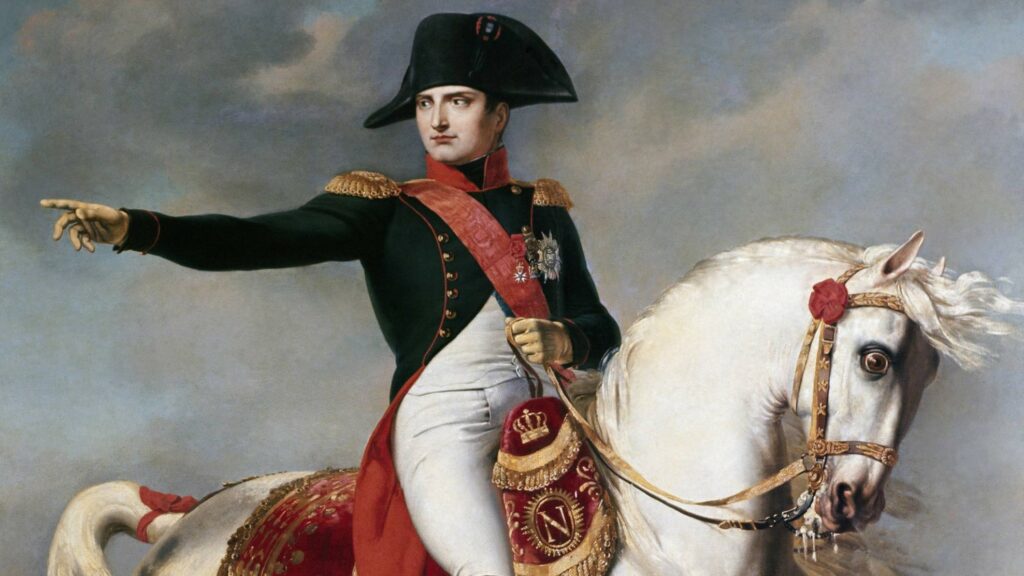
Yes, the Republic established in 1792 as a result of shifting thrones, terror and Thermidorian coups, various directorates and administrations that vacillated between “monarchy and anarchy” was a historic event, its first constitution, administrative and territorial structure, legislature, judiciary, and ability to respond to regional and international conflicts contrasted positively with other governance structures. Although the local administration-commune to seize power by the people resembled ancient Greek democracies, the dominant role of central authorities was strong, but it was defeats in wars, international conflicts that forced the alternating emperors to finally adapt to the republic.
Seeking to carry into the White House the ideas that Montesquieu borrowed from Aristotle to transpose the ancient experience into the tumultuous Élysée Palace of modernity, the Jeffersons, the Franklins, though retaining a federal system, devoted one of the first lines of the U.S. Declaration of Independence to the establishment and affirmation of republican consciousness.
The continuity of power in France, which has changed five republics in the last 200 years, has been strong, each successive structure being as similar to the previous one as drops in the sea are alike. The republics that spread throughout Europe, America, Africa were diverse, varying according to the mental traditions, culture, standard of living of each nation and the economic-political situation in which they lived, but they all had one thing in common: viability.
Of course, the republics had different time intervals. The First Republic existed from 1792 to 1804. Undoubtedly, monarchies were established on the basis of the colonial system. The Second Republic lasted only 4 years, and for the next 70 years, pervaded a wide geography, from Africa to America, and to the far corners of Asia, and dominated the minds of all advanced nations. It is no coincidence that the Third Republic, which survived World War I and weathered the upheavals of the Entente, maintained its equilibrium in the face of the collapse of many empires in the early 20th century. But General Pétain’s collaborationism during World War II made it so that the return to the traditional line was only possible with Charles de Gaulle’s Resistance movement.
Every defeat, failure, or national disgrace pointed to the political nature of the French Republic and its will to exist; of course, at the time a young nation like America was on the rise, but the old institutions on every continent seemed stagnant. Pétain’s attempt to justify his betrayal by claiming that the Third French Republic was “rotten” from within, writing that “our defeat is the punishment for our moral failures,” bitter social tensions, pessimism and defeat of 103 cabinets and 15 former prime ministers that lasted an average of eight months, frightening and inconsistent diplomacy, and an indecisive and short-sighted military policy contributed to Germany’s victory in June 1940. Thus, the new Fourth Republic did not live long either, only 10 years. Since 1956 and up to now, with the adoption of a new Constitution, the modern Fifth Republic of France has been trying to regain its former glory and prestige on the world arena.
This historical summary is not the plot of Akhundov’s famous play featuring the destruction of Paris, as the wave of revolution spread not only to the East, but to all continents. All the new states that emerged from the collapse of the Russian Empire called themselves republics and demonstrated that they were inspired by the French Revolution. Of course, one of the reasons behind this was the central role of Paris in world politics. It was there that peace conferences issued passports to new states, recognizing their political identity.
With the collapse of the Russian and Ottoman empires and the final dissolution of the Transcaucasian Democratic Federative Republic, Armenians and Georgians entered the political map as republics along with the independent Azerbaijan Democratic Republic.
After khanates and governorates, abandoning the Iranian past and choosing the path followed by Europe could be regarded as a utopia of a handful of political idealists. However, the 23-month republic showed the ability and determination of Azerbaijanis to build a state despite all external and internal hardships. The heads of 5 successive governments could not prevent the loss of life and blood given to build a secular state in the Caucasus, plagued by conflicts in the old East and hostility handed down from generation to generation for centuries. The government, moved from Tbilisi to Ganja and then to Baku, under the leadership of Fatali Khan Khoyski and Nasib Bey Yusifbeyli, was able to produce the army, foreign policy, international representation of a state fighting wars on different fronts, and the linguistic, religious, educational, medical, fiscal and other solutions demanded by the nation. However, the fact that Britain kept in Azerbaijan only up to 5,000 of the 20,000-strong army that arrived in the Caucasus, and owned Caspian oil, indicated that the British generals who ruled the Republic for 7 months in 1919 were more ruthless than the Russian tsars. Of course, it would be inappropriate to talk about Constitutions at that time, there was only a declaration of independence, but the 114,000 square kilometers of the country’s territory, the final decision of the parliament to end Armenians’ claims to Karabakh in exchange for giving Yerevan to Armenia as the capital, the almost two years of the Republic’s existence against the backdrop of the Treaties of Moscow and Kars is important political history, the main source of the later structures that replaced it.
The fact that the Second Azerbaijan, Soviet, Republic, which became part of the new empire formed when the Bolsheviks came to power, changed as a result of the repression of some of the former leaders, as well as the changes from land ownership rights to the principle of forming central and local governments, did not mean that the republic’s legacy was completely destroyed. On the contrary, the realization of the ideals for which Rasulzade and his supporters had unsuccessfully fought for many years made the previous statesmen living in exile hesitate. The Azerbaijan Soviet Socialist Republic not only managed to put an end to historical disputes with Armenia and Iran, but also formed most of the attributes and institutions of statehood, formed a large cadre in all areas, from the Armed Forces to foreign policy, and became an integral part of international culture. The main thing is that until 1918, the number of Azerbaijanis who joined secular education only since 1879 by the decree of Russian emperors, with the assistance of such bright personalities as Chernyayevsky, despite the Baku State University, founded in the first year of the democratic republic, did not exceed 400. But only 30 years would pass, and the number of schools opened in the whole Azerbaijan would exceed 1,000, the number of higher education institutions would be more than 20, and the number of technical vocational schools would be more than 100. What empire would let the number of Azerbaijani scientists reach 1,300 in 1955?! Marxists wrote that exploitative capitalism was digging its own grave. However, this is not how “invasion and slavery” works. Unfortunately, there is no objective legal-political assessment of the 70 years of the Soviet era in Azerbaijan, or there are mythologies created under the influence of biased, prejudiced foreign interest groups. Let us once again recall French communalism. Although the Bolsheviks, starting with the central revolutionary committees, spread fear around the world with their vast Chekist network, power on the ground belonged to the common people, people’s councils were the true form of self-government. Five-year plans and unprecedented courage of the Soviet people on the labor front transformed Azerbaijan from a backward remote Eastern province into a secular state with developed industry, education, healthcare and culture. The historical achievement of the Soviet Azerbaijanis was the creation of a society in which Muslims, shrouded in religious fanaticism, or the cloistered way of life typical of Afghan tribes and structures, were alien. Putting aside uniform ideological templates, no one can deny that the culture and literature created by Soviet people still exist as a world heritage.
Just 30 years later, the children of that generation, educated in the USSR, were leading the world’s largest scientific expeditions into outer space.
Compared to the formation of Azerbaijan’s national and Soviet image by Nariman Narimanov, Mirjafar Bagirov and Imam Mustafayev, the rise to power of Heydar Aliyev, raised by the empire and later brought into its leadership, was a full realization of the rights of an independent state reflected in the USSR Constitution. Doesn’t the modern European Union have a single budgetary, financial and foreign policy similar to the Soviet Union? The autonomous decisions of Orbán, Hungary’s independent and recalcitrant leader, are not tolerated and rigidly blocked by the economic and political administration in Brussels.
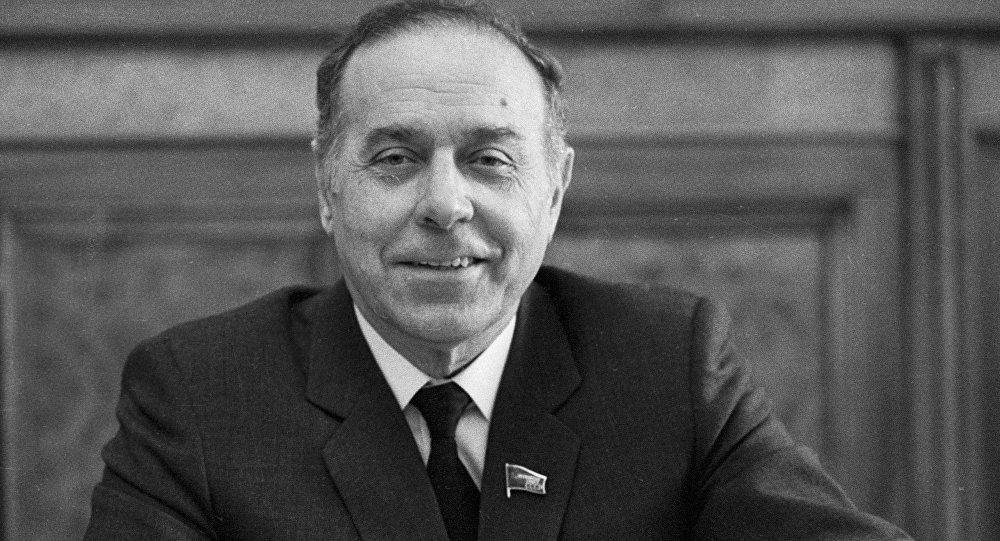
Heydar Aliyev, guided by all institutional decisions and powers held by the state, showed that no ideological framework could stand in the way of serving the people. Red challenge banners were the only guarantees of a strong economy and social infrastructure that prevented the country from completely collapsing in the chaos of 1987-1993. The Soviets, accused of creating an “International Nation”, should be ashamed to look at global movements that shatter the freedom of modern peoples and destroy nation-states when a structure that elevates labor to the level of religion, forms a guild of highly educated people, creates a ruling elite from the working class and peasants, is totally discarded, the historical chain is broken, and the link between generations is lost.
The reasons for the collapse of the Soviet Union are, of course, many, but, without going into details, the establishment of the new state proclaimed after the Second Republic, which collapsed on a wave of national-ethnic conflicts, could have been a kind of reconstruction of the previous one, but the revolutionaries failed to destroy its foundations and build new ones. A stable republic began to take shape in October 1991, after a return to the traditional core of the state, its foundations, built over 70 years, despite external trappings. Those who denied the legacy of the Bolsheviks only because of their political coloring devastated the state, leaving it without historical memory. For example, modern Ukraine or many Eastern European countries have been stripped of the immense wealth created by previous generations because of the denial of past political legacies. If only it ended with blowing up monuments.
Based on the term “successor of the republic” reflected in the Declaration of Independence of Azerbaijan of August 30, 1991, the statement of Armenians that they had found a legal basis for Karabakh’s independence on September 2 of the same year was a mine planted in the foundations of the third Azerbaijan Republic. The 1987 attack on the territorial integrity of a union republic of the still existing USSR under Gorbachev’s leadership was the beginning of the collapse. Although our national liberation was more tragic than that of other Soviet peoples, the salvation and construction of the third republic became a chronicle unparalleled in the world thanks to the salvational and then creating course of Heydar and Ilham Aliyev. As we know, no new national Constitution was adopted under Ayaz Mutalibov and Abulfaz Elchibey. But the third republic has gone a long way to build the state, transfer the new system of economic-political relations to governance, including the building of the army, allies, oil and military policy.
Ilham Aliyev’s rise to the Olympus of power in 2003 is an important milestone of the third republic. Ilham Aliyev, who stopped the destructive revolutionary waves, prevented foreign intervention, put forward a different formula of will and policy in the face of forces that weakened central states with the iron claw of democracy and human rights, dictating the list of governments from Strasbourg and Brussels, chose a third path that has never been taken in the East, which defeated the policy that subjected our country, as well as the geography in which we live, to the invasion of the neighboring and distant capitals for 3 centuries.
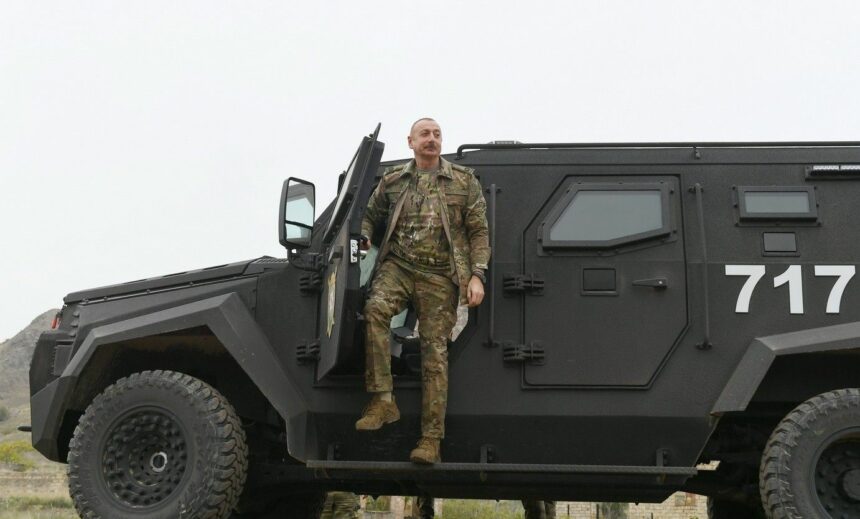
Thus, Azerbaijan’s war in 2020 is the biggest military-political decision it has made. The 45-day Patriotic War, which by its political nature was a popular vote, also meant that the Constitution of the Fourth Republic was written and adopted on the battlefield. It is not just about the integrity of the territorial and political structure of the state. After all, it is more difficult to change the course of history than to fight for 20 percent of the land.
Thus, Ilham Aliyev is the founding father and founder of the Fourth Republic. His moderate approach to various political titles and modest attitude to multimillion-dollar calls is certainly open to debate from the point of view of the interests of the state. At any rate, the military titles of Stalin, Chiang Kai-shek were also accepted by democratic countries across a vast expanse from China to America and met with no resistance. But the end of massacres, genocides caused by Armenian irredentism and endless claims, which have been the headache of the region and the world for centuries, is a real geopolitical, including religious, cultural and spiritual revolution. Those who reprint and study the decrees of Peter the Great must take a retrospective reading of the creation by the Russian emperor of a secure flank in the south, a Christian buffer zone among Muslims, as Aliyev ending the imperial policy. It is also an act of necessity to revitalize societies that lived by past centuries and edicts. Because the political history of a very small part of the peoples fighting for their land, like the Azerbaijanis, goes back centuries, there are global and regional hands over them, they are threatened by precepts, dogmas, codes left over from previous frameworks.
The geopolitical architecture of the Caucasus region is changing towards a just order for the first time in the last three centuries. The ongoing conflicts around Shusha, founded by Panah Ali Khan, and Karabakh in general are overcoming the politics of “divide and conquer” by the struggle of leader and nation and putting forward a new course of “unite and prosper”. So doesn’t the future architecture depend on the joint victory of all? As Peter the Great and subsequent tsars, secretaries general, presidents, the Shah system of Iran, politics after the religious revolution, the Ottoman and republican Turkey replaced one another, Azerbaijan has never been so whole, independent, strong and balanced in the times of khanates, provinces or the first, second and third republics. Global Armenianism itself is divided into several acrimonious poles, and some of them sympathize with Baku’s position. Armenians living in Russia apparently chose the course of hostility towards Yerevan.
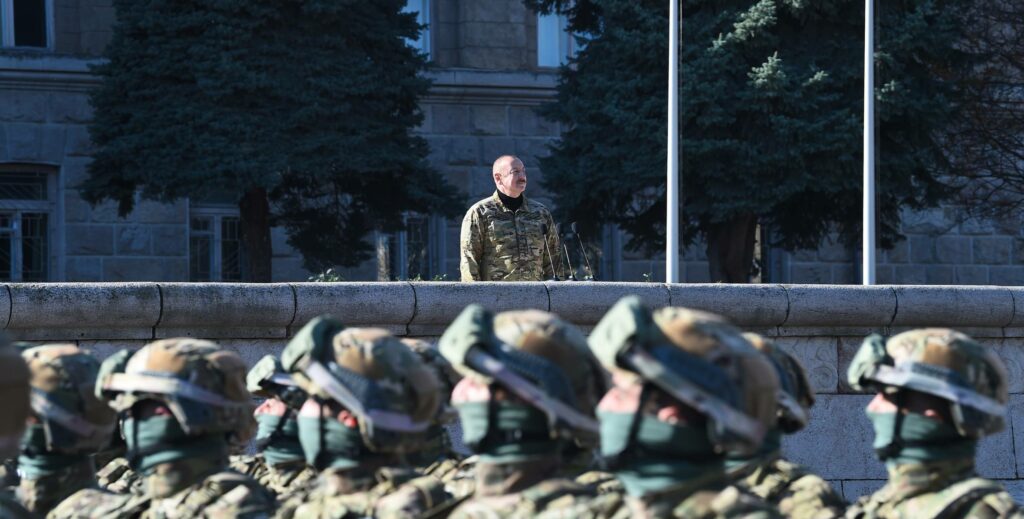
Yes, after 2020 Azerbaijan enters a new political calendar. The cycle of tragedy and loss is coming to an end. The President of Azerbaijan did not stop his historic mission at raising the flag on the “Day of Integrity” September 20 and October 15 in Khankendi on a national scale, he also opened unique opportunities for peace and security on a regional and international scale, creating a new, fourth republic. This is a great mission. The common leader of the Caucasus has the kind of influence and strategic vision that no other leader has had in recent centuries. Indeed, Azerbaijan’s victory is a model and an example of how to address territorial integrity issues in the post-Soviet and international space. Tirelessly changing historical orders and altering the course of policy for the sake of a national goal over many decades is an unusual phenomenon.
Aliyev’s geopolitical revolution changes the structure of regional relations with the fourth republic, opens the paths that the ancestors followed, and returns the world, on the one hand, to order, coexistence, tranquility, spreading the peace born from the East, with its characteristic adherence to the philosophy of creation, to all continents. Can’t the violence in Gaza be resolved by the Karabakh example? Return is fair for all peoples, even if it is our new national ideology. If global Armenianism closes the window of opportunity that has opened, it is doomed to become an “emigration nation”.
The “Sovereignty Parade” of 2023 will manifest itself in the appearance of various architectural structures standing in the center of Azerbaijan. In this respect, the Fourth Republic is an event that paved the way for the political, economic and military arrival of Türkiye in our region after the Ottoman Empire. Problems in relations with Iran are coming to an end, a large Eurasian project, a new alliance comprising Türkiye, Russia, Iran, Azerbaijan, Armenia and Georgia is being implemented, the world is being redrawn against the backdrop of the Russian-Ukrainian and Middle East wars and the transition from a multipolar, essentially West-centered, world to a new architecture is taking place. For the first time in history, Azerbaijan is demonstrating in diplomacy not how it is divided, but that it is the master of its own destiny. This is the main difference of the strength that distinguishes the Fourth Republic from the previous ones. The Victory includes in the calendar not only a national victory, it signifies the entry of our nation into a new qualitative stage. The pages of devastation, tragedies, invasions, and defeats that characterized the East for years are closed. This will also bring about great changes in economy, army building, welfare, culture, literature, spirituality.
When Heydar Aliyev was saving Azerbaijan, his greatest wish was to see a strong citizen. The state and its system of governance can make victory permanent and irreversible only when government institutions rest on a strong citizen. If the citizen is weak, the army cannot be strong or sustain victory. Ilham Aliyev is entering a difficult and glorious phase of nation-building, the era of civic and political institutions, with small successes in the last ten years, like Adenauer’s policy that ended the shock of defeat in Germany. Now bringing up the strong citizen and building cadres is the supreme goal of Aliyev’s policies. Therefore, the founding leader of the Fourth Republic decrees to form the conceptual foundations, ideological-political pillars of the new state and prepare the future 20-year goals of our country.
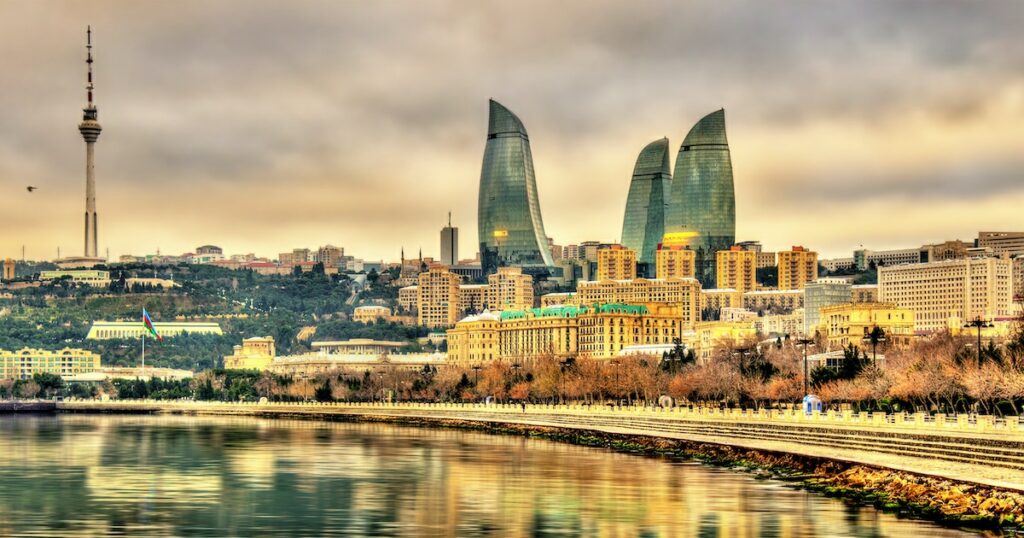
The Fourth Republic demonstrates the political will for an agreement, a “treaty of the century” that puts an end to the eternal enmity with Armenians, with global Armenianism. The agreement is not only about signing documents between the states—everyone must recognize and accept it. Like the army, the peace policy must be strong.
The Fourth Republic makes it necessary to adopt a new constitution in the country’s system of governance. The new nation-building on the liberated lands requires the establishment of the institution of special representation, the Great Return, a solid legal basis in the new policy being pursued for coexistence in Karabakh and the entire Caucasus. The expectations of the victorious Azerbaijani people are also in line with the chronicle of 45 days. Along with the era of the 1990s, its legacy is also fading into history. After the restoration of independence, October 18, the calendar days marked with a black border are replaced by November 8 and September 20. After the victory, a new political and spiritual identity emerges.
In Heydar Aliyev’s jubilee age, on the 100th anniversary of the salvation war of the Republic of Türkiye Ilham Aliyev puts forward to the world a new concept of security against the background of the establishment of the Fourth Republic. Renovation of the UN Security Council, OSCE, European institutions is inevitable. The low level of a number of democratic standards in Azerbaijan has not become an impediment to territorial integrity, on the contrary, new states in international reports are one step away from downfall. Therefore, countries without a strong system of central government, governance mechanisms dictated from outside are doomed to perish.
Ilham Aliyev’s victory formula plays an important role in ensuring world peace and security, and the Fourth Republic begins with exporting peace. Azerbaijan sums up the political and legal results of its 30-year struggle and announces the beginning of a new era.
The Karabakh war is over, and now a new bridge is being built from Agbend to the world.
Murad II once wanted to connect Ottoman Turkey with the Balkans with a bridge. The empire is gone, but its unifying branches live on!
A new political age begins in 2023.
Zahid Oruj, is an Azerbaijan politician and chairperson of the Azerbaijani Social Research Center.