Fenelon wrote in his book “Dialogue of the dead” that “war is an evil that dishonors humanity”.
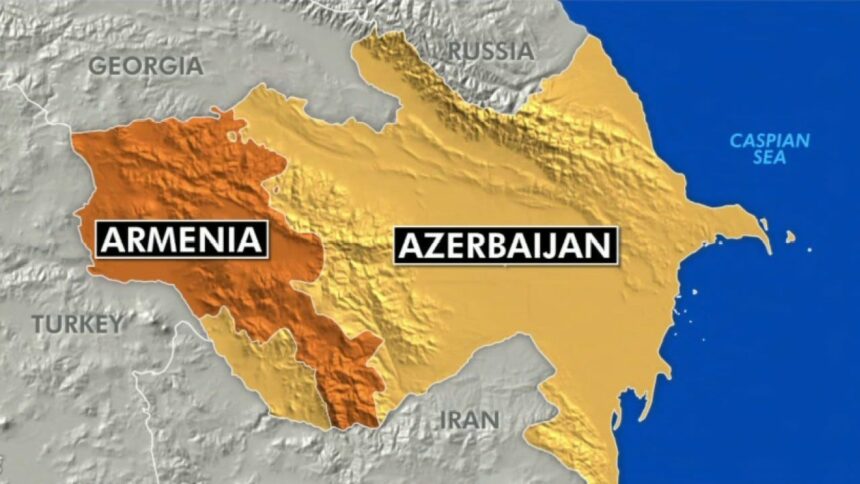
It is undeniable that war, this scourge that ravages humanity, sows devastation. The longer a conflict persists, the more it fuels animosity between the involved nations, making the restoration of trust between the belligerents all the more difficult. As the conflict between Azerbaijan and Armenia has already reached the sad centenary of its existence, it is difficult to imagine the torments endured by these two peoples, each bearing its share of suffering.
I hear and read allegations that Azerbaijan is committing genocide against Armenians. As Albert Camus pointed out, “misexplaining things adds to the world’s unhappiness.” It is essential to understand that the term “genocide” was first introduced by the Polish lawyer Raphael Lemkin in 1944, in his work titled “Axis Rule in Occupied Europe.” It is composed of the Greek “genos,” meaning “race” or “tribe”combined with the Latin “cide,” meaning “killing.” Raphael Lemkin coined this term not only to describe the systematic extermination policies carried out by the Nazis against the Jewish people during the Holocaust but also other targeted actions aimed at destroying specific groups of individuals throughout history. Therefore, it is indisputable that Armenians were victims of genocide in 1915, and this must be acknowledged by all. However, it is equally crucial to recognize other tragedies, including those affecting Azerbaijanis, through the same lens of understanding and justice.
It is undeniable that Azerbaijanis have been severely affected by assassinations and killings, all because they were Azerbaijanis. Let’s delve into this lesser-known period of history that will help us better understand the current situation.
March 31, 1918, Azerbaijan massacre
In march 1918, Lenin appointed Stepan Chaoumian as extraordinary commissar for Baku. On March 31 of that year, for three days, the Azerbaijanis were massacred.
A German named Kulne described the events in Baku : “The Armenians stormed Muslim (Azerbaijani) quarters and killed all the inhabitants, piercing them with their bayonets. A few days later, the corpses of 87 Azerbaijanis had been dug out of a pit. Bodies disemboweled, noses cut off, genitals mutilated. The Armenians had shown no mercy for either the children or the adults.”
During the March massacre, the corpses of 57 Azerbaijani women were found in a single district of Baku, their ears and noses cut off and their stomachs torn open. The girls and women had been nailed to the wall, and the city hospital, where 2,000 people were trying to escape the attacks, was set on fire.
The deportation of Azerbaijanis from Armenia 1948-1953
In December 1947, the Communist leaders of Armenia addressed a letter to Stalin. In that letter, they agreed to move 130,000 Azerbaijanis from Armenia to Azerbaijan, creating vacancies for Armenians coming to Armenia from abroad. The details of the deportation were also set out in USSR Council of Ministers Decree No. 754. The plan was to deport around 100,000 people to the Kura-Aras plain (Azerbaijan Soviet Socialist Republic) in three stages: 10,000 in 1948, 40,000 in 1949 and 50,000 in 1950.
The deportation of Azerbaijanis from Armenia in 1988-1989
In January 1988, under the aegis of the USSR leadership, over 250,000 Azerbaijanis and 18,000 Kurds were expelled from their ancestral lands. On December 7 of that year, a terrible earthquake struck the region. Azeri villagers were evacuated to Azerbaijan and throughout 1989 demanded the right to return and compensation for property lost in the disaster. However, the authorities in Spitak and Yerevan denied that the Azeris were double victims, arguing that they had left Spitak of their own free will.
The massacres of 1992
The Khodjaly Massacre: On February 25 and 26, 1992, during the Nagorno-Karabakh war, Armenian forces attacked the town of Khodjaly, which was mainly populated by Azeris. The siege of the town resulted in the deaths of hundreds of Azerbaijani civilians, including women, children and elderly. This massacre was widely condemned by the international community.
Garadaghly massacre: In February 1992, Armenian forces attacked the village of Garadaghly, outside Nagorno-Karabakh, killing many Azerbaijani civilians.
Maragha Massacre: In April 1992, Armenian forces attacked the village of Maragha, located in Nagorno-Karabakh, and killed several dozen civilians.
Now, with a better knowledge of history, it’s easier for us to understand the current situation.
Following attacks against them and civilians, Azerbaijan’s armed forces launched an attack on Armenian forces in Karabakh on September 19. The following day, Armenia refused to send soldiers to the region in order to counter-attack, revealing certain dissensions within Armenia. Armenia has two distinct governments: the central one in Yerevan, elected by the people, and the one in Karabakh, backed by Russian oligarchs.
The Prime Minister of the central government, Nikol Pachinian, has been expressing his desire to draw closer to the United States for some time, and has been negotiating with the Baku government for over a year. A few weeks ago, Nikol Pachinian announced his intention to recognize Azerbaijan’s sovereignty over Karabagh.
On September 6, the world discovered a photo of Anna Hakobyan, wife of the Prime Minister of Armenia, beaming as she shook hands with Volodymyr Zelensky. Mrs Hakobyan was in Kiev at the invitation of the Ukrainian President’s wife, Olena Zelenska, to take part in the annual summit of first ladies and spouses, dedicated to mental health. On the occasion of her first visit to the Ukrainian capital, Anna Hakobyan formalized the delivery, for the first time since the Russian invasion in February 2022, of humanitarian aid from Armenia to Ukraine. Although modest – around a thousand digital devices for schoolchildren – this assistance has great symbolic value.
The Karabakh government, supported as we know by Putin and the Russian oligarchs, has no desire to draw closer to the United States or Ukraine. Consequently, on September 19, it attempted a coup d’état to remove Pachinian from power.
Peace in the Caucasus is important for several reasons:
Regional stability: The Caucasus is a geopolitically complex region, with several countries in close proximity to one another, including Russia, Turkey, Iran, Armenia and Azerbaijan. Conflicts in this region can have destabilizing repercussions that extend beyond its borders.
Energy: The Caucasus is a key region for the transport of energy, particularly oil and natural gas. Pipelines criss-cross the region, carrying these resources to Europe and other international markets. Any conflict or instability in the region can disrupt energy supplies, with significant economic and geopolitical consequences.
European stability: Instability in the Caucasus can have repercussions for European security. Armed conflicts or humanitarian crises in this region can lead to refugee movements, tensions between Europe’s neighboring countries and disruption of energy supply routes, all of which can affect the continent’s security and stability.
Eric Gozlan is Government Counselor and co-director of the international Council for diplomacy and dialogue. He works in civic diplomacy in the Middle East and in Africa. He has received numerous awards for peace and gives numerous lectures. He served in the IDF for several years.