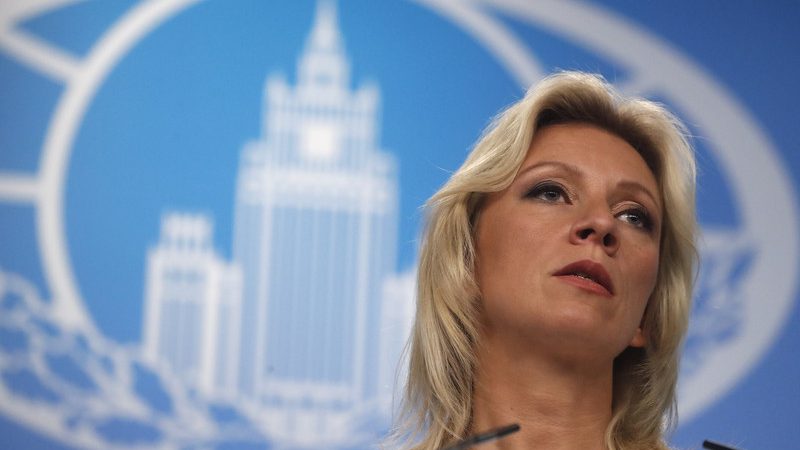
First, she said that Ankara is not a party to the trilateral statements that put Russian peacekeepers in Nagorno-Karabakh. Then she said in an admonishing tone that the peacekeepers play an important stabilizing role in the region, their main function is to maintain the ceasefire. And given the ongoing tense situation in the region, their activity is in even greater demand. Maintaining peace in the South Caucasus is in the interests of Yerevan and Baku, as well as regional players, including Ankara.
We will leave aside the fact that Ankara will figure out its own interests without Ms. Zakharova’s prompting. There is another question. First of all, according to the trilateral statement, Russian peacekeepers are deployed in the region precisely until 2025. So there is no need to look surprised. Further, the existence of a Russian-Turkish monitoring center in Karabakh obviously integrates Ankara into the political settlement process with a higher status than other regional players. Not to mention that Türkiye’s influence in the region remains undiminished.
And most importantly, before talking about the “demand” for peacekeepers, Ms. Zakharova should at least answer the question to herself: what kind of activities are we talking about? Violations of the ceasefire on the line of contact are reported almost daily, with Armenian illegal armed groups opening fire on Azerbaijani positions. The very same ones that, according to the Trilateral Statement, should have been disarmed, disbanded or withdrawn from the area of temporary deployment of the Russian peacekeeping forces CONCURRENTLY with the deployment of the peacekeeping contingent.
But in two and a half years, the Russian peacekeepers have not been able to fulfill their obligations. Nor have the Russian peacekeepers ensured proper control over the Lachin road, which was used to transport Iranian intelligence officers, terrorists like Vova Vartanov, weapons, mines and even Madame Pécresse to Khankendi. The entities established by the separatists also continue to operate in Khankendi. Meanwhile, the work to bring internally displaced persons back to the area of temporary deployment of the Russian peacekeeping forces, which is also stipulated in the Trilateral Statement, has not even begun.
So, what exactly are the Russian peacekeepers doing in the region: handling with the post-war settlement or preserving the conflict while protecting the separatists? Is this the activity that Ms. Zakharova believes to be “in demand”? We hate to disappoint her but Baku and Ankara expected and still expect Moscow to fulfill its commitments under the Trilateral Statement. And if the Russian Federation is not ready, able or willing to disarm the Armenian illegal armed groups, return the refugees and work on reintegration, then we will have to implement the paragraph of the Statement that mentions the year 2025. Simply because it is not the late 1980s and early 1990s anymore, the Russian Federation does not have a political monopoly in the region, so there is such a thing as responsibility for actions and inaction.