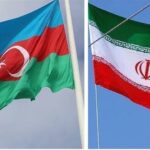
The details have not been disclosed. It is even more unclear why this is reported by the Armenian Foreign Ministry and not by the US State Department or the Azerbaijani Foreign Ministry. What we know is that two days ago the US representative to the OSCE Michael Carpenter made, mildly speaking, scandalous statements.
“We call on Azerbaijan to take steps to ensure constant gas and electricity supplies to Nagorno Karabakh, as well as to ensure the free flow and movement of goods and people, including through the Lachin Corridor,” Mr. Carpenter said. He was immediately echoed by the EU representative to the OSCE: “We call on Azerbaijan to set a positive agenda that ensures the rights and security of the Armenian population of Nagorno-Karabakh. The current situation is worrisome and has negative humanitarian consequences, with the ethnic Armenian population repeatedly facing disruption of basic energy and communication services, and reports of frequent ceasefire violations raising serious concerns for their well-being. If this is still the case, we call on Baku to take concrete steps to lift restrictions on the ethnic Armenian population, ensuring a stable energy supply and allowing for maintenance of the electricity grid.”
For a start, there is no such administrative-territorial unit as “Nagorno-Karabakh” in Azerbaijan. The summary communiqués of the meetings use different formulations: “Karabakh”, “Karabakh region”, “the territory of the former NKAO”, but not “Nagorno-Karabakh”. Moreover, the diplomats are supposed to know that gas, electricity and water are supplied to the residents of the current area of the temporary deployment of Russian peacekeeping forces from Armenia, so to demand something from Azerbaijan here is either incompetence and foolishness, or a deliberate provocation. As for the cries about “free flow” through the “Lachin Corridor”, Azerbaijan never commited and could not commit itself to keeping an “open window” on its border. Through which mines, military personnel disguised as civilians and professional terrorists, including Iranian terrorists, could be smuggled.
It is even more unclear what kind of “positive agenda” Azerbaijan should develop. It was stated at the highest level in our country that Azerbaijan views the Karabakh Armenians as its citizens and is ready to grant them the same rights and the same security guarantees, and even consider an amnesty for the separatist leaders if they recognize the authority of Azerbaijan in Khankendi and disband their unrecognized “government agencies” and illegal armed groups. Baku remembers and is well aware that the separatist leaders are up to their elbows in blood. Yet, despite this, Azerbaijan is ready to consider an amnesty. Washington officially WELCOMED this step through the State Department. So, what “positive agenda” are these diplomats demanding from us now? Preservation of pockets of separatism? The right for Arayik Harutyunyan to continue playing at armed separatism? Are they at all aware of the position of the countries and institutions they represent? Do they know what the subject of the negotiations is?
Of course, it is worth recalling here that Azerbaijan is a multi-ethnic state. Not all European countries can boast a policy of supporting the languages and cultures of ethnic minorities like the one that exists in Azerbaijan. France has no concept of “ethnic minorities” and accordingly has no program for preserving their languages and culture. France did not see fit to join the relevant conventions. But nobody cares about this. EU Special Representative Toivo Klaar is passionately lecturing Azerbaijan, while it does not occur to him to address, for example, the situation of Russian-speaking population in his native Estonia. But he is always welcome to lecture Azerbaijan.
To be honest, one can at least explain, if not justify, when diplomacy is conducted haphazardly by countries with their own statehoods under construction. But the United States and the European Union? One cannot help but ask here: Whom should we believe? Whose position should Azerbaijan take as a basis now?
But most importantly, why is there so much emphasis on the ARMENIAN community of Karabakh? Azerbaijani observers do not recall any categorical and harsh demands to start the process of the return of Azerbaijani IDPs who were forced to leave their homes in the late eighties to the area of temporary deployment of the Russian peacekeeping forces. Neither do we remember any demands to give the maps of the minefields to Azerbaijan. Either there was none at all, or it was not enough to be noticed. The desires of the separatists are being made absolute, while the rights of Azerbaijanis can wait?
This is not merely a position. Both the United States and the European Union are carrying out a mediation mission in the region. And mediation is impossible without the trust of the parties. But how can we talk about any kind of trust, when US and EU diplomats play this kind of tricks? The Caucasus is not the Balkans, and attempts at playing separatism will not work here. Even if someone really wants to get a “second Kosovo”.
And then there is not a single good version of this. Either the diplomats representing the US and the EU in the OSCE are not aware of their countries’ positions and policies, or Washington and Brussels have two positions, or the US and Brussels have no interest in the continuation of negotiations between Azerbaijan and Armenia in Washington and Brussels. Be it as it may, it is unacceptable for our country to have further mediation with such discrepancies in statements, with a clear shift to provocative rhetoric. Suffice it to recall how quickly the “five-party format” went into the trash can when after the meeting in Chisinau French President Emmanuel Macron began to make statements that do not reflect the essence of the negotiations.
One way or another, Azerbaijan has the right to expect Brussels and Washington to clarify their positions. And then we will see if we want to continue the negotiations on the European and American “platforms”. In the meantime, Blinken can thank Carpenter for disrupting the Washington round.