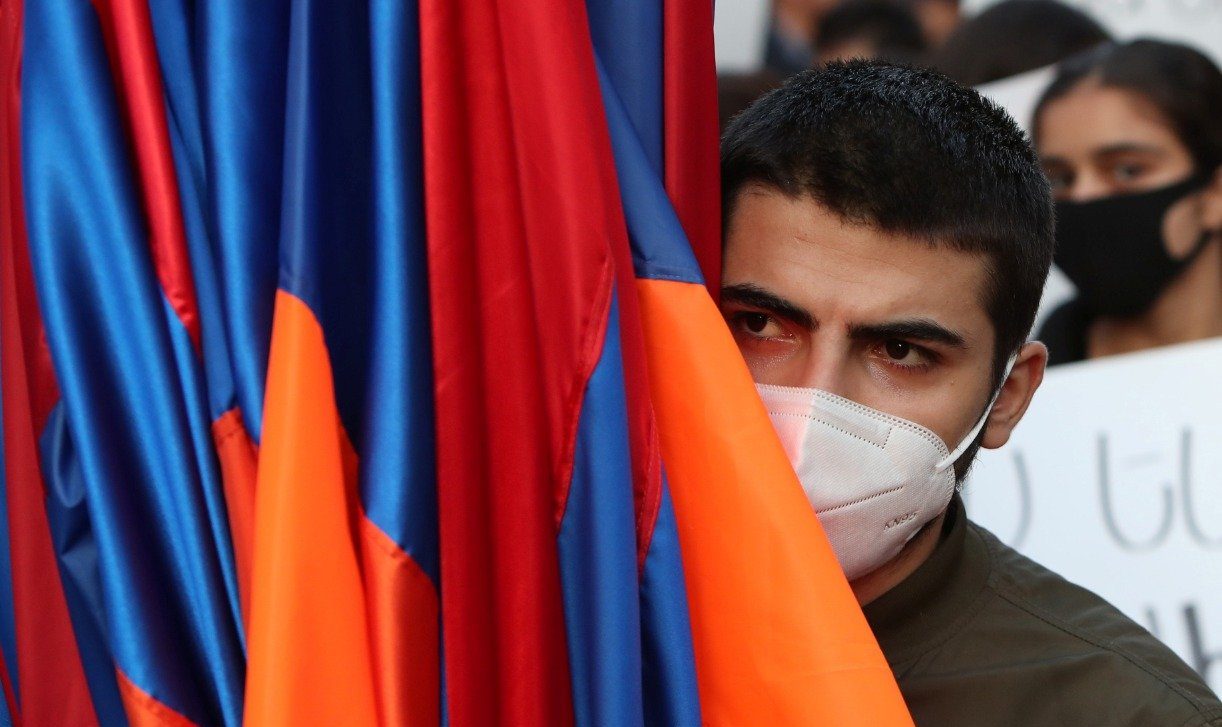
Democracy is a regime that can be judged as positive rather than negative, and, most importantly, it implies creation rather than destruction, mutual understanding rather than disunity. At the same time, it is obvious that there is no universal model of democracy that fits all countries of the world. However, true democracy does not seem to require this. Although, as it turns out, not everyone understands it. One of the dubious talking points the Armenian side often puts forward with regard to the future of the Armenian population in Karabakh is as follows. The Armenians living in Karabakh region of the Republic of Azerbaijan are being persistently portrayed as supporters of the ultra-liberal model of democracy which is perhaps typical for the Northern European countries. This approach is used by the Armenian side as justification for separatist activities in the territory of Azerbaijan. Armenia is trying to prove that the Azerbaijani model of democracy does not suit the Armenian population of Karabakh, and therefore they urgently need to secede, or get some “status”, which will obviously be a step towards that very secession. Otherwise, according to the Armenian side, the Armenians in Karabakh simply cannot survive. The religious and cultural differences between Armenians and Azerbaijanis are not infrequently cited as a subtext to this topic, and of course, these do exist, but for centuries these differences were not fatal for Armenians. The authors of the questionable assertion, firstly, do not want to see that even the history of recent decades in Armenia itself, which is populated essentially only by Armenians, clearly shows that the population of the country does not strongly aspire to repeat the experience of the Scandinavian model of democracy. It is more about imitation with some external attributes, but no more than that. Secondly, Armenians’ adaptability to various political systems in various countries is not taken into account. In this sense, even a very brief analysis of the data of Armenian communities in the Greater Middle East shows that not only can Armenians live in countries which are far from being model democracies, but they are even more comfortable there (!). Let us look at just a few examples, starting with the most striking one.
Syria. According to various estimates, there are between 35,000 and 100,000 Armenians living in Syria. To date, Armenians in Syria do not have any special status documented for a particular territory with some elements of statehood. On the other hand, there is no democratic experience to speak of in the history of the modern Syrian state. The country, torn by civil war, is recognized by much of the civilized world as extremely undemocratic. Moreover, Syrian President Bashar Assad is a tyrant and a dictator accused of war crimes. According to the Western press, the Syrian president is accused, among other things, of using chemical weapons against his own citizens and of launching airstrikes on the medical facilities of opposition forces. These accusations are not disputed by the friends of Armenians either in the French Senate or the US Congress. What official Yerevan thinks about all this is a question that requires a lot of attention. The Armenian authorities do not merely rely on telephone diplomacy with official Damascus where, for instance, the country’s leadership in the person of Prime Minister Nikol Pashinyan maintains dialogue with Bashar al-Assad (https://armenpress.am/eng/news/1103588/). This year Armenia’s Foreign Minister visited Syria and, judging by the protocol photographs, he was warmly received by Bashar Assad. We do not know the details of the conversation, so it is hard to say whether the Armenian FM raised the issue of granting a special status to Armenians living there or whether Ararat Mirzoyan sees Bashar Assad as a representative of some model of democracy.
Egypt. The modern history of the country is essentially a history of military regimes, with generals disguised as civilians, but this does little to change the nature of the authorities. Yet none of this has stopped Armenians from living in Egypt for a long time. According to various estimates, up to ten thousand Armenians live in Egypt’s two largest cities, Cairo and Alexandria. And here again it is interesting to see how official Yerevan conducts itself with the Egyptian regime. There are summits being held, documents being signed, and there is talk of developing bilateral relations. But there is seemingly no talk of a special status for the Armenian population of Egypt. Is it because official Yerevan considers the current Egyptian model of “democracy” as exemplary and the most suitable for Armenians living there?
Monarchies of the Persian Gulf. There is no need to dwell on each country. Undoubtedly, outwardly these countries can be presented as prosperous and without any serious internal contradictions. The vast hydrocarbon resources of the Gulf countries help them to solve issues that cause severe social unrest and political crises in other countries. But this does not make all these countries cease to be monarchies with all that it entails. But does official Yerevan demand a special status for the Armenians of the Gulf? According to open sources, there are tens of thousands of Armenians living in these countries. The UAE is the leader, with almost half of all the Armenians of the Gulf residing there. Moreover, things are going so well there that the Armenian community has a tendency to demographic growth. And there are no complaints about the lack of democracy, either from the Armenians themselves or from official Yerevan. Moreover, in December 2022 the governments of Armenia and the United Arab Emirates signed a Memorandum of Understanding on cooperation in the field of labor and employment (https://armenpress.am/eng/news/1099761/). The memorandum regulates a number of issues related to the employment of Armenian citizens in the country. As we can see, official Yerevan makes no demands regarding the status of the Armenian population in this country, which has no impressive democracy indicators. The standards here are as down-to-earth as possible.
Iran. According to various estimates, between 60,000 and 80,000 Armenians currently live in the Islamic Republic of Iran. And despite all the specifics of the Iranian regime and the growing international pressure in the context of the Iranian nuclear program, official Yerevan continues to maintain very friendly relations with Tehran. It is happening as the Iranian regime systematically tramples not only the rights and freedoms of different ethnic groups inside the country, but in some indicators, especially those related to women’s rights, the rights of citizens across the country. From time to time, mass protests erupt in Iran, which are brutally suppressed by the authorities, and the killing of protesters has long been a trademark of the Iranian security forces. The nature of the Iranian regime is such that the electoral processes in the country are purely pro forma, implying the complete exclusion of any real political forces from the elections. Against this background, there is no recorded instance of official Yerevan publicly raising the issue of granting Armenians in Iran any special status.
Thus, practice proves that Armenians live quite comfortably under authoritarian regimes and monarchies. Of course, similar examples can also be found outside the Greater Middle East region. However, one must realize that we can go quite far if we follow the logic of official Yerevan about the allegedly irrepressible desire of Armenians to live in conditions of perfect democracy. We can conclude, for example, that in the past, when Armenia lived, according to the current authorities, under extremely undemocratic regimes, a segment of the population craving for true democracy should have declared its separation from the undemocratic part of Armenia, instead of insisting that fundamental rights and freedoms be respected. And this kind of secession where everyone dissatisfied with democracy takes, shall we say, part of the shared apartment and leaves, can be extended to many countries of the world. But is that the goal of democracy?
The countries of the former Soviet Union have many problems, but talk of democracy or discrimination has often become an excuse for aggressive separatism or territorial claims: Abkhazia and South Ossetia in Georgia and Crimea and Donbass in Ukraine are examples.
The conclusion is unambiguous. Armenia is trying to mask its territorial claims against Azerbaijan, but it is all too obvious: this discourse on democracy is just a cover for separatism in the Karabakh region of the Republic of Azerbaijan.
Sanan Rzayev, Political analyst at CBC (Azerbaijan)
Translated from