Although the decision highlighted the importance of Azerbaijani-Israeli relations, it quickly became a catalyst behind the renewed war of words between Iran and Azerbaijan (Themedialine.org, March 30). Since 2021, diplomatic relations between Tehran and Baku have steadily become embittered. Iran is primarily concerned with the decline of its influence in the South Caucasus, which has suffered since the end of the Second Karabakh War in 2020. As such, in an attempt by Tehran to flex its muscles and intimidate Azerbaijan, the Islamic Revolutionary Guard Corps conducted large-scale military drills on the border with Azerbaijan in October 2022 (Eurasianet, October 20, 2022). Unlike previous years, the exercises provoked an uneasy reaction within Azerbaijan and triggered anti-Iranian sentiments throughout the country.
Diplomatic relations between the two sides were almost put on hold when Azerbaijan shut down its embassy in Tehran following the armed attack that left one dead on January 27 (Caspian News, January 30). The embassy attack signaled that escalating tensions between the two states would not be resolved anytime soon.
Since 1991, Baku has pursued a more balanced foreign policy toward Iran, maintaining influence among Azerbaijani Shia Muslims. The balanced approach gradually shifted to a pragmatic partnership with Tehran, particularly during Hassan Rouhani’s presidency (2013–2021) in Iran. Nevertheless, the conservative and hard-liner administration of President Ebrahim Raisi has demonstratively walked away from this approach, citing national security concerns (Cacianalyst.org, January 26, 2022).
Iran’s security concerns stem from deepened ties between Azerbaijan and Israel, particularly in defense and military matters over the past two years. The narrative also claims that Azerbaijan has allowed Israeli intelligence to conduct surveillance of Iranian territories (Aawsat.com, April 2). Although Tehran’s accusations regarding the presence of “Israeli intelligence on Azerbaijani soil” is not a new phenomenon, recently, this pronouncement was followed with several further provocations from the Islamic Republic. For example, on March 30, the commander of Iranian land forces, Kioumars Heydari, publicly warned that “Iran will not allow the change of borders in the South Caucasus” (Amwaj.media, April 4).
Consequently, the recurrence of hostile rhetoric between Baku and Tehran inevitably raised concerns of a direct conflict in the fragile region. While, at this point, diplomatic tensions between the two countries have yet to be fully exacerbated, the risk of minor border clashes is still real. However, considering several essential factors, including Russian influence in the region, the burgeoning Azerbaijani-Turkish alliance and Iran’s stagnating economy and political instability, a full-scale conventional war between Iran and Azerbaijan is unlikely (Jns.org, March 13).
For Iran, the prospect of missile attacks against alleged Israeli military facilities on Azerbaijani territories also represents an undesirable option. Tehran understands that, in the case of such an attack, the West—namely the United States—will almost unanimously support Baku. This hypothesis falls in line with US Secretary of State Anthony Blinken’s recent comment that “Azerbaijan has a long border with Iran, which needs defending.” (News.az, March 23). Blinken’s remarks should not come as a surprise in light of Iranian troops amassing near the border with Nakhchivan, which is considered one of Azerbaijan’s most vulnerable points (Baku Post, April 4).
Iran is highly concerned about the possibility of border changes in the region—namely, the establishment of the Zangezur transit corridor via Armenia’s Syunik province and linking Azerbaijan with Turkey. This corridor would eventually fence off Tehran from Armenia, de facto isolating Iran from cargo and energy transit through the region. In this regard, Tehran strongly believes that the strengthening of the Azerbaijani-Turkish-Israeli axis will significantly limit its influence over extended “sleeper cells,” which were reportedly created by Iran on Azerbaijani soul in the past three decades (Times of Israel, April 6).
Of even greater concern to Tehran is the fact that the recent diplomatic standoff with Azerbaijan has provoked a harsh reaction in Baku with the continuous mass crackdown on pro-Iranian groups, which are accused of being part of an Iranian spy network within the country (Caspian News, February 2). The spy network–related arrests and mounting anti-Iranian sentiments culminated on March 28 when Fazil Mustafa, an Azerbaijani member of parliament (MP) and staunch critic of Iran, was gunned down in front of his house but managed to survive. In response, the Azerbaijani government pointed the finger of blame at Tehran as the main perpetrator of the assassination attempt (Eurasianet, April 3).
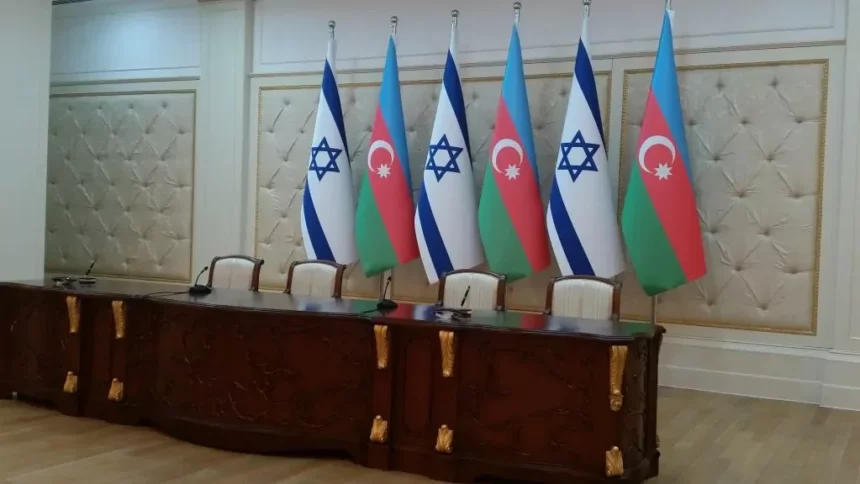
The MP’s assassination attempt coincided with the inauguration of the Azerbaijani embassy in Tel Aviv and Israeli Foreign Minister Eli Cohen’s statement that “Azerbaijan and Israel had agreed to form a unified front in the face of Iran.” As a result, these events triggered even more bellicose rhetoric from Tehran (Mfa.ir, March 31).
The statement from the Israeli foreign minister became genuine proof for Iran regarding the deepening of the Azerbaijani-Israeli partnership. Undoubtedly, enhanced ties with Israel in this uncertain environment provide Azerbaijan with additional security guarantees and access to Israeli-made sophisticated weaponry and defense technology (Haaretz, March 6). Iran’s continuous threats against Azerbaijan and the mass arrests of members from pro-Iranian groups in Azerbaijan, including the well-known pro-Iranian cleric Haji Ali Beheshti who was later charged with treason, resulted in the expulsion of four Iranian diplomats from Azerbaijan (Al Jazeera, April 6; Globalinfo.az, April 11).
Overall, this expulsion is largely unprecedented in the history of Azerbaijani-Iranian relations, which decreases the chances for a significant diplomatic thaw in the near future. In truth, Baku’s resolute stance on its position in the region suggests that Iran has gained little from its intimidation tactics; on the contrary, it has in fact boosted anti-Iranian rhetoric within Azerbaijan. As a result, the most recent phone conversations between Iranian Foreign Minister Hossein Amir-Abdollahian and his Azerbaijani counterpart Jeyhun Bayramov on April 7 and 8 could indicate Tehran’s efforts to de-escalate tensions. This sentiment was solidified shortly after by comments from Elchin Amirbayov, aide to the vice president of Azerbaijan and a top diplomat, that Azerbaijan wants to maintain positive relations with Iran (Haqqin.az, April 13). Hence, though the risk of immediate armed conflict between Baku and Tehran has decreased slightly for now, the war of words between the two sides will likely continue for the foreseeable future.
Fuad Shahbazov