As we drive through the war-torn landscape, we pass abandoned Armenian defensive positions, villages and once vibrant cities raised to the ground, desecrated cemeteries and hundreds of kilometres of territory infested with lethal mines.
The destruction and devastation is almost total, yet very little of it was inflicted by military means and warfare. The evidence speaks overwhelmingly of a calculated and deliberate attempt to eradicate any trace of the Azerbaijani people and their culture from these lands.
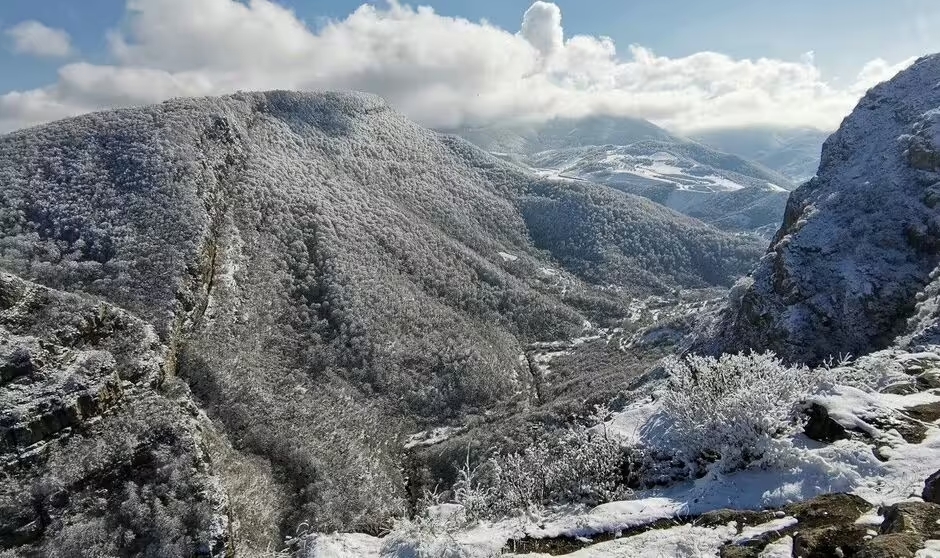
The Karabakh region is situated in the southwest of Azerbaijan, makes up roughly 20 percent of the country’s territory and forms borders with both Armenia and Iran. Its natural landscape is characterised by mountains, forests and steppes, whose fertile soils once supported a thriving agricultural sector and wine industry.
The region was once famous for its silk and textile manufacturers who among other things produced Karabakh carpets, known for their vivid and flamboyant colours. It is also home to the Karabakh horse that is the national animal of Azerbaijan – one of which was presented as a gift to the late British monarch Queen Elizabeth II last May.
A BLOODY CONFLICT THAT HAS CLAIMED THOUSANDS OF LIVES
Located within this region is the Armenian enclave of Nagorno-Karabakh – a disputed territory over which two bloody wars have been fought, costing the lives of tens of thousands of soldiers and civilians.
The roots of this bitter long-running conflict go back to the early days of the Soviet Union, when the Bolsheviks created in 1923 the Nagorno-Karabakh Autonomous Oblast (NKAO) within the Azerbaijan Soviet Socialist Republic.
The NKAO was populated largely by Armenians – up to 95 percent of the residents according to some estimates. In 1988, as the USSR was undergoing major political and economic upheavals and as nationalist movements began to sprout up everywhere, Nagorno-Karabakh’s regional government passed a resolution declaring its intention to join the Republic of Armenia.
Then, as the Soviet Union fell apart in 1991 and both Azerbaijan and Armenia achieved statehood, Nagorno-Karabakh escalated the conflict by unilaterally declaring its independence. A vicious and ferocious war broke out, which spared neither soldiers nor civilians, claiming around 30,000 casualties.
The brutality and cruelty of the war was graphically captured in news bulletins. A Newsweek article on March 16, 1992, reported on a massacre of civilians by Armenian forces in the village of Khojaly, saying that many of them had been shot at close range while trying to flee and “some had their faces mutilated, others were scalped”.
When a ceasefire was eventually brokered in 1994 by the Russians, the Armenians had gained the upper hand, securing control over Nagorno-Karabakh and the rest of the Karabakh region.
Some 600,000 Azerbaijanis were forced to flee their homes in Karabakh, becoming internally displaced people (IDPs) in the process.
Azerbaijan launched a second war in late September 2020 to regain its lost territories, which lasted six weeks and cost the lives of around another seven thousand soldiers and civilians. The Russians once again brokered a ceasefire on November 9, 2020, which resulted in most of Karabakh returning to Azerbaijan and left Armenians in control of a small enclave centred around Khankendi (Stepanakert) in Nagorno-Karabakh.
Although Armenian leaders in Nagorno-Karabakh insist on their right to independence, the UN Security Council has recognised the enclave as being indisputably part of Azerbaijan.
Tensions between the two sides currently remain high, with no real prospect of a lasting peace deal in sight.
THE ‘HIROSHIMA OF THE CAUCASUS’ AND CULTURAL OBLITERATION
When Azerbaijanis fled their homes in Karabakh in 1994, they thought they would be back within a week. But it would be almost thirty years before they would have a chance to return.
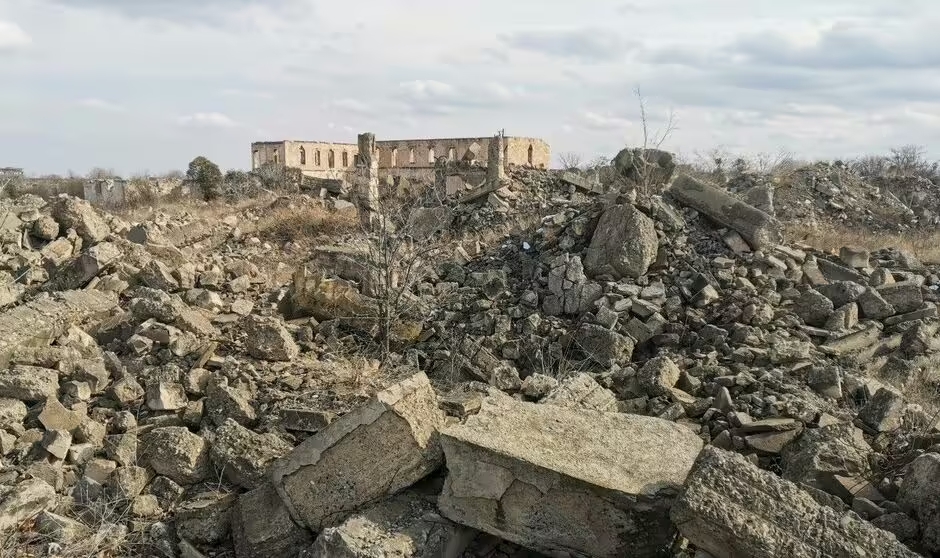
In the meantime, the Armenians never attempted to repopulate the region with their own citizens or use the fertile land. Instead, they set about tearing down houses, wiping out whole cities and villages, that were home to tens of thousands of people, as well as rendering the land unusable with mines.
The destruction was “handmade”, and not caused by military bombardment. It was “systematic and purposeful”.
Initially, the Armenian military looted abandoned houses, but there were too many of them. So they sold the empty properties to other Armenians and even Iranians for between US$200-300. The purchasers stripped the houses for all they were worth – first, they took furniture, washing machines and other household goods, before carting off bricks, stones, roof tiles and window frames. Finally, they set fire to what was left of the house, leaving nothing but some charred remains and a few bricks.
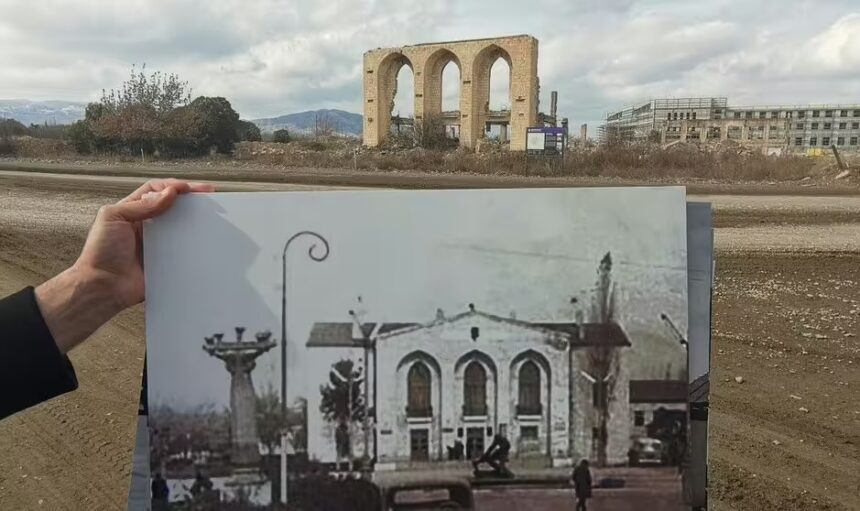
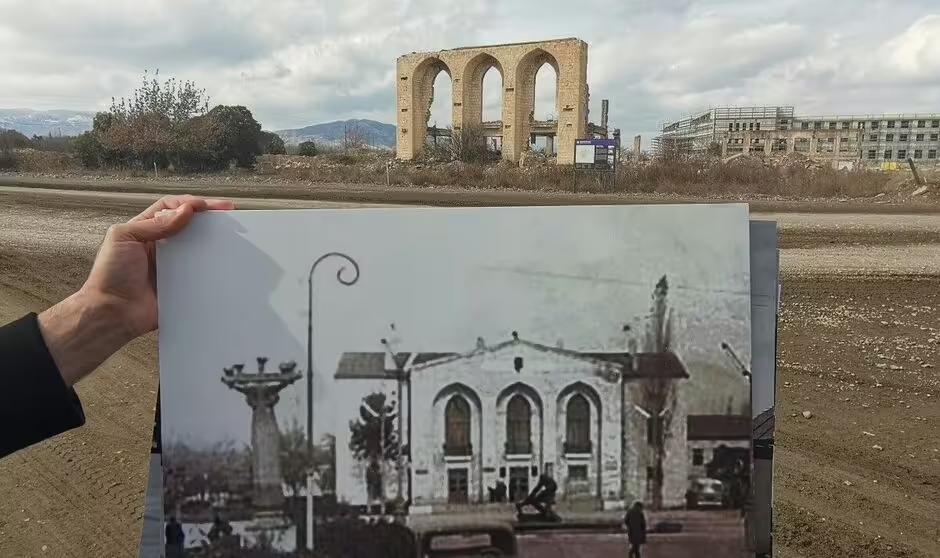
Perhaps the most glaring and stark testimony to the overwhelming destruction wrought by the Armenians is the city of Aghdam, sometimes referred to as the “Hiroshima of the Caucasus”. Founded in the 18th century, the city was famous for its palaces made from white stone and boasted 58 homes belonging to the local nobility – many over two hundred years old.
Aghdam was a dynamic trading centre and had a pre-war population of over 40,000 people – but today it has been reduced to a heap of rubble, resembling a city subjected to an unrelenting aerial campaign of carpet bombing. Only some walls of the former drama theatre, the post office and a central hotel remain standing.
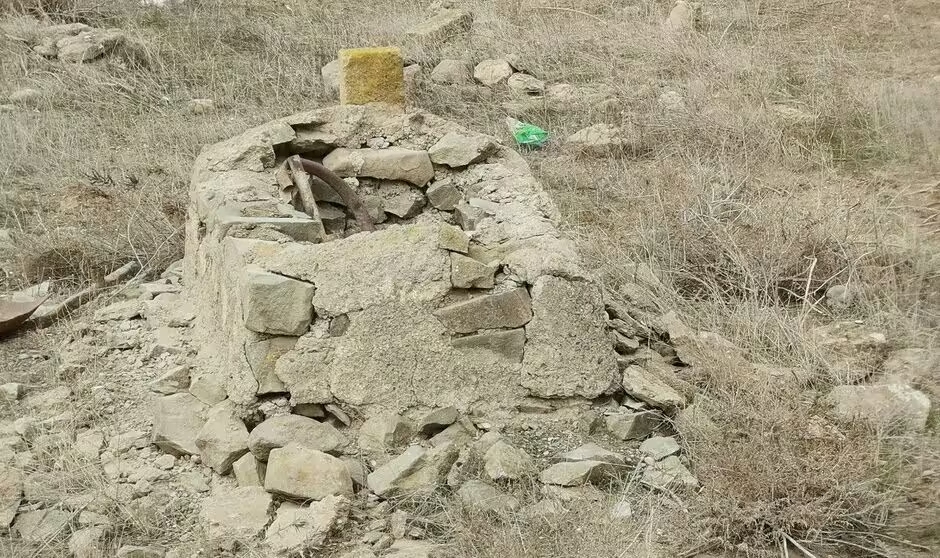
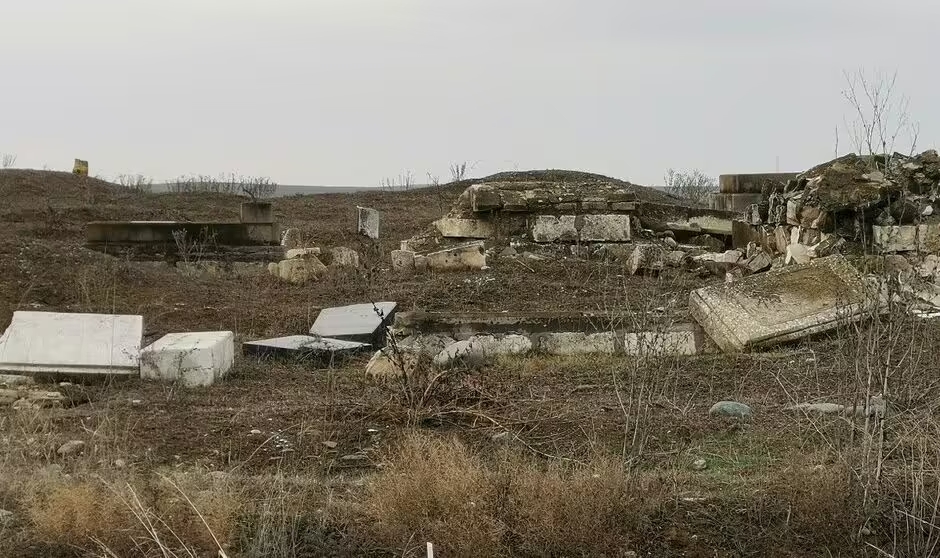
The Armenians spared nothing in their attempt to eradicate any trace of the former inhabitants and their culture, signalling out cemeteries and mosques for particularly rough treatment.
Graves were dug out, as looters scoured cemeteries for booty – during the Soviet times golden teeth were very popular in Azerbaijan. At first, the robbers dug out the whole corpse, before hitting on a better technique, which entailed making holes on the front side of the grave and removing just the skull with its precious metal.
“This is the tale of the Karabakh people. This happened to everyone,” Araz explained. “All our graves, all these precious places for us were destroyed.”
He added: “The main reason why they did this was to erase the Azerbaijani legacy on these lands. Because if you don’t have graves in some place, it means you don’t belong to that land. So they were trying to erase whatever reminded them of anything that is related to Azerbaijan.”
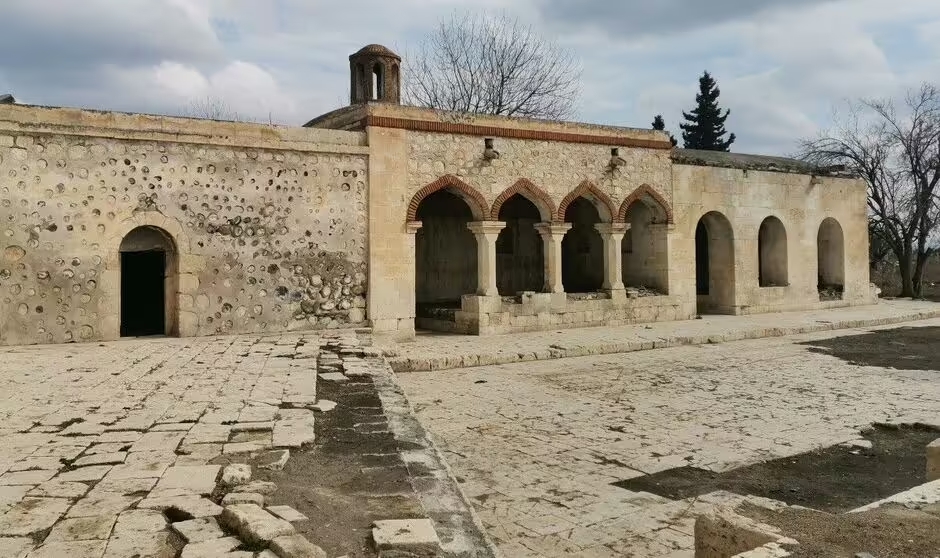
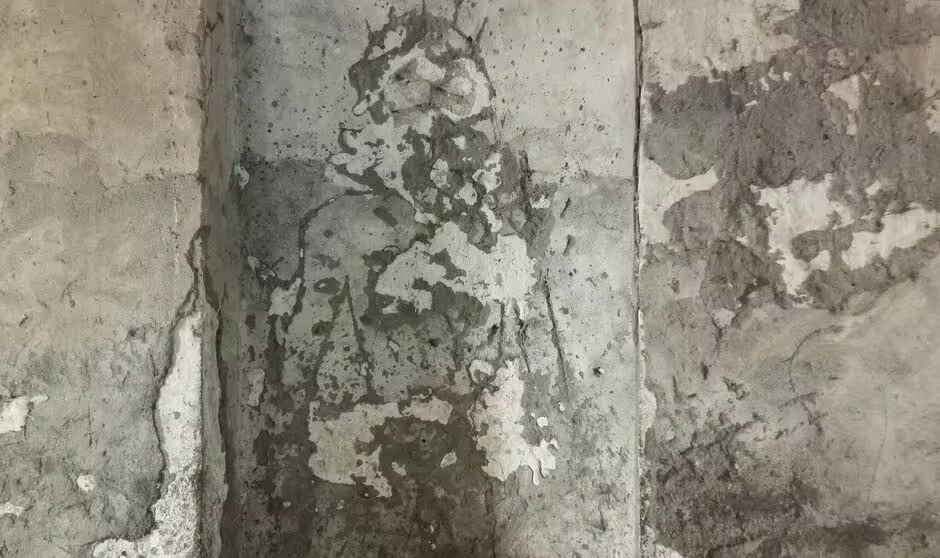
Karabakh used to have 85 mosques. Today only four or five remain, one of which is in the village of Merdinli. Originally constructed 200 years ago, it was restored between 1905 and 1907. During the occupation, the Armenian military units stationed in the vicinity of the village used the mosque to keep their livestock, which included pigs. They also defiled the interior of the building, drawing what looked like a devil on the Mehrab and using the image for shooting practice. The Mehrab is a niche in the wall of the mosque that indicates the direction of Mecca and which Muslims face when praying.
“What they did with the mosques was on purpose – it was humiliation and meant to deprive the Azerbaijani nation of its self-esteem,” Araz said.
THE PHOENIX RISES FROM THE ASHES – LOOKING AHEAD TO A GREEN FUTURE
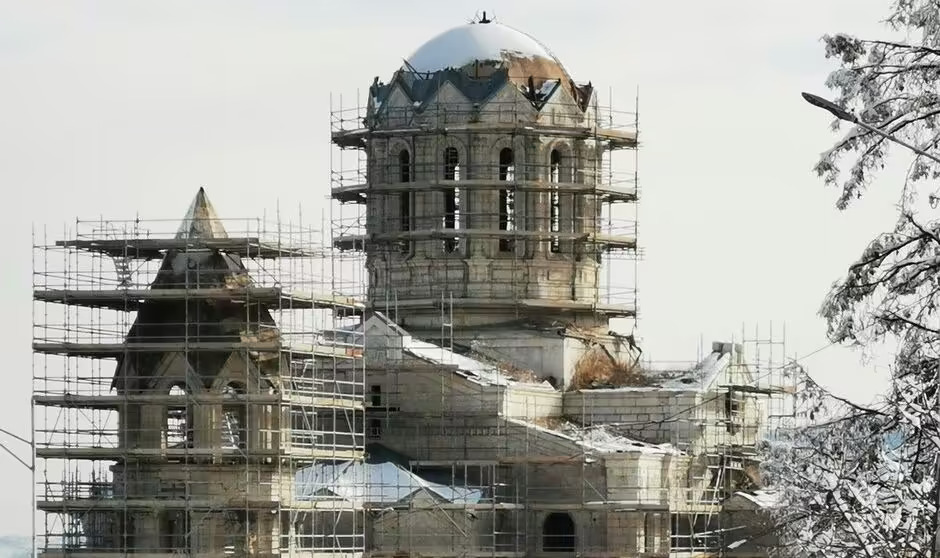
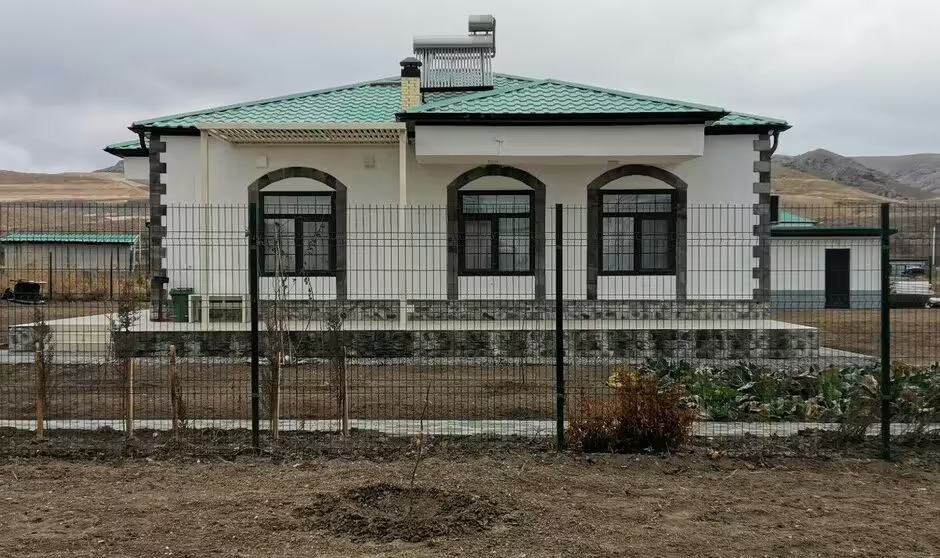
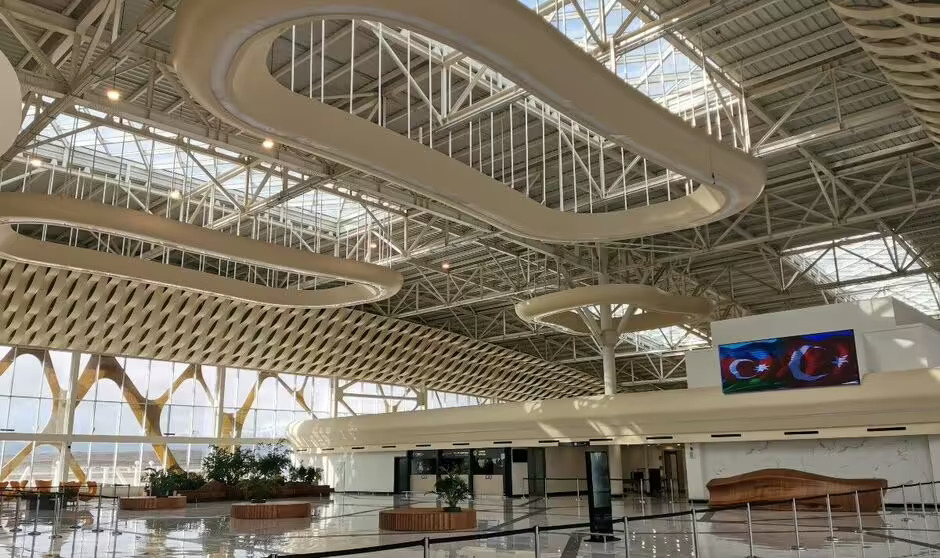
Azerbaijan President Ilham Aliyev has made the reconstruction and repopulation of Karabakh a centrepiece of his political agenda and has ambitious plans. Billions of dollars are being invested into the construction of new roads, airports, railways, houses and energy infrastructure. The project is scheduled to be completed by 2040 and is expected to cost no less than US$60 billion.
One of the most striking features of the regeneration programme is the commitment to renewable energy and zero CO2 emissions. Karabakh has a lot of green energy sources in the form of sun, wind and hydropower. Its renewable potential is estimated to be more than 10 gigawatts a year. There are already 12 hydroelectric power stations, with plans to build a total of 50. Solar energy, however, is the main renewable source and is expected to generate almost 9 gigawatts.
The UK is playing its role in helping to develop the green potential. BP has signed an agreement with the Azeri government to build solar plants in Jabrayil and Zangilan.
Karabakh still remains largely a ghost region, with few people as yet living there. The plan is to gradually repopulate the region over the coming years with families that had to flee their homes in the early 1990s. It is hoped that as many as 34,000 families will be resettled within the next three years.
The government conducted a survey to get an idea of how many internally displaced people (IDPs) would likely return. According to its results, almost 60 percent said they would be ready to come back without any conditions. The number rose to 98 percent when incentives were included such as subsidies, opportunities for agricultural farming and the provision of housing.
Houses will be provided without cost for returning families. Initially, they will be allowed to live in them rent-free for a period of three to five years, before the ownership is transferred to them.
THE LETHAL LEGACY OF MINES
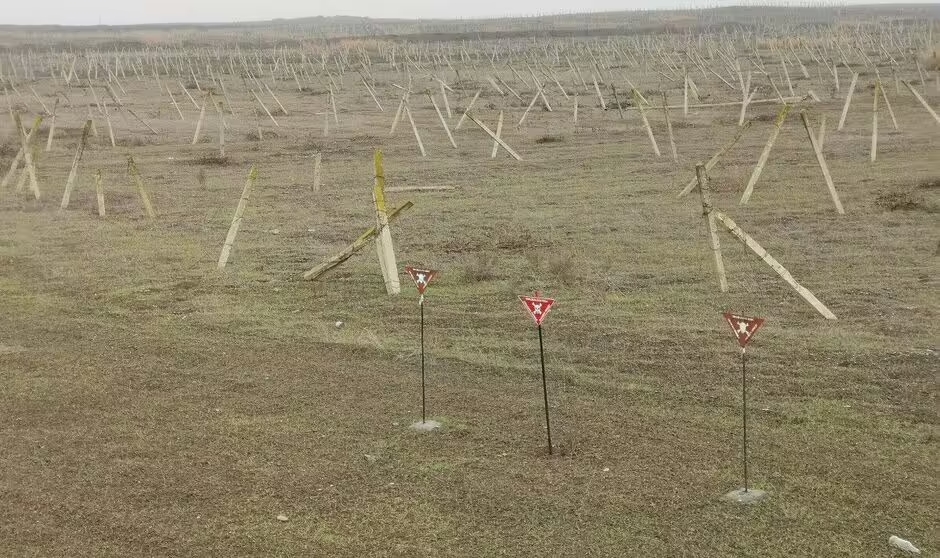
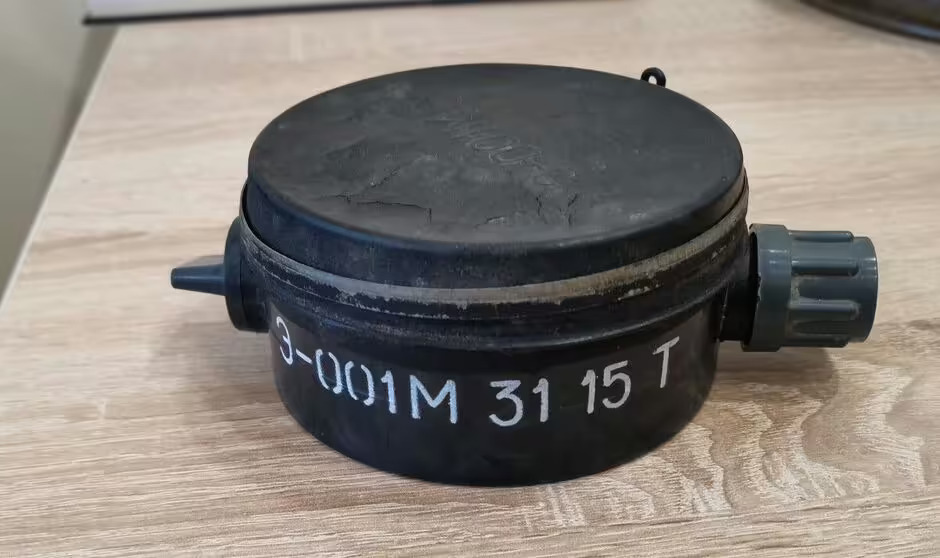
One of the biggest obstacles to the return of people to the region is mines and unexploded ordinances, which range from small hand grenades to big rockets. By some estimates, there are at least 400,000 land mines that are scattered over the territory – the most heavily mined area being the former line of contact.
However, more than 55 percent of civilian injuries from mines have occurred outside the area of the line of contact, indicating just how extensively the Armenians mined the region. To date, around 282 people have been injured after stepping on mines, of whom 46 have died.
The Armenians used Russian PMN mines, but they produced many of their own copies, which are made of cheaper materials and are much more sensitive and unstable. They also made plastic anti-tank mines with minimal metallic content, meaning it is extremely difficult to locate them. Only specialist detectors from Germany and Australia are up to the job.
The task facing Azerbaijan’s Mine Action Agency (ANAMA) is a daunting one, to say the least.
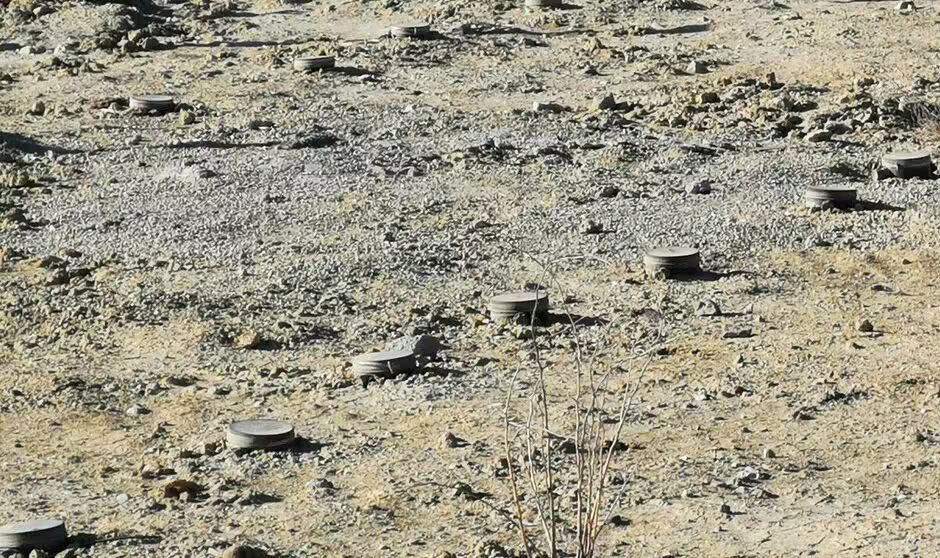
The liberated territories total some 11,780 square kilometres, which is bigger than the size of Lebanon. So far they have managed to clear 650 square kilometres since September 2020. Officials at the agency estimate it will take them another 30 years to complete their work.
The process could be accelerated if the Armenians provided reliable maps showing the location of the mine fields. Despite international pressure to do so, the Armenian side has been slow to cooperate and the information they have provided is often missing key details.
Samir Poladov, a deputy chairman of ANAMA, told the Express that only 25 percent of the mine records provided by Armenia are “reasonably reliable”.
He added: “The other 75 percent lacks very important pieces of information and without this, it is practically impossible to identify the location of the mine fields – for example geographic information, coordinates, the length and width of the the fields, the type of mines that were laid – 75 percent of these records don’t contain this information.”
Mr Poladov said it is unlikely the Armenians do not have this detailed information, since their own military commanders would have had to keep precise records of the locations of the mine fields in order to protect their own troops.
“The military themselves – they need these records because they rotate from time to time – the commanders and units. And when a new commander comes, he must go and see the files and know where the mine fields are so that his soldiers can move safely in the area.
“So because of that I think they do have this information, because it is not normal. I have seen many mine fields all over the world and this is the worst quality of records that I have ever seen in my life. It is really bad quality.”
Araz’s family are originally from Karabakh. His grandfather and grandmother on his father’s side were born in Füzuli and most of his relatives lived there until the end of the first war in 1994. In addition, his wife’s mother comes from Shusha.
He was born and raised in Baku and worked many years as a diplomat, before deciding to quit his job and move to Karabakh.
His decision to go was based not only on his family ties to the land, but also on a desire for justice.
“I always wanted to come back here,” he said. “The whole generation including my parents, me and maybe the next generation after me who are 10-15 years younger – dedicated their lives to Karabakh.
“Not only for coming back here, but at least to spread the message of Azerbaijan to the world. To raise the awareness of what is happening here. To show that the Azerbaijanis are on the right side of the conflict. We are not the occupiers. We did not go to anyone else’s land. Territorial integrity is something sacred to us.”
He added: “The wish to come back is not just because I am from this region and not because of my family or the IDPs and refugees. I want and everyone wants justice to prevail. And the best sign of justice prevailing, is when Azerbaijanis return here.”
John Varga