Russia in search of servile flattery
Even though Russia is one of the most uncompromising, harsh and ruthless countries in the world, it nevertheless badly wants to receive occasional praise, loyalty and, even better, vows of eternal friendship.
Russian dictators, who, for the sake of mineral reserves, are sometimes ready to ruthlessly overthrow entire governments, are willing to hand out hundreds of millions of dollars left and right in exchange for blatant, menial flattery.
This nuance is the key to understanding and appreciating the policy of the Russian Empire over the centuries.
The fact is that Russia, as an empire, never sought material gain in the process of annexing its colonies. Apparently, it was, and still is, the only colonial power in the world that spends on its colonies much more than it receives.
And it continues to do so to this day with a persistence worthy of better application.
Typically, the Russians themselves are terribly proud of this fact, emphasizing the high motives and selflessness of their actions.
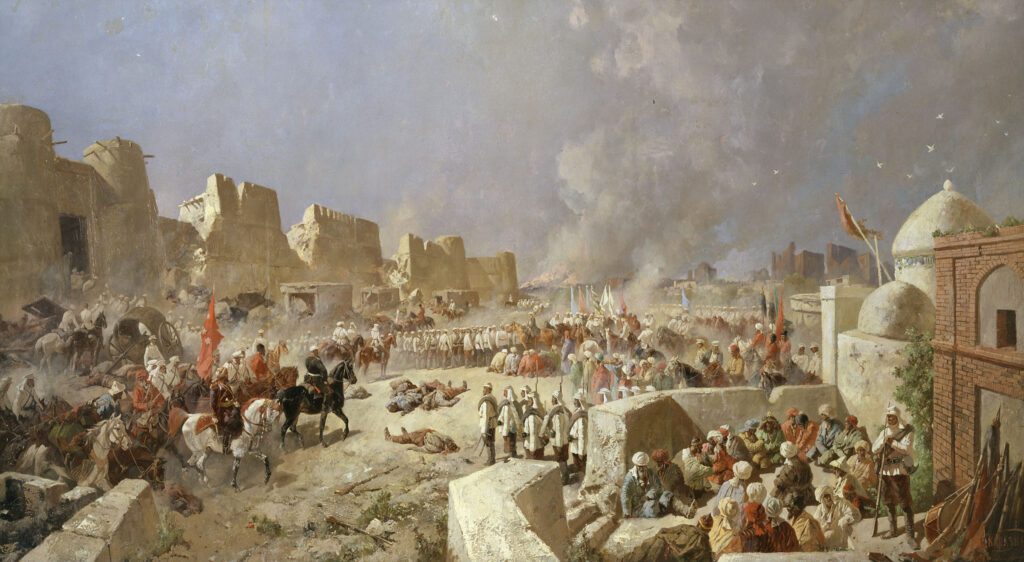
“Look, the English, the French, the Spanish, and all the others bled their colonies dry,” staunch Russian power-mongers like to say in debates. “But we Russians never did!”
But I think one of Russia’s most serious problems is that its rulers have never even considered how bad and destructive this “spiritual” imperative is.
It is always better when people and countries are guided by clear and understandable motives. When everything is rational, everything is calculated, everything is done with a clear head, without any illusions about the “mission to civilize wild peoples”.
Why does Russia need the Caucasus?
When the motive is clear, everyone knows what to do, how to act, and where to look for compromises. It was pragmatism, that is, a realistic rather than idealistic or sectarian view of reality, that ended the existence of European empires. Their leaders and smart helpers simply figured out that maintaining the colonies was more costly than the profits they generated.
And the shop called “colonial era” was shut down.
Of course, it was not entirely without messianism; after all, at all times people wanted to look nobler and better than they really were, and no one wanted to admit that it was all just for the money. Yet those messianic attempts looked very unconvincing. Especially if one considers that the conquerors and conquistadors, though they did a lot of good for the colonies, originally only made the effort for their own benefit.
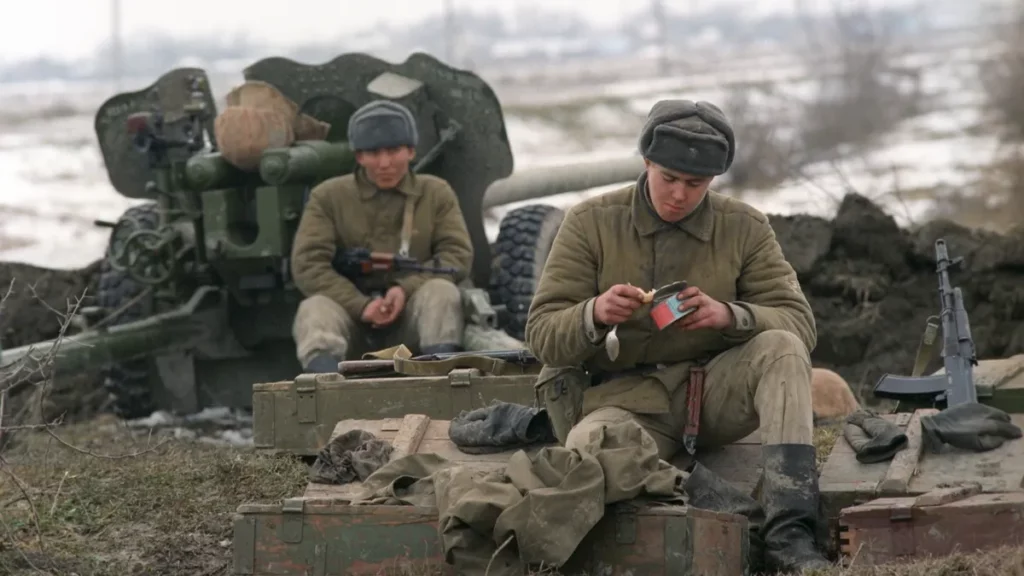
They did not build the railroad in Kinshasa so that the Congolese could visit their relatives, but so that it would be more convenient to transport the expensive rubber to Europe. And the urban infrastructure was not built for the natives at all, but to make the colonists’ life more comfortable. The fact that all the achievements of civilization and technological progress ended up the property of the freed colonies is a nothing more than a side effect.
It is easier to deal with rational people: you know where they can give in and where they will not back down. Because their motives are clear and precise.
But how, pray tell, do you deal with people who know not what they want? In what language should one speak to Russian imperialists who cannot even begin to articulate what it is they want?
For example, what is Russia doing in the North Caucasus? What interests can Russia have there? From a practical point of view, none at all. Quite the opposite, it is an enormous black hole, in which astronomical sums disappear and which does not yield even the bare minimum profit. In the language of the financiers, it is a net liability, something to get rid of immediately and by any means possible.
Any European empire would have done just that: it would have calculated the assets and liabilities and made sure that the balance does not add up, and that losses are many times greater than profits, and it would have said goodbye to the North Caucasus and left the indigenous population to deal with their own problems.
Any empire, but not Russia!
The high mission of the Russian man
Ask modern Russians why they need an empire in the twenty-first century. And you will get an abysmal mixture of religious messianism, wild historical parallels, and digging into the depths of the “mysterious Russian soul”. But I guarantee that no Russian would say that his country needs the empire for oil, gas, or other minerals. Such an answer does not befit the high mission of the Russian man, who is called to bring light and spirituality into the world.
As Maurice Druon said, “Lilies do not spin yarn!”
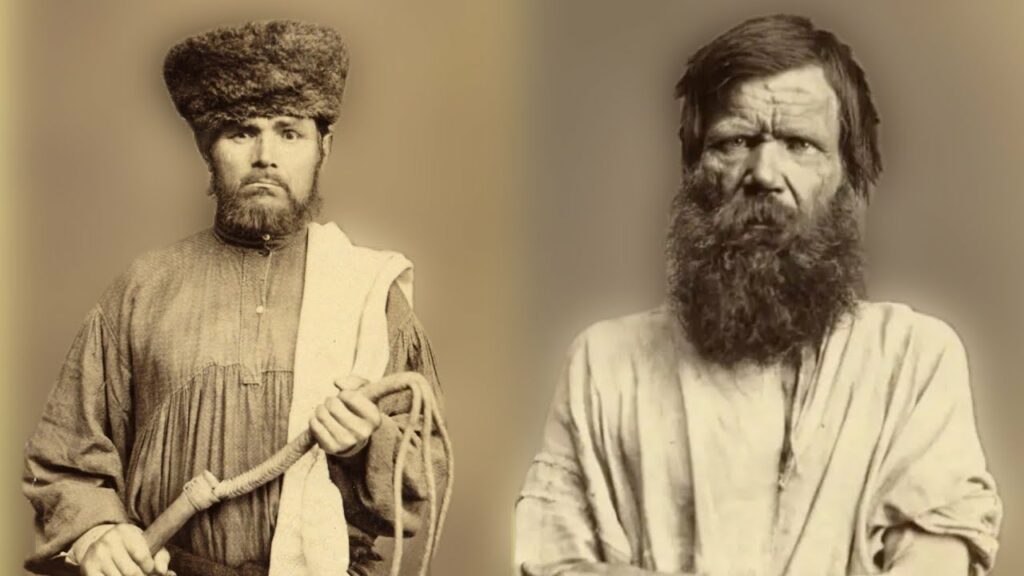
It is not very clear who called them to do it, and what kind of “light and spirituality” it is, but no one digs that deep. Parochial Napoleon could argue that nothing is too small for the truly great. But Russian imperialists of today prove practically that nothing is too much for the truly great.
That is, nothing is enough.
To my argument that Russia has never received anything from its colonies, one might argue that most of this country’s natural resources are located in Siberia and the Far North, that is, in the annexed lands. Let me remind you, however, that mankind began to use oil and gas at most a hundred years ago, while the annexation of these, at the time useless lands, took place about three hundred years ago.
Relying on emotions, historical sentiments, and a sense of one’s own chosenness is always very bad and extremely dangerous. You can calculate and be ready for the actions of someone who came to your land for money and wealth. But what will you do with someone who has an ideological mess in their head and not a single rational argument?
You can expect anything from an emotional person: today they adore you and lavish you with favors, and tomorrow they hate you and launch missiles at you.
Alas, the most dangerous people in everyday life are those who are emotionally unstable, passionately poking around in their thoughts.
Dancing on blood
My point is that the war unleashed by Russia in Ukraine is beyond the logic of a normal person! It is one hundred percent counterproductive, destroys Russia ideologically and causes it enormous and probably irreparable economic damage. Any other empire—and there are still many of them on the political map of the world—would not even plan it. And what is there to plan? Giant costs and zero benefits.
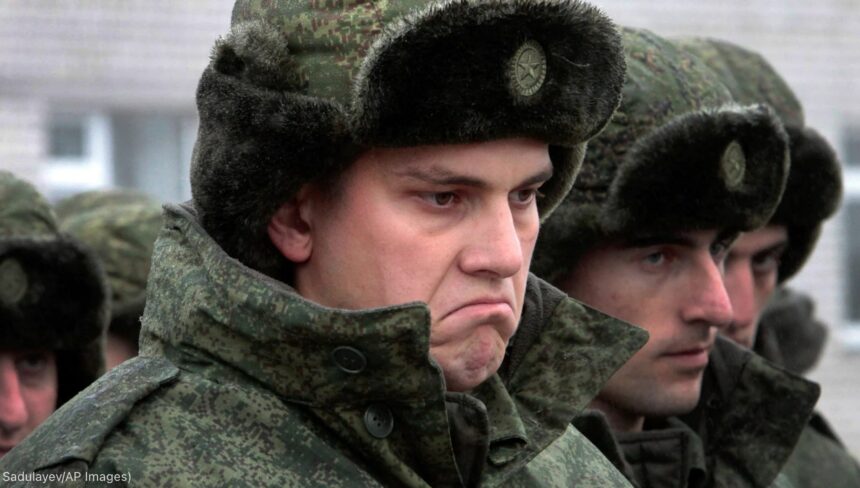
But this is from a practical point of view. From the Russian point of view, it is the exact opposite: this country is willing to suffer hardships, to accept nonchalantly the tens of thousands of dead soldiers, to lose its economy, to be left without industry, to watch the exodus of the most progressive and promising segment of its population… For the sake of what? What goal can justify all this?
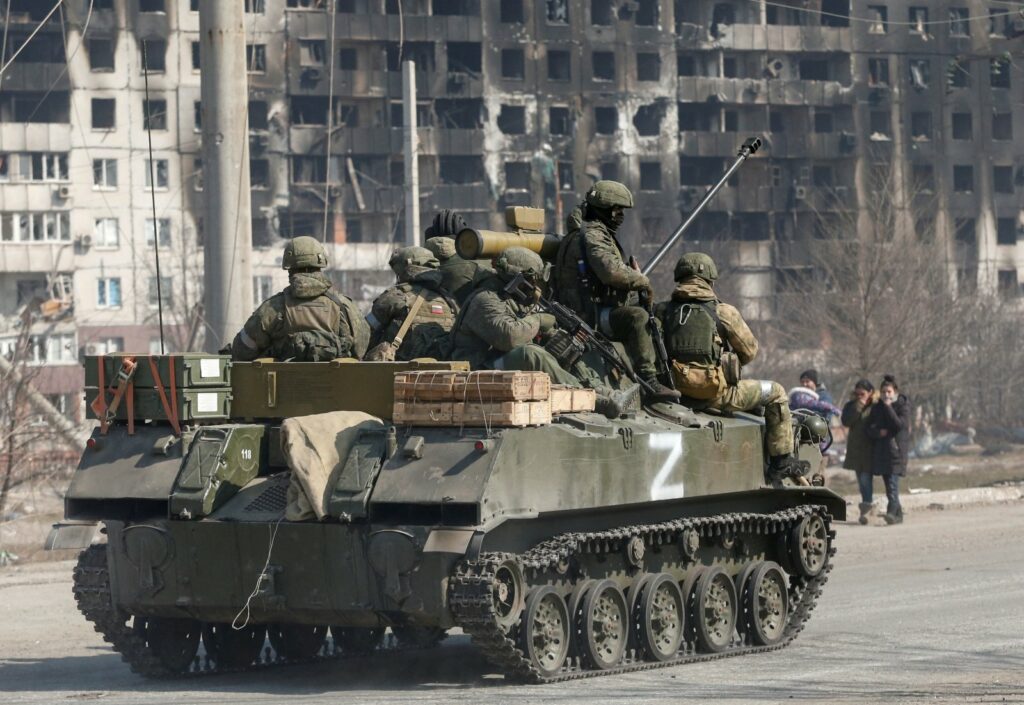
The goal is a pure abstraction, something nebulous that hovers somewhere out there in the stratosphere. The goal, as declared by the Kremlin, is the unity of Russians and Ukrainians, but under the patronage of the Russians. Why? Because there was Kievan Rus, because Stalin gave Ukraine its territories, because Khrushchev gave it the Crimea, and so on.
This might be a good topic for some scientific-theoretical conference, where scholars would argue about the independence of the Ukrainian language, the potential of “soft power”, the boundaries of the “Russian world”, and so on. But this is certainly not a reason for a full-scale war, in the course of which hundreds of thousands of people have already been killed, civilians are being decimated, and the economy of Ukraine is being effectively destroyed.
No Englishman, Frenchman or Spaniard, no one representing nations with a great imperial past, would ever go for this. No benefits would compensate them for the loss of the image of a civilized state, for economic sanctions, for technological backwardness…
But Russia!
Russia continues to be the only state in Europe whose policies are based not on practicality, but on some kind of ideological jumble, a hybrid of inferiority complex and megalomania. It is a country that is ready to break into a reckless dance while the entire civilized world shudders with horror.
No one has ever cheered this great-power dance before. But today, it can evoke nothing but disgust and nausea.
Because this is dancing on blood…
Tengiz Ablotia