Today we observe a growing bifurcation of the world between two camps which might lead to devastating consequences for humanity.
While the origins of this crisis predate and transcend the war in Ukraine, this war has notably escalated the confrontational nature of ongoing international tensions. The implications of this process can be observed also in the South Caucasus, the region that used to be traditionally seen by Moscow and some others as part of Russia’s sphere of influence.
Russia seeks to protect its influence in the region against rival powers
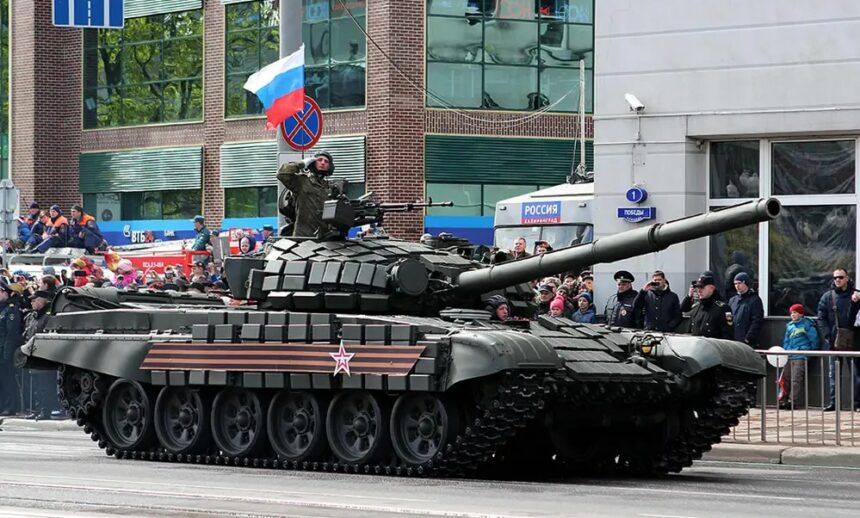
Since the full-scale war in Ukraine started one year ago, Russia has made various efforts to safeguard its predominance in the South Caucasus which had been boosted with the deployment of a peacekeeping mission to the Karabakh region of Azerbaijan following the Second Karabakh War in 2020. With a military foothold on the territories of each of the regional countries, Russia is a formidable power in the South Caucasus and cannot be easily ousted from this position. But the fallout of the Russia-Ukraine war, coupled with the consequences of the Second Karabakh War which increased Türkiye’s influence in the region, has pushed Russia to take measures against the threats to its dominance.
On the one hand, partly due to a potential reaction from Moscow, Georgia became more vigilant in its foreign policy, careful not to antagonize Russia. The consequences of this policy are manifested in Tbilisi’s refusal to join sanctions on Russia, a deterioration of relations between Ukraine and Georgia, as well as the EU’s hesitation to grant Georgia candidate status. On the other hand, Russia took measures to ensure the extension of its peacekeeping mission in Karabakh beyond 2025.
Towards this end, Moscow averts the complete settlement of the Armenia-Azerbaijan disputes by undermining the talks on Karabakh’s integration to Azerbaijan. The appointment of Russian oligarch of Armenian origin Ruben Vardanyan as the “state minister” of the separatist regime has served this intention and indeed significantly damaged the peace process.
The Armenia-Azerbaijan peace process transforms into another theater of the Russia-West confrontation
Another consequence of the Russia-Ukraine war is noticed in the EU’s growing engagement with the Armenia-Azerbaijan peace process. Russia has opposed Brussels’ mediation in these talks from the outset characterizing this as Brussels’ hijack of the peace process and its attempt to play a geopolitical game. However, the two tracks of the peace process were, until recently, held more or less concurrently as the Kremlin largely endorsed the agreements reached in the EU-mediated track of negotiations.
This changed after the news about the deployment of the EU’s monitoring mission to Armenian territory along the borders with Azerbaijan. Meanwhile, Yerevan refused to deploy a similar mission of the Collective Security Treaty Organization (CSTO) within which Armenia is a military ally of Russia. The Russian leaders, evoking the fate of Ukraine and Yugoslavia, unequivocally warn the Armenian leadership that this policy direction might end disastrously for Armenia.
Iran rushes to fill the vacuum created by the decline of Russian influence
Another external actor that tries to boost its influence in the South Caucasus following the decline in Russian influence is Iran. For Tehran, the developments ensuing the Second Karabakh and Russia-Ukraine wars pose various threats to Iran’s national security. Azerbaijan’s alignment with Türkiye and Israel, the talks on the opening of Zangazur corridor, the deployment of the EU monitoring mission to Armenia, etc. are all seen as adversarial developments in Tehran. In this context, Iran sees Armenia as its major partner in the South Caucasus and seeks to deepen bilateral economic and military ties to form a joint resistance against Azerbaijan and its allies.
The countries of the South Caucasus need to remain cautious and vigilant against geopolitical risks and threats
The South Caucasus is a region that is afflicted by many flashpoints with a potential to erupt into a military escalation and violent hostilities. The alignment of the regional countries with different and often conflicting external powers further aggravates the situation and makes the region vulnerable to conflicts and confrontations amongst these external actors. Therefore, the current trend of political developments is dangerous and needs to be cautiously handled by the regional countries.
In this context, a balanced approach or multilateralism, a strategy that has been upheld by Azerbaijan for the significant part of its post-Soviet independence, promises to be useful for all three countries to effectively navigate these turbulent times if replicated by Armenia and Georgia as well. At least for now it looks possible to pursue this strategy and keep the extension of geopolitical hostilities at bay.
Dr Vasif Huseynov, Head of Department at the Centre of Analysis of International Relations (AIR Centre) and Adjunct Lecturer at Khazar University in Baku, Azerbaijan.