Throughout history, European powers have often descended upon the Prague Castle in the Czech Republic to sign peace treaties and end conflicts. It is where the German Brothers’ War was settled in the 19th century, and where the Peace of Prague pathed the way for an end to the Thirty Years’ War — perhaps the most destructive conflict in Europe’s long and bloody history.
Last autumn, the castle’s medieval halls served as a crucial backdrop once more, this time for the first ever summit of the European Political Community. And one of the main items on the agenda were talks aimed at ushering in a peace deal between Armenia and Azerbaijan to finally bring the three-decades-long dispute over Nagorno-Karabakh to a lasting resolution.
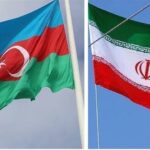
At the summit, peace seemed more attainable than ever, as Armenian Prime Minister Nikol Pashinyan and Azerbaijan’s President Ilham Aliyev confirmed they would recognize each other’s territorial integrity and sovereignty, adopting the United Nations’ Alma Ata 1991 Declaration as the basis for border delimitation discussions.
This is significant, as up until that point, Armenia’s leadership had never recognized Karabakh as the sovereign territory of Azerbaijan. But despite such crucial progress, reality has, of course, proven more complicated. And though peace between Armenia and Azerbaijan is still possible, there’s now a new obstacle standing in the way — and it’s backed by Russia.
Before reclaiming much of its lost territory in a rapid, six week-long war in 2020, Azerbaijan was cut off from Karabakh for 24 years, as an Armenian military presence turned the region into a parastate backed by Yerevan. And since the end of hostilities, Baku has moved quickly to reintegrate the region, with vast sums invested into a massive mine-removal operation, and so far, the first 200 families from among the 600,000 Azeris internally displaced from the first war have already begun returning.
Bringing closure to the Azeris, who were victims of the First Nagorno-Karabakh conflict in the 1990s is a priority for Baku — however, there’s also a need to accommodate and integrate the region’s large ethnic Armenian population, as there can otherwise be no lasting peace.
Karabakh may be Azerbaijani territory, but a significant majority of its current residents identify as Armenian, and today, they are living in a unilaterally declared independent exclave within Karabakh, which illegally seceded from Azerbaijan in the early 1990s. This breakaway state has never been recognized by a single member of the international community — including Armenia itself. But after three decades of self-rule, Karabakh’s Armenians are now worried about their future status as an ethnic minority in Azerbaijan.
Assuaging these concerns and guaranteeing the rights, security and religious and cultural freedoms of ethnic Armenians was a key aim of the Prague talks — and significant advancements were made. But then, just a month later, the mood changed dramatically following an intervention by Russian-Armenian oligarch Ruben Vardanyan.
Born in Yerevan, Vardanyan made his riches in Russia during the decade of gangster capitalism following the collapse of the Soviet Union. Described as the “father of the Russian stock market,” he cut his teeth in investment banking before going on to sit on the boards of some of Russia’s biggest companies, many of which now find themselves on Western sanction lists.
Departing his birthplace in 1985, Vardanyan lived in Moscow for many years before suddenly renouncing his Russian citizenship last November and relocating to Karabakh, becoming the region’s de-facto state minister. The oligarch showed scant interest in Karabakh before this point, but he’d clearly spotted an opportunity to earn a profit: Two long-dormant gold mines reopened mere weeks after his arrival.
Indeed, the timing of Vardanyan’s arrival was peculiar. He came just as Azerbaijan was set to begin talks with the region’s Armenian leadership, who had sent signals to Baku’s negotiators that they recognized their future lay as a protected minority inside Azerbaijan. But now, with Vardanyan as leader, their stance has become obstructionist — the oligarch and the government in Yerevan are publicly opposing each other.
The worry is that Vardanyan will now use this influence to turn public opinion among Karabakh’s Armenian community against peace, which would be disastrous for the interests of both Baku and Yerevan.
It raises the question: How did Vardanyan suddenly become so influential in Karabakh, and who helped him get to this position?
The two main regional powers active in the South Caucasus are Turkey and Russia. The former is a firm ally of Azerbaijan, and while the latter has traditionally backed Armenia, Pashinyan has been public in his criticisms of the Russia-led Collective Security Treaty Organization for failing to provide his country with sufficient support — a move that can be read as an indirect criticism of the Kremlin.
Meanwhile, Vardanyan is well-connected in Moscow, which sees the South Caucasus as firmly in its sphere of influence. All of Russia’s oligarchs operate under the grace-and-favor of President Vladimir Putin, and for this reason, there can be no doubt that Vardanyan is the Kremlin’s man — something the Ukrainian government recognized when it imposed sanctions against him.
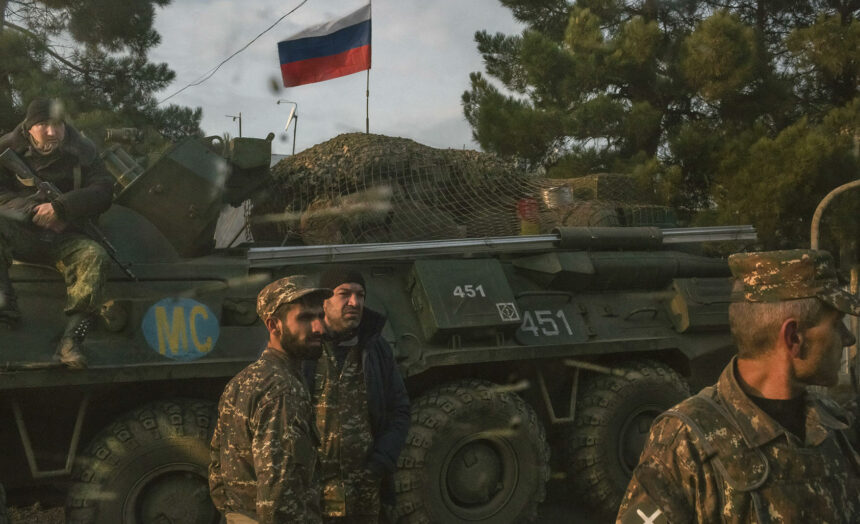
Actively engaged in Karabakh, Moscow brokered the ceasefire agreement that ended the 2020 war, and its peacekeepers have been stationed there ever since. With the European Union also actively engaged in the peace process, however, the Kremlin has a direct interest to avoid being sidelined in its own backyard.
Currently, Russian peacekeepers are also patrolling the Lachin corridor linking Karabakh to Armenia, which is the route Vardanyan is using to export his minerals as well — and Moscow’s peacekeepers aren’t hindering these exports. But while looted gold is unlikely to sink the peace process on its own, Vardanyan’s actions are setting a dangerous precedent.
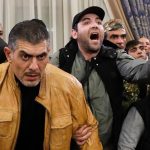
Just last month, things came to a head when Azerbaijani activists appeared at snow-covered Lachin to protest the mines reopening, and the demonstrations had the effect of squeezing the route into Armenian-controlled Karabakh near shut.
Worldwide condemnation in the press has been fierce, as has the questioning of the activists’ legitimacy, as they’ve been roundly accused of being government-sponsored. The international community has rightly focused more on the blockade’s effects on the delivery of foodstuffs and medicine — and there is no doubt a humanitarian crisis is happening. What is less clear, however, is the true gravity of the immediate situation.
At the beginning of the blockade, Vardanyan took to the media, proclaiming his leadership with great relish — starting with briefings to the Russian press. Yet, as it’s dragged on, he has increasingly been forced to defend the purpose and motives of his arrival in Karabakh at such a critical time, as well as the Russian peacekeepers’ failure to clear the protestors from the road, given their mandate is to keep Lachin open.
The danger here is that all this may lead other malign actors to see that the terms of the Russian ceasefire and peacekeeping agreement isn’t worth the paper it’s written on, increasing the risk of soldiers, military contractors and new landmines moving freely over the legal borders of Azerbaijan as well. And should this happen, the threat of a new conflict would dramatically escalate.
This scenario is far from unlikely. The Republican Party of Armenia, which ruled the country for nearly two decades before Pashinyan came to power, was dominated by Karabakh-born Armenians, many of whom were involved in the first war in the 1990s. These individuals may no longer retain much administrative power, but they’re still highly influential and oppose any sort of peace deal. Should Russia decide to sabotage the process entirely, this hard-line bloc could easily serve as a ready-made proxy for carrying out that aim.
A return to armed conflict isn’t in Moscow’s interest, but that doesn’t mean it wants peace either. The Kremlin would much rather see a state of frozen conflict in Karabakh, where tension can be turned up or down at Russia’s behest.
With its diplomatic, military and political bandwidth consumed by the conflict in Ukraine, suspending peace talks indefinitely would allow Moscow to kick the can down the road and reengage at a time when it’s more able to impose its own terms. This way, it can maintain its position as the international arbiter in the South Caucasus.
If the international community wants to prevent this from happening, it needs to get substantive peace talks between Azerbaijan and Armenia going as quickly as possible. It could do this is by publicly holding Azerbaijan to its word that it will guarantee the rights, security and heritage of Karabakh Armenians, while also publicly holding Armenia to its word that it will guarantee respect for Azerbaijan’s territorial integrity.
But no matter what, the local populace in Karabakh needs to understand there are two sides fighting for peace here — and neither Russia nor Vardanyan are among them.
Maurizio Geri is a former analyst on the Middle East and North Africa at the NATO Allied Command. He was also previously an analyst for the Italian Defence General Staff.