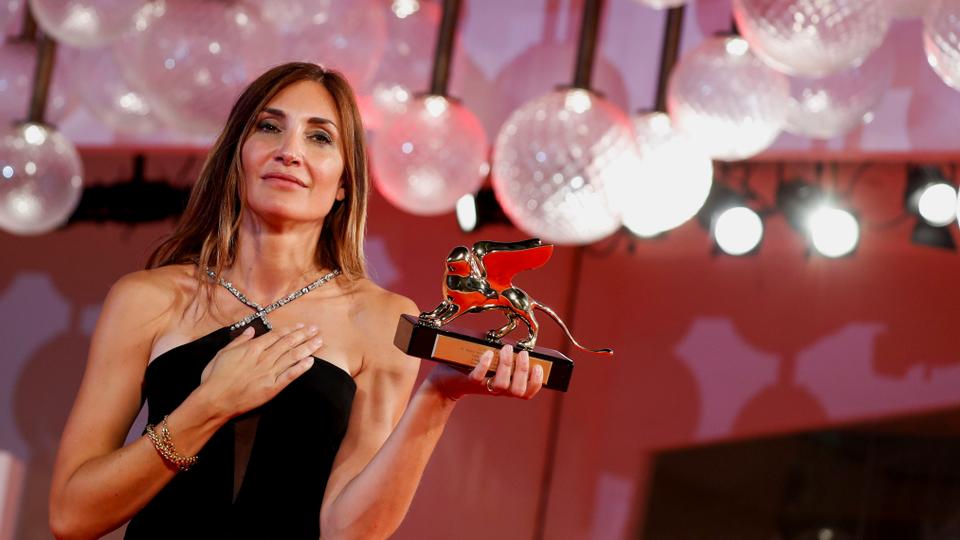
Audrey Diwan, born into a family of Lebanese immigrants, began her career as a journalist. Her debut feature Happening winning the main prize in Venice was a controversial topic even among film professionals; her name had not even been mentioned among the potential candidates for the award. The film’s triumph is the result of the climate dictated to film festivals by Western liberals. Women must be on the jury, they must be given awards even if they make lousy films, queer, black, and female discourse must be featured in films prominently, and so on.
The story takes place in France in 1963. Anna (Anamaria Vartolomei), a philology student, experiences a profound shock when she learns that she is pregnant. She wants to build a career and become a writer, but her pregnancy gets in the way. Since abortion is illegal in the country at the time of the story, Anna looks for a solution…
On the screen we see a drama elevated to the rank of Shakespearean tragedies… To me, as an Eastern woman, Anna’s story, or rather the reason for her not wanting the baby, is not a universal reason worthy of dramatization.
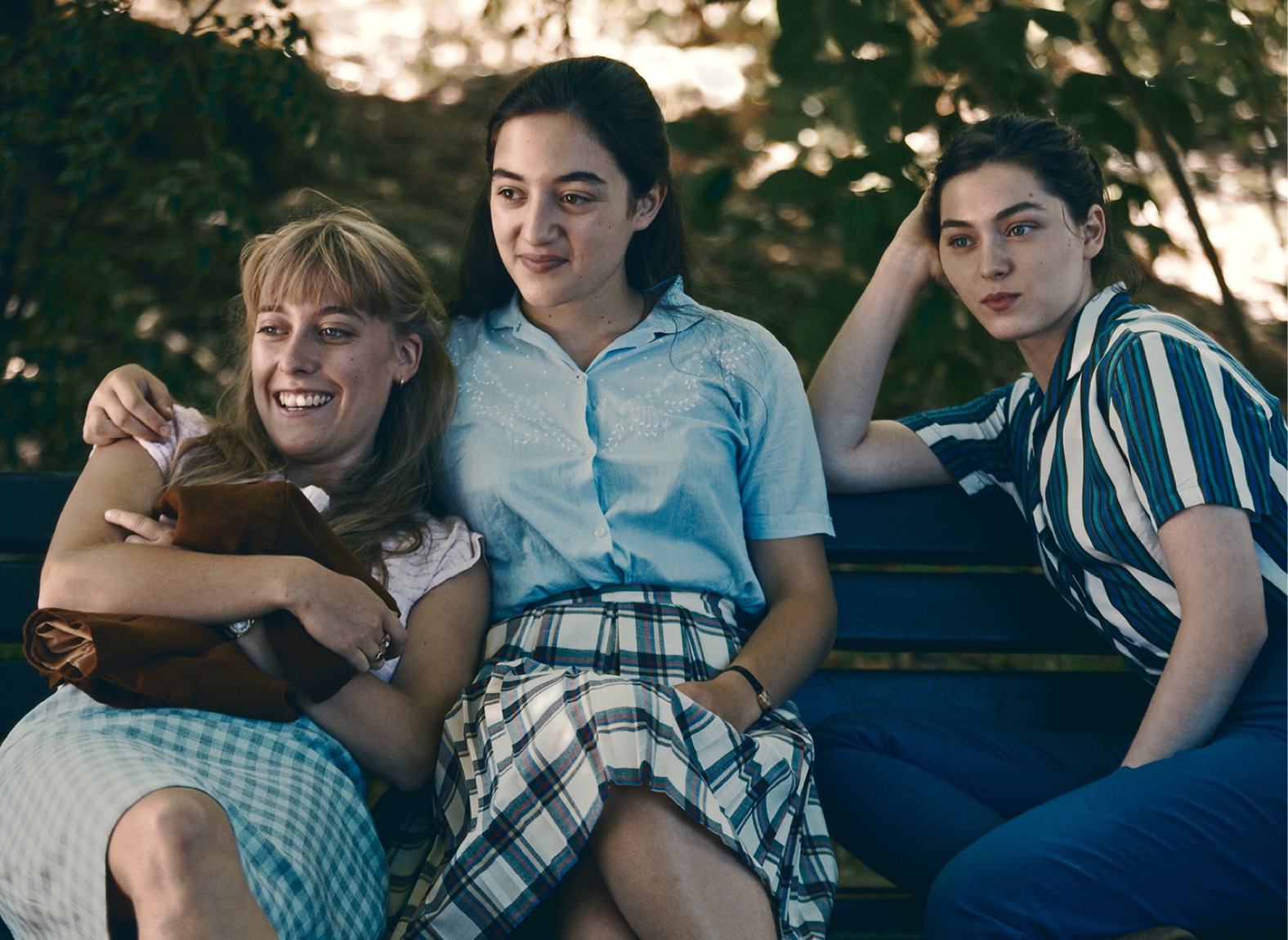
If an unmarried woman becomes pregnant in our country, we all know what awaits her: she may be rejected by her family, killed, physically and psychologically abused, not taken seriously in society, etc. That is, Anna’s choice between career and children turns for us into a live or die dilemma. Which one is more tragic? The novel is autobiographical, Anna’s prototype is Annie Ernaux, and the main reason for the abortion she had as a young woman was to remove a hurdle on the road to the Nobel Prize, not wanting to become a housewife, as she told her teacher…
The director presents the reason with such intensity that one wants to jump into the screen and stop it, to intervene: “My sisters, my fellow women Anna, Audrey… For God’s sake, do not subject yourselves and the audience to this senseless torture and oppression. Give birth and take the baby to an orphanage. Or give it to your mother (Sandrine Bonnaire), she has nothing to do anyway. Or hire a nanny. There are ways out of this situation. In Azerbaijan, women have children, build careers, and take care of the household. This is why we find your hysteria and depression unimportant.”
But the other side of the story must be taken seriously. I am talking about a woman’s right to own her own body, the recognition of the right to abortion, the right to do with one’s body what one wishes. Here the theme becomes truly universal and at the same time raises another question: what expressive means, aesthetics and style does Audrey Diwan employs to address this important issue? Not for a moment does the focus deviate from Anna, the viewer does not get a break from her. The protagonist’s body is shown from all possible angles, and the cinematographer (Laurent Tangy) almost shoves the camera into Anna’s vagina, trying to give us the view of the world from that perspective.
Courtesy of IFC Films. An IFC Films Release.
In Happening, the body is not a means of visual expression, a dramaturgical device serving to unfold and develop the narrative. The body is simply a fact recorded in a pseudo-documentary manner. Why then should we call the fact of the primitive rendering of life a feature film? How is the artistic aspect, the interpretation of it different from reality? Where is the director’s artistic reality and vision that can stir us?
The same happens in Chloé Zhao’s Nomadland, the film that won the Golden Lion in 2020. Homespun hyped-up filmmakers, unable to find words for their stories and their characters, are content to show aspects of an individual’s physiological and biological life, and this in our modern world is called feature films.
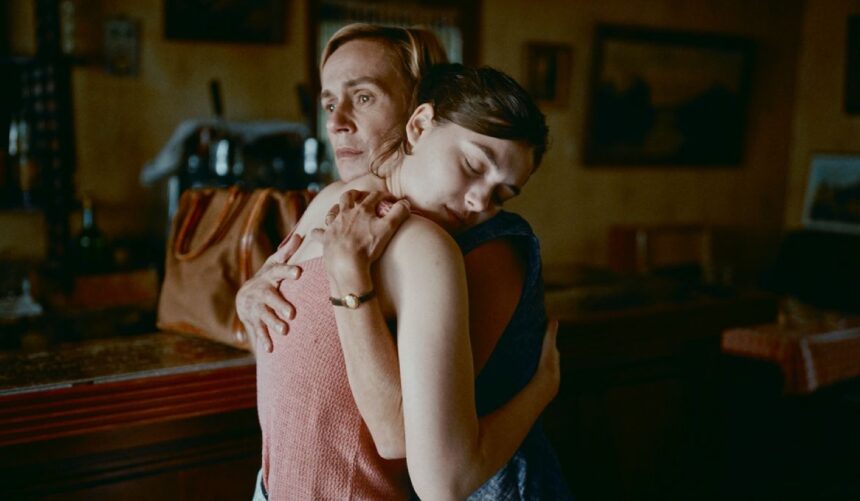
Throughout the film Anna eats, Anna is tense, Anna is tired, Anna makes love, Anna goes to the doctor, Anna takes a bath, Anna touches her vagina, trying to somehow get the fetus out of it, Anna suffers … and all these scenes are loaded with artificial tension and are monotonously repeated. As I already said, the camera only follows Anna, using tight shots, abrupt editing cuts (Anna eats at home, then all of a sudden she dances in a bar, then she is suddenly at the university, etc.): there is no social environment, no life outside the frame, the director rejects the mise-en-scene, depth of the frame, aesthetic principles. Because Anna should be only in the frames.
Master directors too made use of tight angles, this technique aimed at focusing the viewer’s attention on the protagonist. But there is no manipulation of actors in those films, the mise-en-scene, the depth of space, the aesthetic vision are not disregarded, scenes are built on a visual level, showing the depth of the characters’ state of mind.
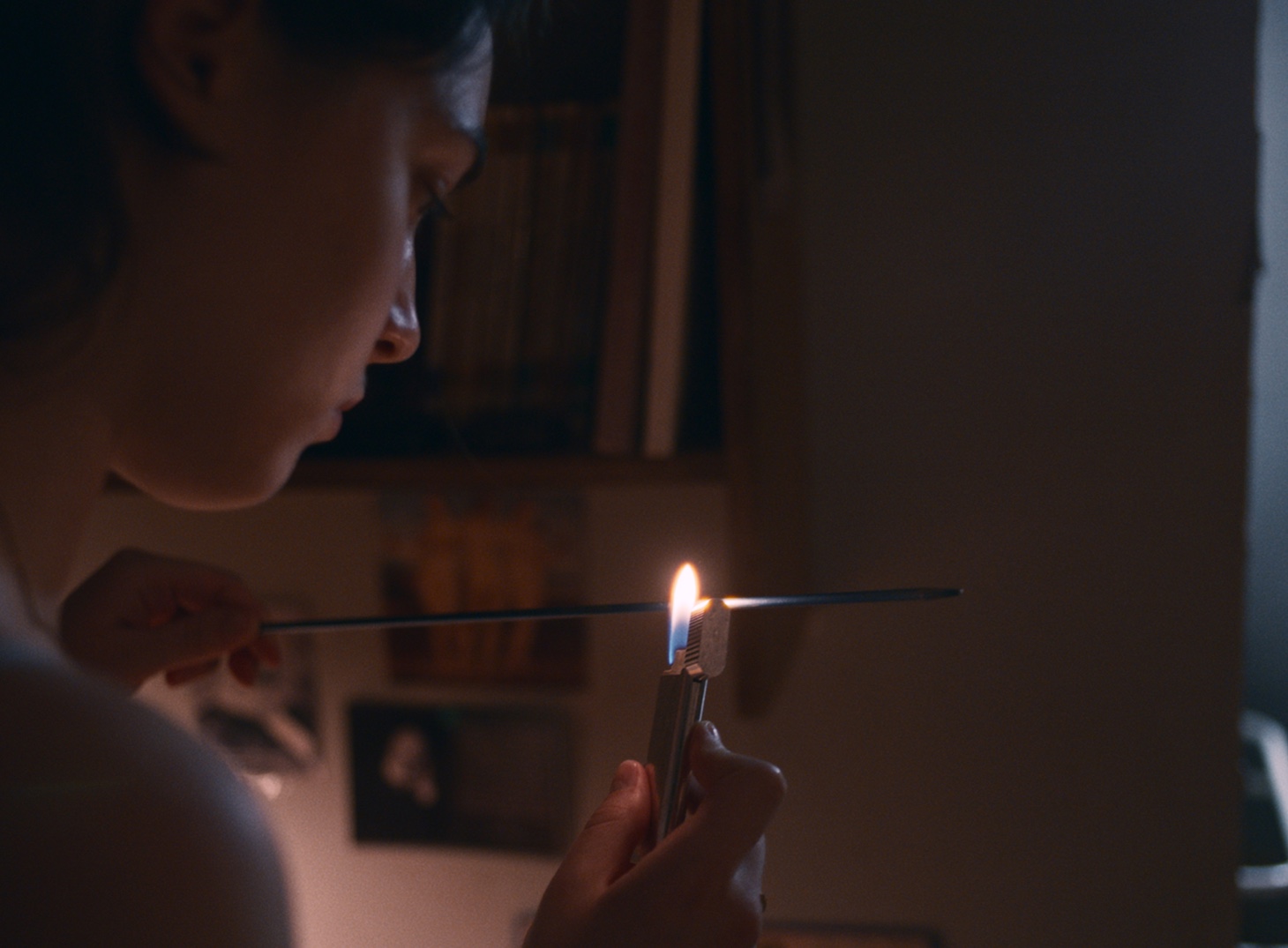
Courtesy of IFC Films. An IFC Films Release.
If Happening is made up of a repetition of states, then the emotional and physical transformation of the protagonist from scene to scene should lead to something absurd. At least, that is what the rhythm dictates. But near the end, the camera again sadistically shows Anna getting rid of the fetus and continuing her education in the final scenes. Diwan worked one line and the only message is: see how this woman suffers, acknowledge our right to abortion. But, believe me, Audrey, you did not need 100 minutes of this mess to voice this slogan.
Oh, and all the men in the film are despicable, aggressive users. A banal feminist approach.
Although I never read Annie Ernaux’s novel, I took note of some parts of it. “Maybe the true purpose of my life is for my body, my sensations and my thoughts to become writing, in other words, something intelligible and universal, causing my existence to merge into the lives and heads of other people.”
The writer clearly wanted to communicate and humanize her personal trauma, but Diwan very ineptly transferred it to film. However, if a film director claims authorship in the adaptation of a literary work, they must also have an authorial intonation of their own.
The topic of abortion was also explored in Mike Leigh’s Vera Drake and Cristian Mungiu’s 4 Months, 3 Weeks and 2 Days, where the authors pack the core theme with issues such as the ethical, moral, political, and social conformity of the time.
… French cinema used to be distinguished for its political-social-philosophical, intellectual films, which did not look artificial. Sadly, French cinema today is represented by films like Happening, which, artistically, are anything but.