
Thirty years after Azerbaijan and Israel established diplomatic relations and 29 years after Israel opened its embassy in Baku, Azerbaijan’s parliament and President Ilham Aliyev decided last month to open an embassy in Tel Aviv.
Israel’s Foreign Ministry called the decision historic. Prime Minister Yair Lapid noted the fact that Azerbaijan was the “first Shi’ite state” to announce it was opening an embassy in Israel.”
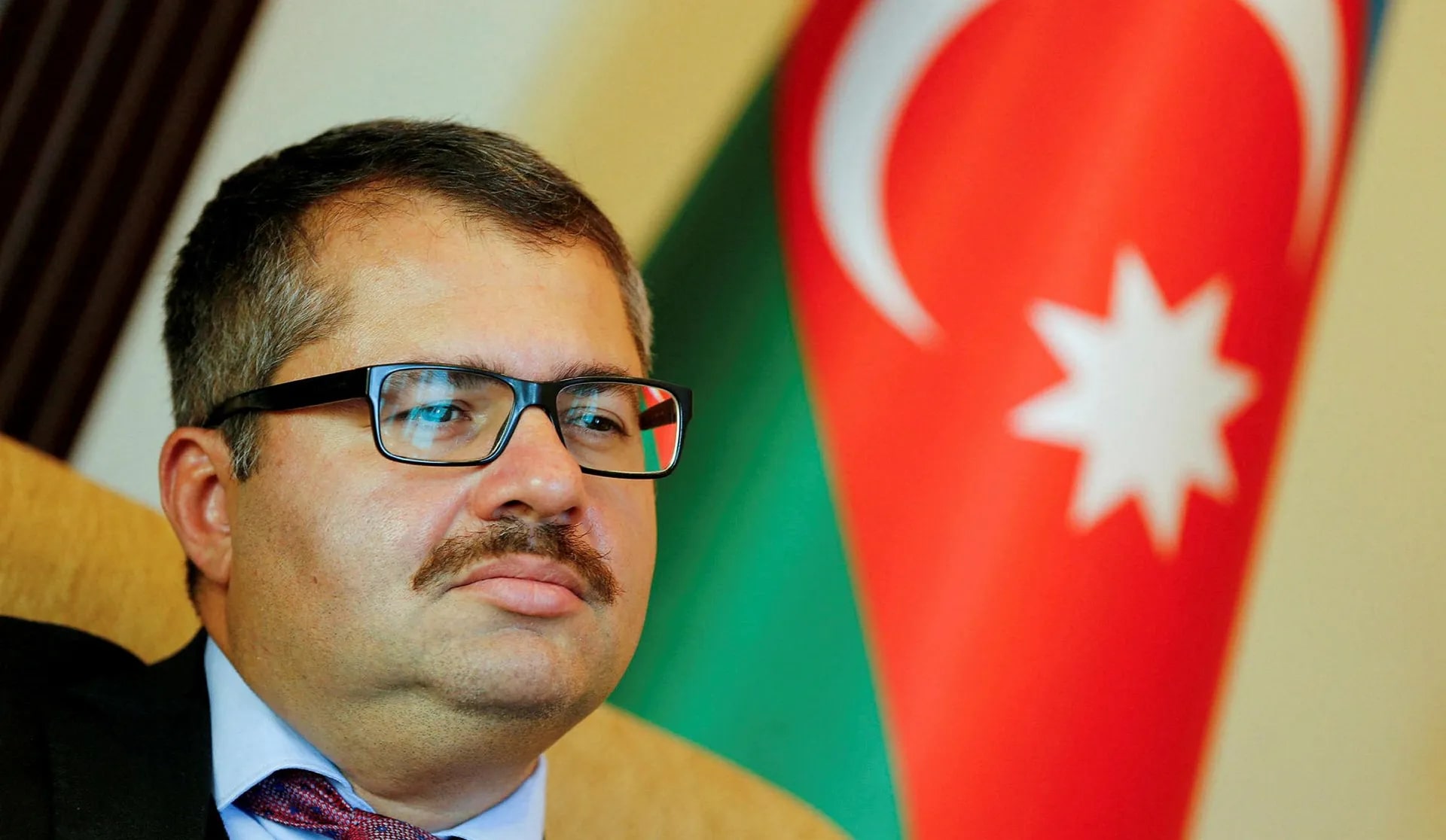
But Khazar Ibrahim, Azerbaijan ambassador to the United States, maintains that religion had nothing to do with the move. “We may be a predominantly Shi’ite Muslim country, but we’re so secular nobody really cares about the religious affiliation of people, and never has,” he says in an interview with Haaretz.
He is aware of the criticism Azerbaijan has faced from certain countries over strengthening ties with Israel, including Iran and rival Armenia. “We hear from various international circles of criticism of our relations with Israel … It’s a fact.”
However, he emphasizes that the decision to establish ties with Israel was made independently. “Our relations and cooperation with Israel, as well as our strategic partnership, have nothing to do with any other country, including Iran.”
The decision to open an embassy in Tel Aviv at this particular time – just as a right-wing government that has come under criticism in Europe and the United States is about to take power – does not seem like the obvious choice. The ambassador notes, though, that the change of government will have no effect on the relationship between the countries.
“Israel and Azerbaijan’s relations will never be dependent on a change in the governments. I think this is a ‘state-to-state’ and ‘people-to-people’ relationship,” Ibrahim explains. “We’ve seen many changes in the political establishment in Israel, and it has never affected the relations.”
The embassy’s opening date is still unknown, as is the identity of the first Azerbaijani ambassador to Israel. One thing has been decided: Like most foreign embassies in Israel, this one will be located in Tel Aviv, rather than in Jerusalem.
Ibrahim says he is under the impression that his colleagues in Israel commend the move regardless of where the embassy will be located. “We are not the only country which has opened an embassy in Tel Aviv, and we never saw any bad feeling about opening it in one city rather than in another one. Having it in Tel Aviv will definitely contribute to our relations.”
Asked about the possibility that the embassy would eventually move to Jerusalem, he says, “I can’t say anything about that. It won’t be helpful and is a little bit hypothetical.”
Azerbaijan and Israel have extensive security and trade relationships. According to the 2021 annual report of the Stockholm International Peace Research Institute, Israel accounted for 69 percent of Baku’s total arms imports from 2016 to 2020. These arms sales took place during the bloody conflict between Azerbaijan and Armenia in the Nagorno-Karabakh region. Israel imports some 40 percent of its oil from Azerbaijan, and the two countries also cooperate on agriculture projects.
About two months ago, Israeli Defense Minister Benny Gantz paid an official visit to Azerbaijan, accompanied by senior defense officials.
Ibrahim believes that bilateral defense ties will expand, stressing, however, that his country’s weaponry is solely for defensive purposes. In order to ensure peace in the region Azerbaijan must have strong defense capabilities “and I emphasize, defense capabilities.”
He says that Azerbaijan has an arms industry and produces weapons, but will never use them against another country or cast a shadow on the cooperation with any of its allies. His country, he implies, would not risk its international relations due to pressure from other states – including its relations with Israel.
The ambassador also signals that these warming bilateral relations does not necessarily mean that Azerbaijan intends to side with Israel on votes in the United Nations and other international forums. He says that the country does not believe in making deals behind closed doors, and that Azerbaijan and Israel understand and recognize each other’s positions within the international arena.
There has been speculation over the years about the possibility of Israel operating from bases in Azerbaijan to attack Iran’s nuclear facilities. Ibrahim vehemently rejects reports on the matter, and stresses that his country would not allow Israel to act from its territory against its neighbor.
“Never will Azerbaijanis be used against any other country. Probably there is someone who wants to spoil the relations between Azerbaijan and its allies, but that will never be the case.”
He says his country would not destroy its international reputation for the benefit of other states’ interests: “Azerbaijan is a very reliable international partner. It has very good relations with any country that wishes to have good relations,” he says.
“I should underline that it has nothing to do with just one country. We are very proud that we do not have any foreign military bases on our soil.”
In October 2021, Iranian forces carried out military drills on the border between the two countries. Senior Iranian figures implied at the time that the move signaled Iran’s fear of Israel’s gaining a foothold on the border.
Ibrahim confirms that there are tension between the two neighbors. “Recently there have been some steps, some statements and some actions from Iran which, I would say, do not contribute to good neighborhood relations. It’s a fact they had military exercises right on our border that did not take place in the last 30 years.
“But at the same time, our relations with Israel, our cooperation with Israel, our strategic partnership with Israel, has nothing to do with other countries, including Iran. We’ll continue our cooperation with Israel regardless of any other country’s position on that, and we should be very clear: Nobody can have any veto or any impact on our relations with Israel, which are strategic and deep and will continue to expand.”
Jonathan Lis