The latest border hostilities between Armenia and Azerbaijan reflect Russia’s weakening hand in the region. However, this decline has not occurred overnight. Even before the continuing fiasco of Russia’s war of aggression against Ukraine, influential strategic thinkers in Moscow—for example, Alexander Dugin, Dmitri Trenin, and Andrei Yepifantsev— were finally coming to grips with the fact that the Soviet Union represented the high-water mark of the Russian Empire. Russia’s influence in the South Caucasus has waned and waxed for 30 years. Now, it is waning again, as Russian President Vladimir Putin is seeking to regain control over former Soviet republics.
After the Soviet Union disintegrated, Russia’s influence declined in Azerbaijan and Georgia—but not in Armenia. Developing Azerbaijan’s offshore energy resources led to increased Western influence. The West also favorably regarded then-Georgian President Eduard Shevardnadze after 1991 because he was already known to the outside world as former Soviet leader Mikhail Gorbachev’s foreign minister. Mikheil Saakashvili, who succeeded Shevardnadze as president in 2004, was himself a Western-educated and Western-oriented individual. Russia closed its last military base in Georgia in 2007, but in Armenia, Yerevan’s irredentist claim over Azerbaijan’s Nagorno-Karabakh region produced the current situation in which Russia, as a security guarantor, still has military bases in Armenia.
Russian influence in Azerbaijan and Georgia stopped its decline toward the end of the 2000s. Russia’s August 2008 war of aggression against Georgia was the main reason. The West’s refusal to offer anything but words shocked local political elites and made them think again about their relations with Moscow. This convinced Azerbaijan that it could not rely on the West to guarantee its security.
Another reason for the recovery of Russian influence was the pro-Armenian tilt of then-U.S. President Barack Obama’s administration, beginning in January 2009. As then- Washington Post editorial page editor Fred Hiatt observed, for example, the Obama administration did little to prevent Armenian-American interest groups from blocking Senate approval of Matthew Bryza as U.S. ambassador to Azerbaijan, thus providing an example of “how the larger U.S. national interest can fall victim to special-interest jockeying and political accommodation.”
U.S. prestige declined after the failure of the Obama administration’s attempt to promote a Turkish-Armenian rapprochement, which failed due to counterclaims from both sides: Armenia insisted on Turkish recognition of genocide in 1915, and Turkey linked the process to the resolution of the Nagorno-Karabakh problem. Washington lost credibility in the region and seemed simply to lose interest. Georgia’s effective absorption into a Russian sphere of influence began accelerating in 2012, when Georgian oligarch Bidzina Ivanishvili became prime minister with his Georgian Dream party in the majority. Saakashvili’s ouster from the presidency in 2013 confirmed the trend.
However, none of these events affected Russian influence in Armenia, which only increased between 1991 and the second Armenia-Azerbaijan war in 2020. Several Russian army formations, notably the 366th Guards Motor Rifle Regiment, played key roles in guaranteeing victory of the irredentist Armenian movement in the former Soviet Nagorno-Karabakh oblast from 1992 to 1994.
Leaders of the so-called Karabakh clan (so-called by local Armenians and some international experts, such as Laurence Broers, and led by Robert Kocharyan and Serzh Sargsyan, who would later become leaders of Armenia itself) oversaw the ethnic cleansing of 700,000 Azerbaijanis—with attendant atrocities that some have called genocide—from their ancestral homes in seven adjoining Azerbaijani provinces.
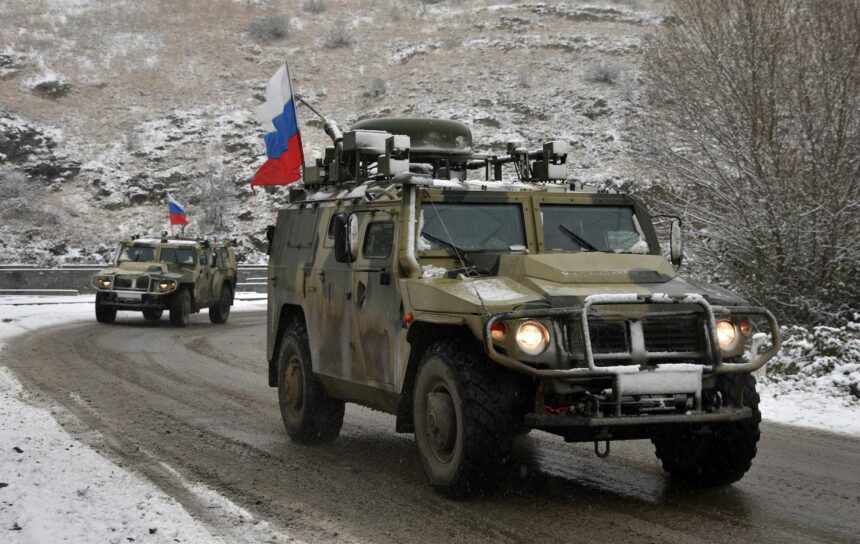
Armenia signed a mutual defense treaty with Russia in August 1997. It continues to host several thousand soldiers in Gyumri, Armenia, under the command of the Southern Military District of the Russian Armed Forces, with which Armenian ground forces have been directly integrated since 2016. Russia sells weapons systems to Armenia at the domestic Russian price as “military aid,” lending it rubles that will likely never be repaid, rather than at the international price, which Azerbaijan pays in hard currency. Russian state interests own Armenia’s railways, banking system, and energy infrastructure.
The proximate cause for the accelerated decline of Russian influence in the region is not its February reinvasion of Ukraine or even the second Armenia-Azerbaijan war from September to November 2020. Rather, this cause was the four-day Tovuz clashes between Armenia and Azerbaijan in July 2020. At that time,
Azerbaijan was unpleasantly surprised by Russia’s unmistakable tilt toward Armenia, notably through emergency military resupply. The country’s political elite was arguably shocked, and Azerbaijani public opinion was galvanized. Officials in Baku, Azerbaijan, drew the conclusion that they could no longer count on Moscow and that Ankara was its only true friend in the region in standing up to Yerevan.
The question of Russian influence in Armenia is a more nuanced matter. Moscow could not oppose the coming-to-power of current Armenian Prime Minister Nikol Pashinyan in Yerevan’s 2018 so-called Velvet Revolution against Sargsyan’s attempt to maintain the Karabakh clan in power by moving from the presidency to the prime minister’s office. The Armenian public had grown exhausted with the isolation, poverty, and corruption that the Karabakh clan had visited on the country during the two previous decades. In opposition since then, the Karabakh clan has kept pressure on Pashinyan in myriad ways.
However, Pashinyan’s overwhelming victory in the June 2021 snap elections demonstrated the political bankruptcy of their policies, which had been continually endorsed by the most extreme elements of the Armenian diaspora. Pashinyan’s victory was all the more remarkable for having followed the catastrophic capitulation by Armenia’s armed forces, which the November 2020 Moscow cease-fire agreement codified.
Significant numbers of Russians have emigrated to Armenia since Russia relaunched its war of aggression against Ukraine in February. Reportedly, 142,000 people emigrated in the first quarter of the year alone, equivalent to around 5 percent of Armenia’s whole population (including children and older adults). Early concerns about how Armenia could help Russia break Western sanctions now appear to merit closer examination.
While some of these Russians certainly left Russia because they did not like Russia’s war of aggression against Ukraine, the opportunity provides Russian security services the chance to infiltrate their own people among the emigrants. These Russians now in Armenia, with networks of influence established by Russia between 1998 and 2018 during the political preeminence of the Karabakh clan, have led to the emergence in Yerevan—even before Russia launched its new war—of a Russian “fifth column” openly questioning the need for Armenian independence altogether.
“There is no alternative to the Armenian-Russian alliance,” said Eduard Sharmazanov, a member of the Republican Party of Armenia, led by Sargsyan. These circles would seek the dissolution of Armenian state sovereignty into a so-called common state with Russia—such as exists on paper between Russia and Belarus—or even its absorption into that same common state. Other Armenian political observers, like Hakob Badalyan, condemn pro-Russian sentiments: “Armenia is a free country, unlike Russia.”
Recent clashes between Armenia and Azerbaijan over their disputed border made it obvious that Russia’s war of aggression against Ukraine limits Moscow’s capacity to impose its grip on the region. Armenia has nothing to show for its extended and enduring reliance on Russia as a security provider.
Russia has not answered Pashinyan’s appeal under the terms of their bilateral 1997 treaty. Yet just a few days ago, Pashinyan told Armenia’s National Assembly in Yerevan that “our ally is the Russian Federation and the [Collective Security Treaty Organization].” The latter is a military alliance of six members of the Commonwealth of Independent States; but when he appealed to them for assistance, there was next to nothing to show for it.
Today, Armenia—for all its claims of Westernness rooted in its Christian past—is firmly in the anti-Western camp. Not only has it been strongly aligned with Russia since its independence three decades ago, but it has also fallen into an intersecting sphere of influence projected by Iran, which shares Armenia’s hostility toward Azerbaijan. Now, Yerevan is inviting foreign direct investment from Beijing into the sensitive southern province of Syunik on the Iranian border, located between the main body of Azerbaijan and its exclave Nakhchivan.
This region is exactly where Pashinyan has refused to construct the Zangezur passage (which the Azerbaijanis call a “corridor” and which would connect Azerbaijan proper with its Nakhchivan exclave through Armenian territory), to which he committed Armenia in Paragraph 9 of the November 2020 cease-fire agreement. Azerbaijan has kept its commitment to construct a new Lachin corridor from Armenia to the city known by the names Khankendi and Stepanakert that, unlike the old one, bypasses Lachin city. Late last month, Azerbaijani forces took control of Lachin city, in accord with signed agreements, and began clearing the area in anticipation of the return of Azerbaijanis who had suffered under ethnic cleansing in the 1990s.
In the process, they discovered and disarmed 1,318 banned landmines manufactured in Armenia in 2021 and buried on Lachin territory by “unauthorized Armenian armed detachments” (i.e., infiltrated saboteurs) after the 2020 war. It is estimated that Armenian forces placed more than 1 million mines throughout the occupied territories over the course of nearly 30 years.
Many countries, international institutions, and civil society organizations are contributing to the demining effort, which will still take years if not decades to complete. Although Baku laid some mines on the line of contact (which did not include Lachin) before the second war between the two sides in the fall of 2020, the overwhelming majority of mines in the formerly occupied territories were laid by Armenia during the years when it controlled those territories.
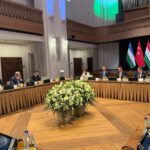
Recent border hostilities reveal the fragility of the cease-fire and the need for a peace agreement. In the meantime, there is little progress on other tracks, such as border delimitation and the opening of transport corridors. In Vladivostok, Russia, on Sept. 8, Pashinyan announced that Armenia would not agree to any “corridor” through its territory. According to local sources, Armenia is no longer planning the railway project through Zangezur and Meghri that was stipulated by the trilateral statement of November 2020.
A few days ago, Pashinyan informally revealed the motives behind this stance. He was quoted in the Armenian press as letting it slip to members of his parliamentary group that Armenia had “to maintain this situation” of stalemate around the Zangezur passage “for at least two years … until [Armenia’s] army is rearmed.”
This directly contradicts the admonition of U.N. Assistant Secretary-General Miroslav Jenca, who—speaking at a U.N. Security Council meeting demanded by Armenia—enjoined the parties to “abide by their obligation to fully implement the [November 2020] trilateral Statement” (including the Zangezur passage) and “take steps towards the signing of a lasting peace treaty” (for which Azerbaijani President Ilham Aliyev has proposed five principles).
These are exactly the steps that Pashinyan committed Armenia to—but which he has been avoiding for nearly two years. Indications seemed favorable after the Brussels meetings on April 6 and May 22 this year; however, the recent clashes erupted after he met Putin in Vladivostok on Sept. 7.
Russia’s interest lies in the opening of transport links enabling Moscow to be connected with Armenia through Azerbaijan and in the delimitation of its border under Russian supervision. However, Russia is not interested in a final peace agreement between Armenia and Azerbaijan because then Moscow’s peacekeeping operation in Nagorno-Karabakh would lose its raison d’être. It therefore seems likely that it was under Putin’s influence that Pashinyan reversed his previous commitment to signing a peace treaty; indeed, he gave two diametrically opposed statements on the matter in the course of a single day.
Balking further at peace increases the risk that Russian interests in Armenia will remake it as a permanent outpost of Russian influence in the South Caucasus, confirming Iran’s foothold there and giving China one as well. The whole adventure of territorial claims against Azerbaijan has had the result of bringing Armenia under Russian influence. (Brought on by the Karabakh clan, this led some Armenians born in Armenia proper to refer sardonically to their hijacked country as the “Republic of Greater Karabakh.”)
If this trend continues, Armenia will become still further absorbed by Russia. Moreover, as it was observed by Andrey Kortunov, director-general of the Russian International Affairs Council and one of the most experienced regional observers in Moscow, Armenian irredentism may simply lead to the demise of the liberal project in Armenia.
Robert M. Cutler, a fellow of the Canadian Global Affairs Institute.