Organization of film production: National Cinema Center, Eurimages and…
After the collapse of the USSR, in the 1990s, the first decade of independence, a total of 30 feature-length and short films were produced in Armenia. Although several independent film studios were opened at that time, many of them were later closed for economic reasons. In the 2000s, the situation began to change for the better, and in the second decade of independence, 60 feature-length and short films were produced in the country.
The National Cinema Center of Armenia, established in 2006, is a non-profit government organization under the Ministry of Education, Science, Culture and Sport of the country. The goal of the organization is to implement the state policy in the field of cinema, financially support local filmmakers, promote the national cinema heritage and present Armenian films at international festivals and film markets. The National Cinema Center arranges educational and training programs for film producers and implements various projects for young filmmakers. For example, the center has just announced a grant competition for filmmakers in cooperation with the French CNC (Centre National du cinéma et de l’Image animée) and the Cité Internationale des Arts. Regularly participating in the film market at Cannes, Berlin, Venice and other prestigious film festivals to expand co-productions, the center promotes its projects to Western filmmakers and seeks partners.
The expert committee that evaluates film projects is renewed every five years. Members of the committee may be film producers, directors, screenwriters, cinematographers, film editors, and film critics with at least five years of experience in the field. As a rule, preference is given to persons who have participated in international film festivals, sat on film festival juries, won international awards, have production experience, and have written analytical articles about the film industry. According to the rules, a member of the expert committee must not work for any government agency. In addition, persons related to a member of the expert committee are not eligible to enter the competition.
Another organization supporting cinema in Armenia is Hayk Documentary Film Studio. However, by decree of the government last year, the studio was merged with the National Cinema Center of Armenia. While the National Cinema Center supports films of different genres, the Haik studio sponsors documentaries. Since the functions of both organizations are essentially the same and they are funded from the state budget, the government decided to centralize financial and professional resources. The Armenian diaspora also supports Armenian cinema and is actively involved in film production. The Hayastan All-Armenian Fund is particularly active in film restoration and promotion.
Since 2016, Armenia has been a member of Eurimages, an organization with headquarters in Strasbourg that provides financial support to feature, animated, and documentary films, organizes co-productions, distributes films, and assists in their distribution. Thanks to the membership in the organization, the country has joined the European film production network, increasing the number of its co-productions and being able to introduce its films more widely on the world film market.
Actively working with foreign foundations and organizations, last year the Center signed a contract with MK2, one of the world’s leading film distribution companies, to promote Armenian cinema worldwide. MK2 handled the global screening of Frunze Dovlatyan’s Hello, It’s Me (1965), and the restored version of the film was screened at the 76th Cannes Film Festival as part of the Cannes Classics program. The program also featured Parajanov’s Shadows of Forgotten Ancestors (1965).
There are plans for international projects to mark the 100th anniversary of Armenian cinema and Parajanov’s 100th birthday in 2024. This year, one of Arman Manaryan’s films, Heghnar Spring (1970) or Karine (1967) will be screened as part of the Venice Classics program at the Venice Film Festival. Similar projects will be implemented at other film festivals.
The Center has also signed contracts with cinematheques in Brussels, Berlin, and discussed the restoration of classic Armenian films and the establishment of a film laboratory in Armenia with Prasad Corporation, one of the largest organizations providing post-production and film restoration services. Specializing in cooperation with the countries of the former Soviet Union, the organization has branches in different countries. And a regional festival of Armenian-Georgian films is expected to be held in cooperation with Georgia in both countries in 2024.
Main themes in Armenian cinema
According to the head of the Center Shushanik Mirzakhanyan, the state-funded films feature predominantly national themes. The selection committee accounts for this when reviewing the projects. The Center orders five to six full-length feature films annually, at least two of which are of ideological nature. National interests are usually prominent not only in films financed by the Center, but also in independent films. The list below presents some of the films with an ideological focus (the events of 1915, the claims that Karabakh is the historical Armenian land, the promotion of Armenian culture in the context of the life and work of Armenian artists, etc.), made in various years. Many films were screened at international festivals and received awards.
Human Stories in War and Peace (2007) Director: Vardan Hovhannisyan. Subject: Karabakh. Journalist Hovhannisyan, who fought in the First Karabakh War, goes in search of his comrades-in-arms. Production: Armenia
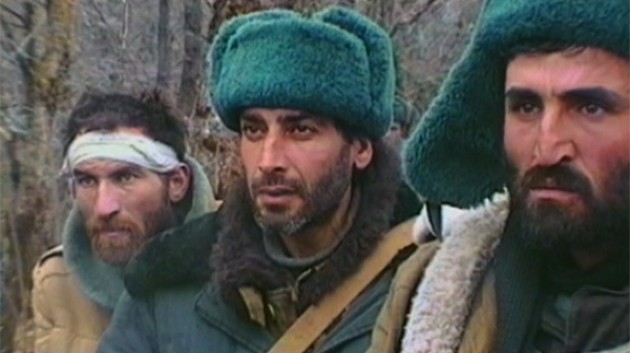
Border (2009) Subject: Karabakh. Director: Harutyun Khachatryan. Production: Armenia, Netherlands
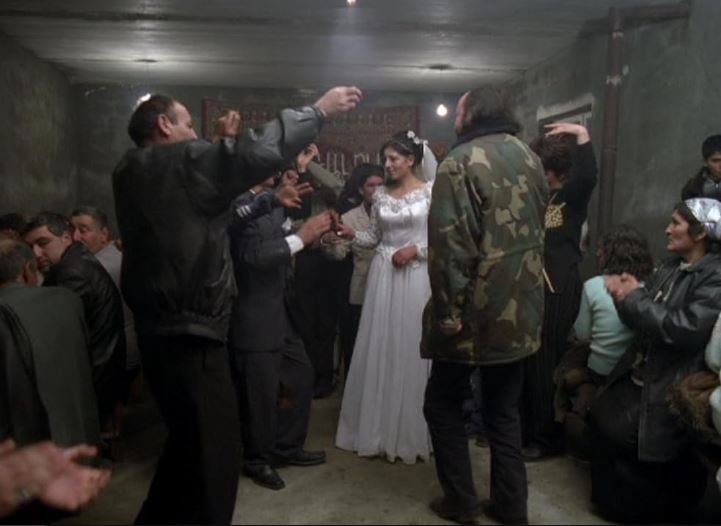
If Only Everyone (2012) Subject: Karabakh. Director: Natalya Belyauskene. Production: Armenia.
The film was produced by Time Production, a company patronized by former President Serzh Sargsyan.
Broken Childhood (2013) Subject: Karabakh. Director: Jivan Avetisyan. Production: Lithuania, Armenia
Тevanik (2014) Subject: Karabakh. Director: Jivan Avetisyan. Production: Armenia, Lithuania
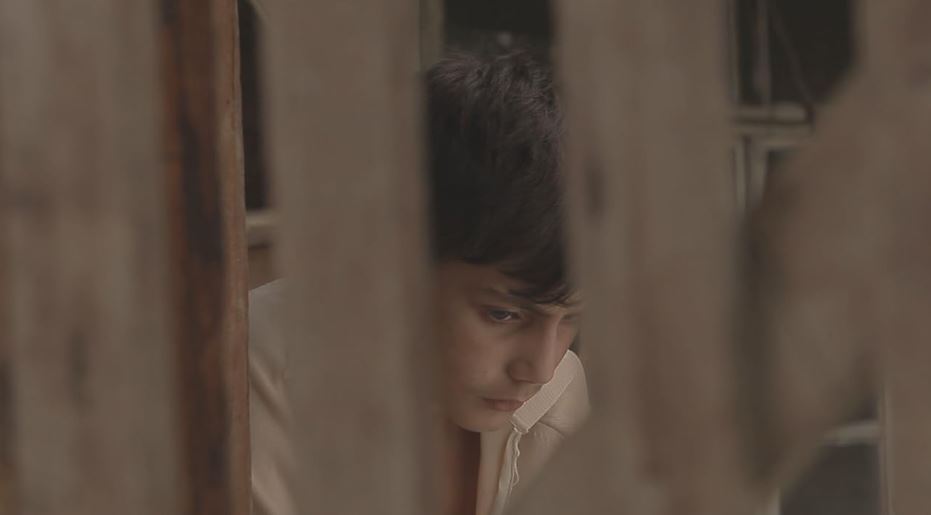
Map of Salvation (2015) Subject: Events of 1915. Director Aram Shahbazyan. Production: Armenia
Note: The film is about five European missionary women, Maria Jacobsen (Denmark), Karen Jeppe (Denmark), Bodil Biørn (Norway), Alma Johansson (Sweden), Anna Hedvig Büll (Estonia), who founded shelters for Armenian children and women.
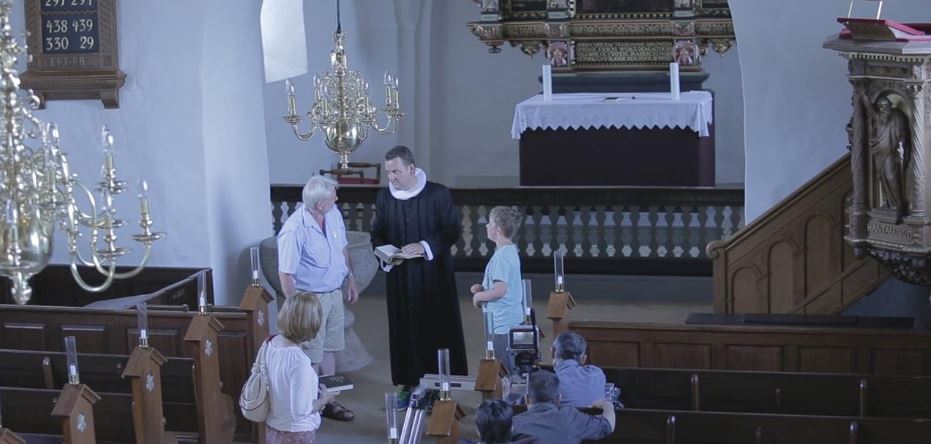
Don’t Tell Me the Boy Was Mad (2015) Subject: Events of 1915. Director: French Armenian Robert Guédiguian. Production: France, Lebanon, Switzerland, Armenia.
Note: The plot is focused on the assassination of a Turkish diplomat by an Armenian terrorist in the 1980s and on how that assassination is rooted in the events of 1915.
Alter Ego (2016) Subject: Armenian history, life of composer Komitas. Director: Vigen Chaldranyan. Production: Armenia
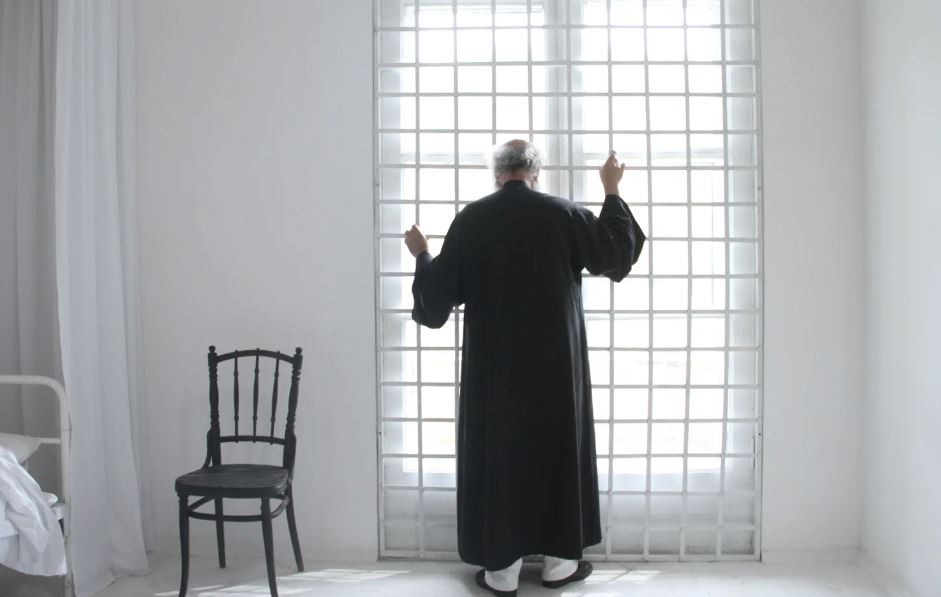
The Line (2016) Subject: Karabakh. Director: Mher Mkrtchyan. Production: Armenia
The Last Inhabitant (2016) Subject: Karabakh. Director: Jivan Avetisyan. Production: Lithuania, Sweden, Lebanon, US.
Earthquake (2016), Subject: 1988 earthquake. Director: Sarik Аndreasyan. Production: Russia, Armenia.
The Call (2016), Subject: Events of 1915. Director: Guzh Tadiosyan. Production: Armenia
Yeva (2017) Subject: Karabakh. Director: Iranian Armenian Anahid Abad.
Note: The film is a production of the famous Iranian Farabi Cinema Foundation.
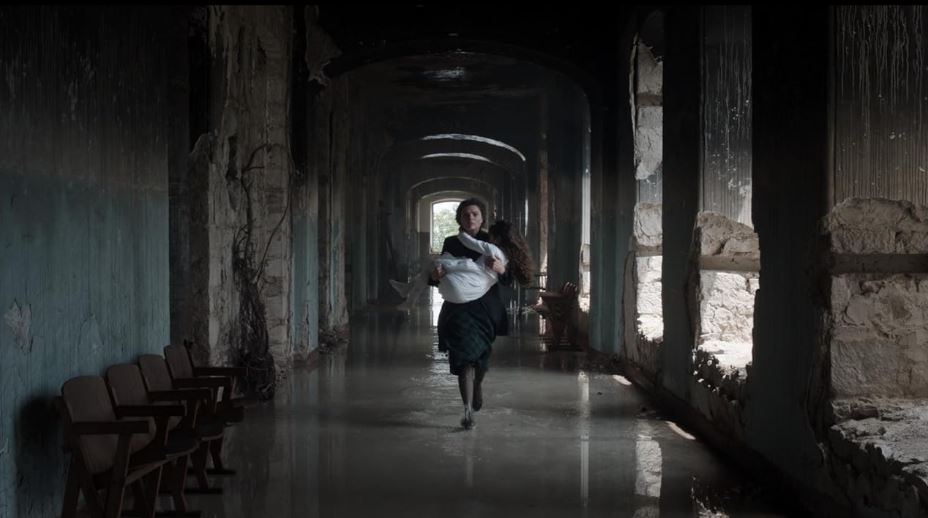
Spitak (2018) Subject: 1988 earthquake. Director: Aleksandr Kott. Production: Russia, Armenia
Gate to Heaven (2019) Subject: Karabakh. Director: Jivan Avetisyan. Production: Lithuania, Armenia, Germany, France, Bulgaria, Czech Republic, Italy, US
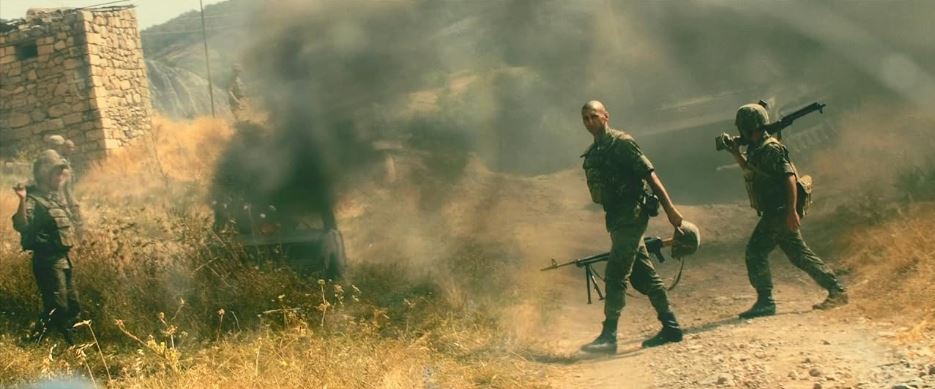
Long Night (2019) Subject: Events of 1915. Director: Edgar Baghdasaryan. Production: Armenia
My Cross (2019) Subject: Karabakh. Director: Shavarsh Vardanyan. Production: Russia, Armenia
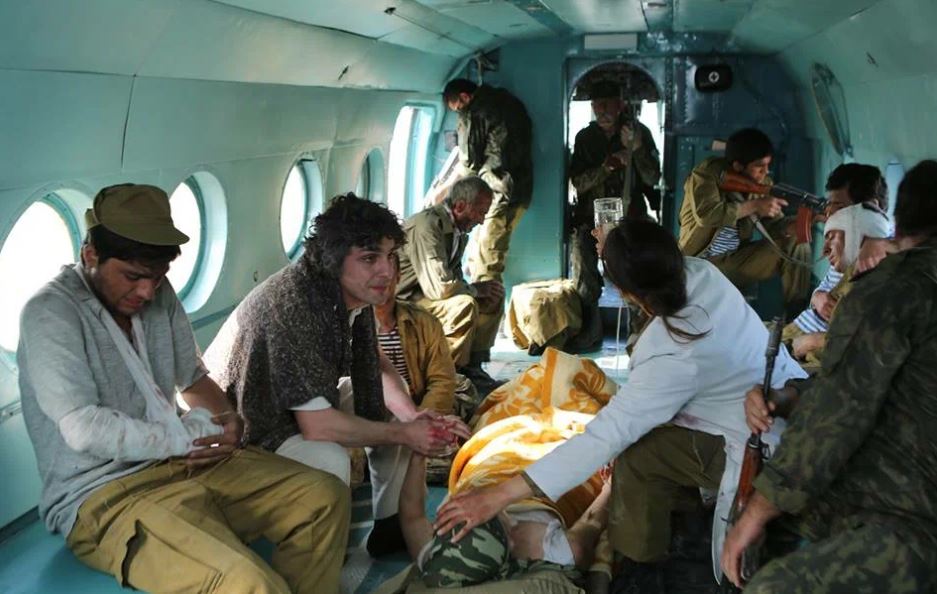
Sabre Dance (2019) Subject: Life of composer Aram Khachaturian. Director: Yusup Razykov. Production: Russia, Armenia
Blockade (2020) Subject: Karabakh. Director: Hakob Melkonyan. Production: France, Armenia, Germany, Greece
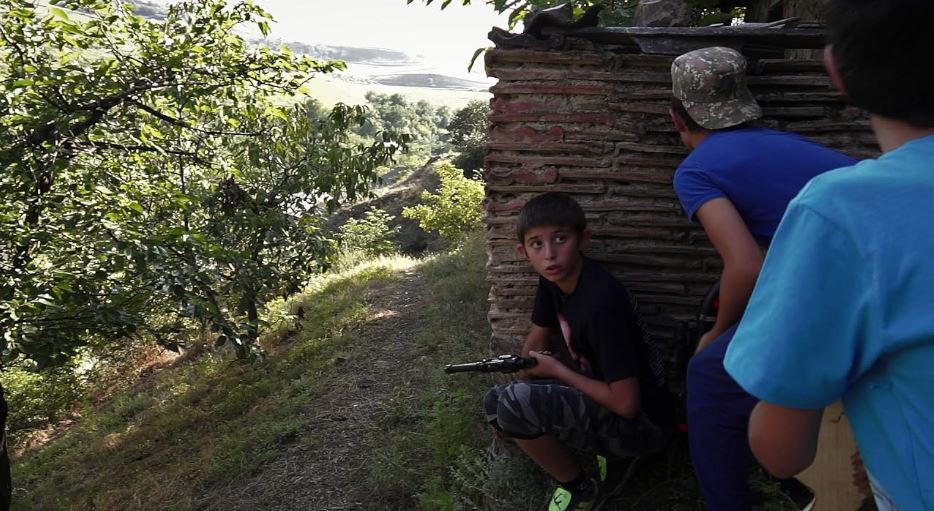
Note: According to the plot of the film, after the First Karabakh War, our national army allegedly killed 20 civilians in the village of Chinari on the border with Tovuz District.
Songs of Solomon (2020) Subject: Events of 1915. Rejssor: Arman Nshanian. Production: Armenia
Note: One of the film’s producers, Nick Vallelonga, co-wrote and co-produced Green Book, a film that won multiple Oscar nominations, including an Oscar for Best Original Screenplay.
Should the Wind Drop (2020) Subject: Karabakh. Director: Nora Martirosyan. Production: Armenia, France, Belgium
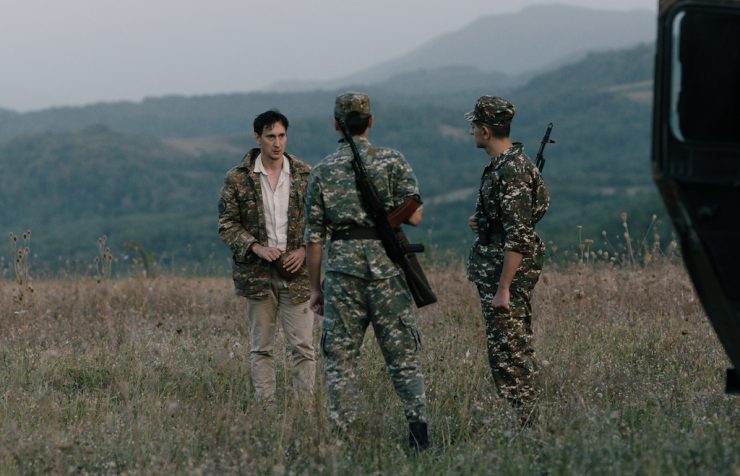
Amerikatsi (2021) Subject: Events of 1915, Armenia in the 1930s. Director: Michael Goorjian, Production: Armenia
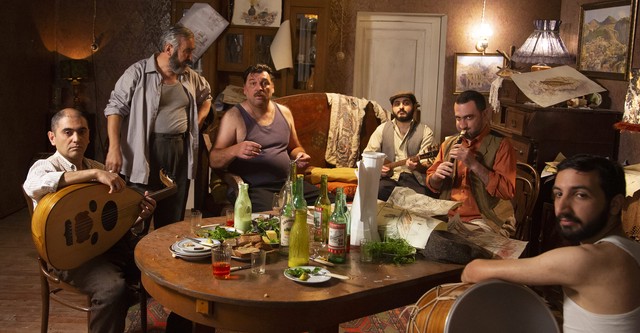
The Hidden Map (2021) Subject: Events of 1915. Director: Ani Hovannisian. Production: Armenia, US
Revolution (2021) Subject: Armenian history, Karabakh. Directors: Ara Chagaryan, Artashes Matevosyan. Production: Armenia
The Faces of War (2021) Subject: Karabakh. Director: Hrayr Sargsyan. Production: Armenia
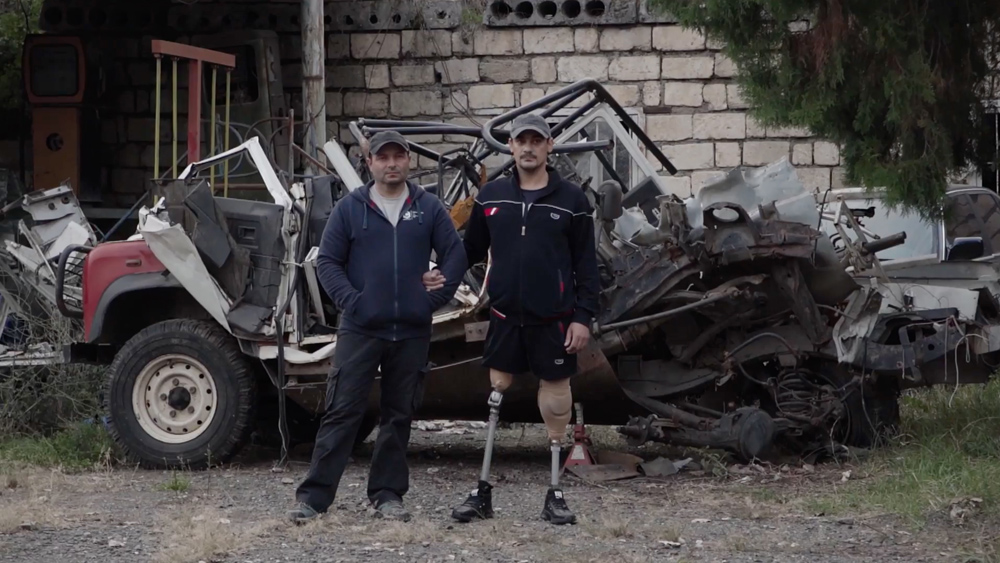
Aurora’s Sunrise (2022) Subject: Events of 1915. Director: İnna Sahakyan. Production: Germany, Lithuania, Armenia
The American Good Samaritans (2022) Subject: Events of 1915. Director: Ara Mnatsakanyan, Production: Armenia
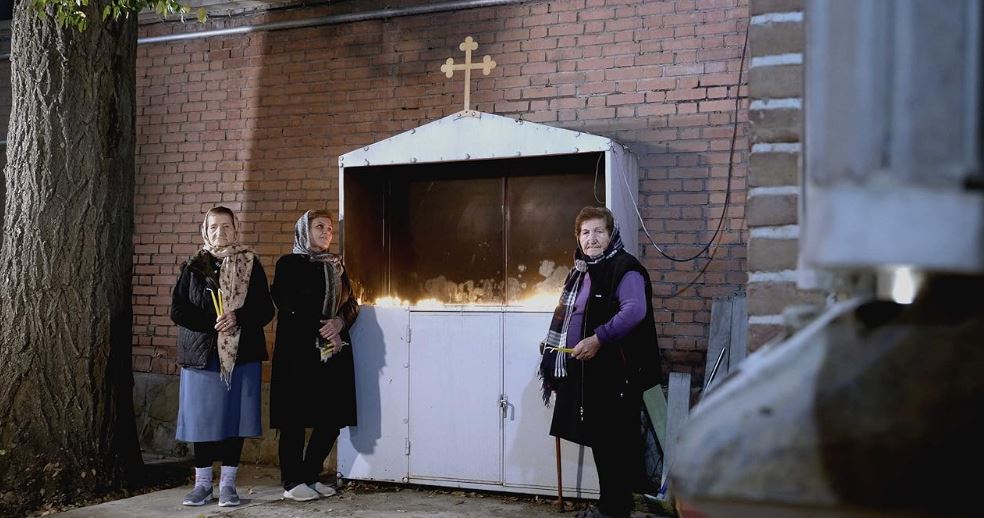
Tonratun, The Armenian History Told by Women (2022) Subject: Armenian history, culture, war. Director: Inna Mkhitaryan, Production: Armenia, France
Tezeta (2023) Subject: Events of 1915, story of composer Nerses Nalbandian. Directors: Aramazt Kalayjian, Garegin Papoyan. Production: Armenia, US.
Three Graves of the Artist (2023) Subject: Like of Armenian painter Vahan Ananyan. Directors: Harutyun Khachatryan, Ruben Khachatryan. Production: Golden Apricot Fund For Cinema Development.
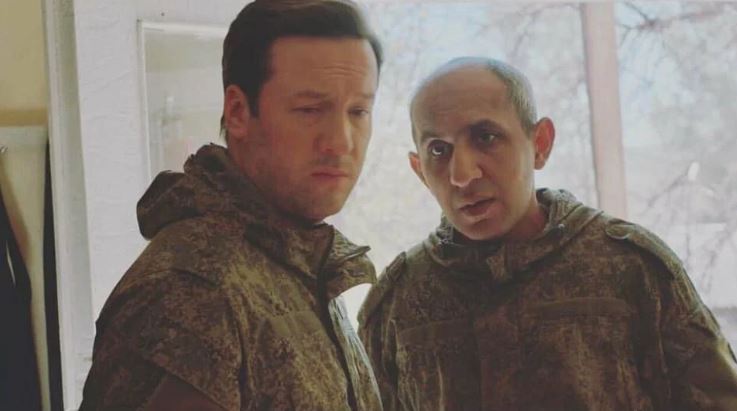
Suren (2023) Subject: Karabakh. Director: Valeri Vardanyan. Production: Armenia, Russia
The film premiered in Russia last year. A Russian military officer is tasked with getting the Armenians living in Karabakh out of the area during the 44-day war. An Armenian named Suren does not want to leave his village.
Arno Babajanian. Age of Love (2023) Subject: life of the composer. Director: Vaga Vardanyan. Production: Armenia
There Was, There Was Not (2024) Subject: Karabakh. Director: Emily Mkrtichian
Zako – project (2024) Subject: life of painter Sargis Mangasaryan. Director: Tigran Arakelyan.
The Golden Chain of Mercy (2024) Subject: Events of 1915. Director: Arman Chilingaryan. Production: Armenia
Briefly on other themes, local box office and budget…
Other subjects in contemporary Armenian cinema include stories of women suffering from patriarchal traditions, people who cannot adapt to the post-Soviet period, and people searching for the meaning of life: Fight (2023, director: Lilit Movsisyan), 5 Dreamers and a Horse (2022, directors: Vahagn Khachatryan, Aren Malakyan), Chnchik (2020, director: Aram Shahbazyan), Mountains, the Sun and Love (2019, directors: Michael Poghosian, Garik Mashkaryan), Zulali (2021, director: Hayk Ordyan), Yasha and Leonid Brezhnev (2023, director: Edgar Baghdasaryan), and others.
Although there is no extensive information on the country’s commercial cinema on the Internet, some of the films made in various genres were co-produced with former Soviet countries: The House of the Heart (director: Hrachya Keshishyan, Russia, Armenia), Happy Family (director: Mikhail Pogosov, Armenia, Estonia), Good Morning (director: Anna Arevshatyan, Armenia, Russia), etc.
I would like to mention a few films separately. Co-produced by Belgium, Italy, the Netherlands, Bulgaria and Armenia, Luka (2023, director: Jessica Woodworth) is an adaptation of Dino Buzzati’s novel The Tartar Steppe. One of the main roles is played by Armenian actor Samvel Tadevossian, and one of his opposites is Geraldine Chaplin. The film is co-produced by Angela Frangyan. The film is about a sniper defending his homeland from invasion.
Mel (2022), the documentary directed by Inna Sahakyan and Paul Cohen, tells the story of Mel Daluzyan, a transgender weightlifter living in the Netherlands who faced pressure in Armenia because of his transition.
The plot of the feature film About Him or How He Did Not Fear the Bear (Narine Mkrtchyan, Arsen Azatyan), produced with the support of the National Cinema Center of Armenia in 2018, is based on the events of a mass murder in Gyumri in 2015. Valery Permyakov, a soldier of the Russian military base No. 102 in Gyumri, murdered the local Avetisyan family. Armenian filmmakers named the protagonist of the film Ivan, showing a fairy tale about Ivan and the bear in parallel with this story. The film also includes footage of the real-life mass protests in the city after this murder. Since the film was made during Serzh Sargsyan’s administration, the authors feared that he would not let the film be released. However, when Pashinyan came to power, that obstacle was gone and the film premiered at the Rotterdam Film Festival and was also screened at other festivals.
It is difficult to find accurate information on the number and revenues of locally produced films released annually in Armenia, information on current productions, and the budget allocated for cinema on the Internet resources. However, at last year’s press conference, Armenian Deputy Minister of Education, Science, Culture and Sport Ara Khzmalyan said that the budget for cinema in 2023 had been increased by 70 percent, to AMD 199 million… Successful local films can run in theaters for as long as 7 months. Although ticket sales have increased over the past few years, there are no dedicated arthouse movie theaters in Armenia.
The presence of Armenian cinema at prestigious film festivals has reached 74 percent, with 10 Armenian films receiving 28 awards in 2023 alone. Amerikatsi was shortlisted for an Oscar nomination.
Success at IDFA…
Last year, Armenian director Shoghakat Vardanyan’s documentary 1489 won best film at the prestigious IDFA documentary film festival. The film is about an Armenian soldier who went missing during the Karabakh war and whose body was found a year later. In her film, Vardanyan portrays the story of the invading soldier to the world as “the tragedy of a suffering nation.” Some social media users in Azerbaijan note in their comments that our filmmakers can also shoot Karabakh stories on their phones and show them to the world without needing financial support from the state. Indeed, we live in an era when a film shot on a phone can cause a stir in the world and win awards. But we must bear in mind one important thing. It does not just happen that a debut film by an ordinary Armenian woman gets into a prestigious festival and wins two awards at once. The reason why Vardanyan won the IDFA award is, first of all, the consistent work of Armenian film organizations with festivals, a result of the ongoing festival policy. One of the first winners at IDFA, the festival held in Amsterdam since 1988, was Armenian director Ruben Gevorgyants (film Islands). Ruben Gevorgyants is a nationalist and one of the supporters of the film about Garegin Nzhdeh, made with an unhealthy mindset. Vardan Hovhannisyan’s film Human Stories in War and Peace about Karabakh was nominated for the Joris Ivens Award at IDFA in 2007. The director of this festival, Orwa Nyrabia, who hails from Syria, was one of the jury members at the Golden Apricot Festival in 2022. There is also Artavazd Peleshyan, who received a special Life achievement IDFA award for his contribution to cinema…
Golden Apricot Festival
Speaking of festivals… Golden Apricot, held in Yerevan since 2004, is the most prestigious international film festival in the region. The festival was established by documentary film director Harutyun Khachatryan, screenwriter Mikael Stamboltsyan and film critic Susanna Harutyunyan. The theme of the festival, supported by the Ministry, is “Crossroads of Cultures and Civilizations”. The Golden Apricot Film Festival includes such competition categories as “International Feature Competition”, “International Documentary Competition”, “Armenian Panorama National Competition”, “Short Film Competition” (the prize in this category is called “Apricot Stone”) and other competition categories. The festival also features a FIPRESCI Award. The Parajanov Lifetime Achievement Award honors renowned filmmakers, including Takeshi Kitano, the Dardenne brothers, Carlos Reygadas and others. The festival also hosts a film school at the GAIFF Pro production platform. The classes are free of charge and are taught by prominent film professionals. Admission to the school is done through an interview. The goal is to teach how to make films without spending money and to promote the art of filmmaking. Students of the film school have made films under the guidance of Krzysztof Zanussi, Abbas Kiarostami, and Jos Stelling.
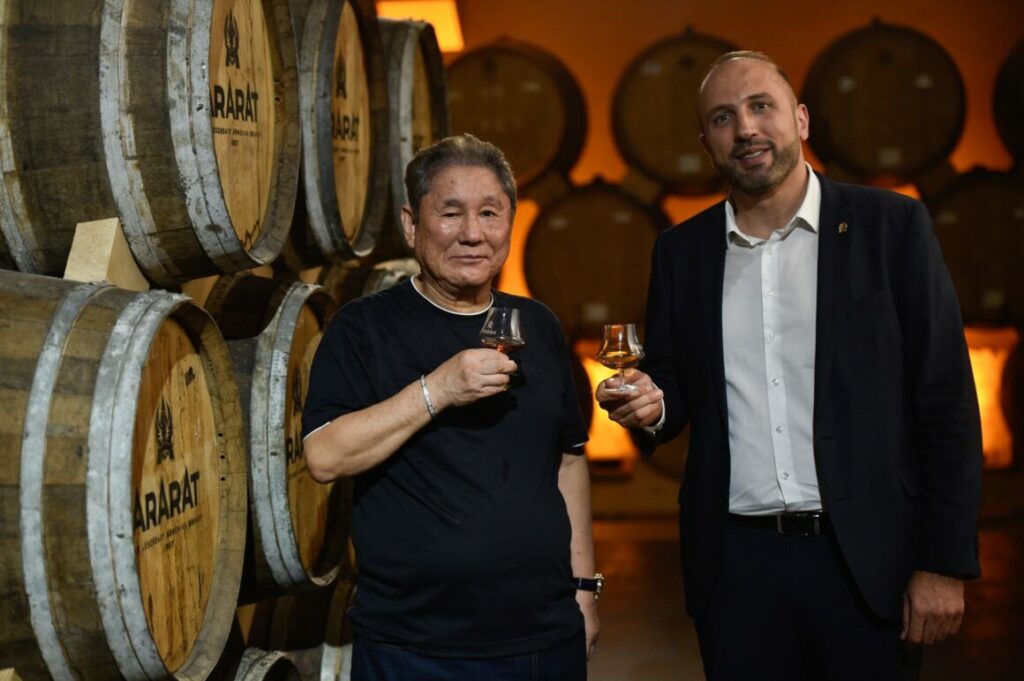
The consistent running of the Golden Apricot Film Festival has further strengthened the desire of local filmmakers to make films. So far, the festival has been attended by Claire Denis, Theo Angelopoulos, the Dardenne brothers, Lav Diaz, Philippe Bober, Tonino Querra, Darren Aronofsky, Paul Schrader, Carlos Reygadas, Terry George and other renowned filmmakers. The festival screens films that have won awards at the Locarno, San Sebastian, Cannes, and Oscar winners. Golden Apricot works closely with the Rotterdam and Busan Film Festivals.
In 2022, Golden Apricot paid special attention to the Karabakh war, and the festival program included co-produced films on this subject. The anti-Azerbaijani documentary Invisible Republic was directed by American Garin Hovannisian. The film about the 44-day war was released in America and Great Britain.
Furthermore, the Rolan International Children’s Film Festival has been held annually in Armenia since 2004. The festival, established by the Rolan Bykov Foundation, hosts competitions in the nominations “Best Full-length Feature Film”, “Best Animated Film” and others.
The law on cinematography
In the second half of 2023, the Armenian Parliament adopted amendments to the law “On Cinematography”. The law is based on the experience of France, Poland, Germany, Georgia and Venezuela and, according to experts, the efficiency will be much higher if film production is based on the model of these countries. This law makes possible the integration of Armenian cinema into the European Union’s MEDIA program. MEDIA is part of the European Union’s Creative Europe program, which supports the cultural, audiovisual sector. Films made with the support of this program reach out beyond the European market, to new markets. MEDIA also finances education in the field of cinema.
According to Armenian experts, the law “On Cinematography” will create favorable conditions for foreign investments, particularly for films to be produced in Armenia. For example, if the budget of a film is about 100 million drams, the cost of some services during its production will be low, film companies will get back from 10 to 40 percent of the revenue. This is especially true for companies that film in historical locations of the country. A number of films and TV series for Netflix are already scheduled to be produced in Armenia. Famous German producer and actor Til Schweiger has signed a contract with local agencies to shoot his films Underdog, Dead by Dawn, and TV series Collapse. The law “On Cinematography” also includes the support for the development of private productions working in unequal conditions, in a competitive environment. One of the problem areas in the country is film distribution; there are few movie theaters in the country, which is one of the factors holding back the development of cinema. There is no extensive movie theater network, and there is a lack of funds for the construction of new ones, but, according to experts, changes in the law will not regulate the distribution system either. If the state participates in the film production in Armenia, giving half of the money, it is also responsible for distribution. If the state finances a 100 percent of the film, then it interferes in its idea, content, and creative process. For example, the animated movie Anahit and the documentary Komitas Vardapet were fully financed by the state. But there is no full-length feature film fully funded by the state.
The fate of Armenfilm
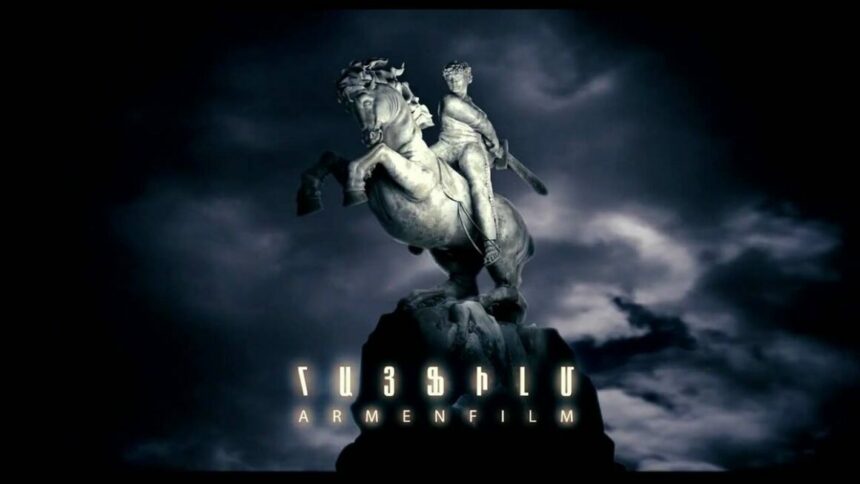
On the fate of Armenfilm, which has been operating since 1923… In 2005, the State Property Management Agency announced a bid for the privatization of the Armenfilm film studio. There was only one bidder, Armenia Studios, the company whose main shareholder was the Cafesjian family (Gerard Cafesjian, an American-born lawyer, established a foundation named after himself. The purpose of the foundation is to help Armenia). The company offered 350 million drams for the purchase of the studio and promised to turn it into one of the most advanced film studios in the region within 10 years. First of all, the studio had to be fully refurbished and its equipment upgraded. In the end, the company failed to honor its commitments, Armenian films in the archives were digitized in poor quality, $10 million worth of damage was inflicted on the state, stage props and studio technical equipment of historical and cultural value, worth $2 million drams, were stolen. Last January, the Republican Prosecutor’s Office issued a press release reporting the looting of the studio. Prime Minister Nikol Pashinyan proposed that the territory of Armenfilm should become home to a lyceum of arts and a university, with theater venues, etc., and that this project should be made part of an academic campus to be opened in the town of Ashtarak. Pashinyan wanted no universities to be left in Yerevan. All universities should be housed in the academic campus in Ashtarak. He called this a strategic project for the country and linked this imperative to the fact that universities are not up to standards. His proposal, as well as the idea of making Armenfilm part of the academic campus were subjected to harsh criticism in the country.